More Than a Day of Fishing

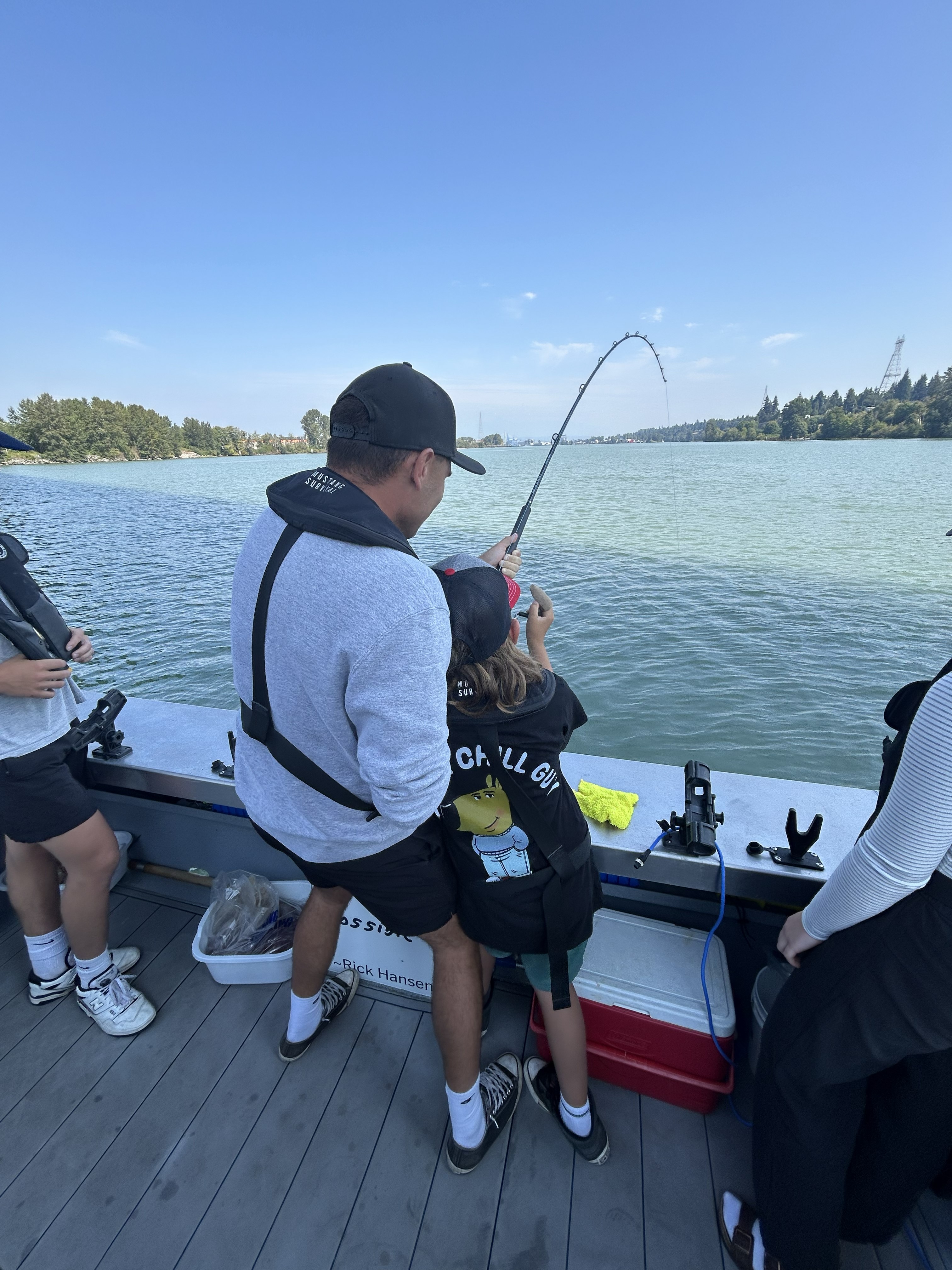
The fish were biting so fast that even Rick Hansen seemed surprised.
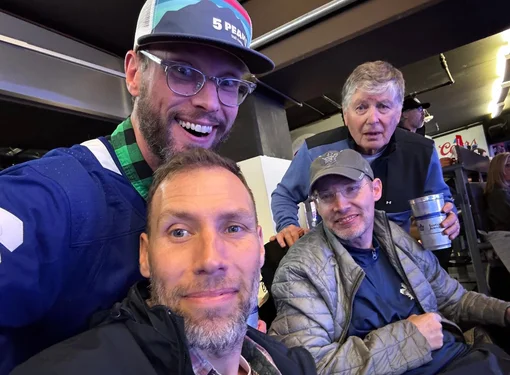
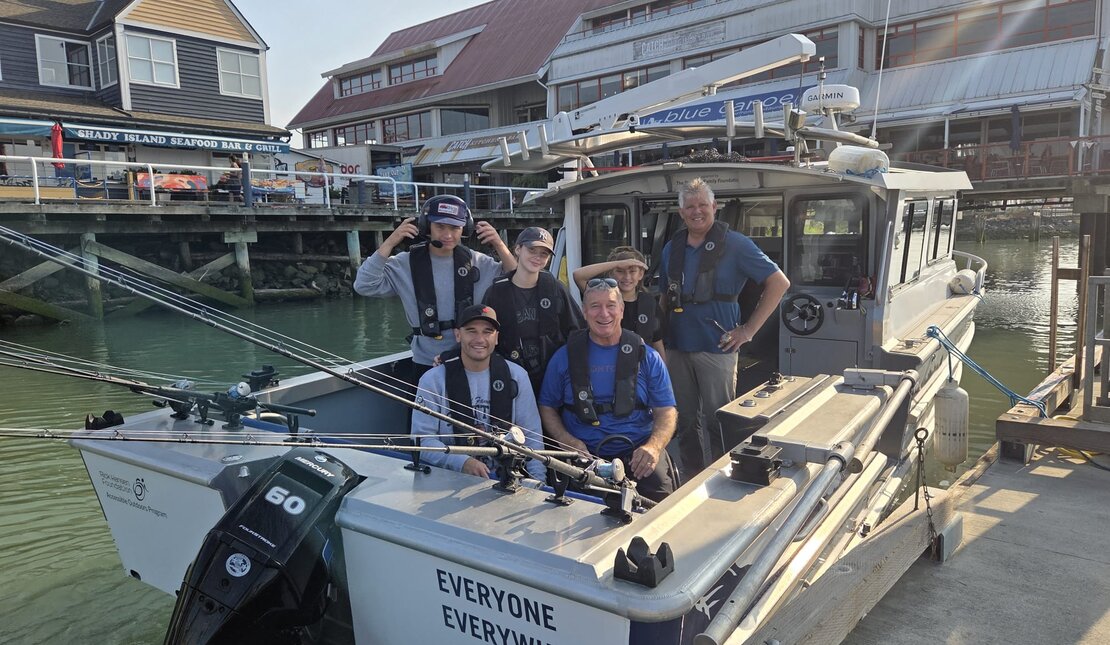
On a warm summer day on the Fraser River, Willie Sellars, Chief of Williams Lake First Nation, and his three older children climbed aboard ‘Everyone, Everywhere’, the Rick Hansen Foundation (RHF)'s accessible vessel, for what they thought would be a memorable day of sturgeon fishing and tagging on the Fraser River.
By the end of the outing, they caught 16 sturgeon, ranging from small juveniles to giants stretching more than seven feet long. Willie still laughs when he remembers Rick's reaction.
"It was a bit of an anomaly day," said Willie.
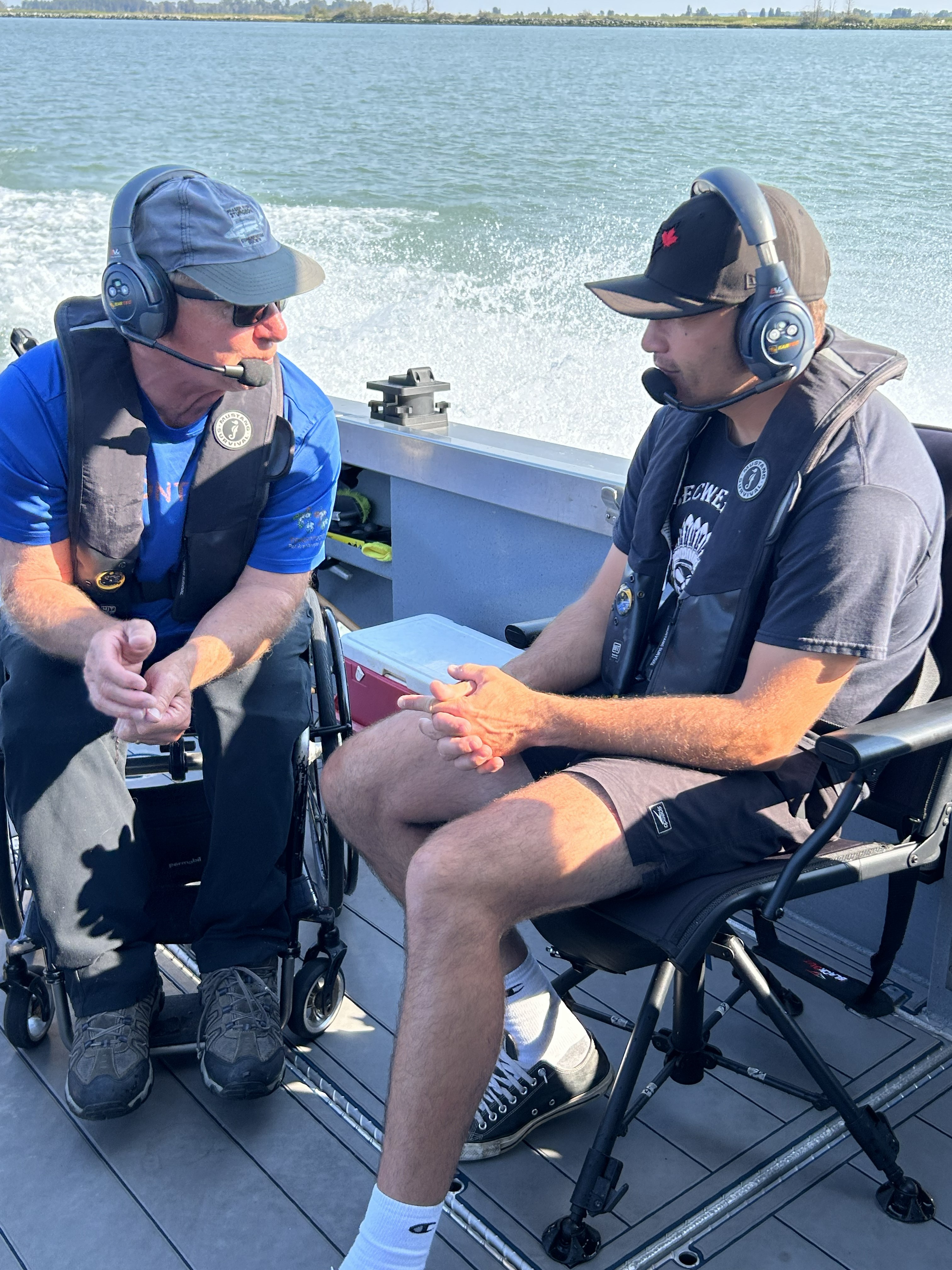
Yet months later, when he reflects on the experience, it isn't the extraordinary fishing that stands out most vividly. Instead, he remembers the conversations shared through the boat's communication headsets, the stories exchanged as the banks of the Fraser River slipped by, and the opportunity to spend uninterrupted time with his children in a place where accessibility had been thoughtfully woven into so many details.
The day changed the way Willie thinks about accessibility, community, and what becomes possible when barriers are removed.
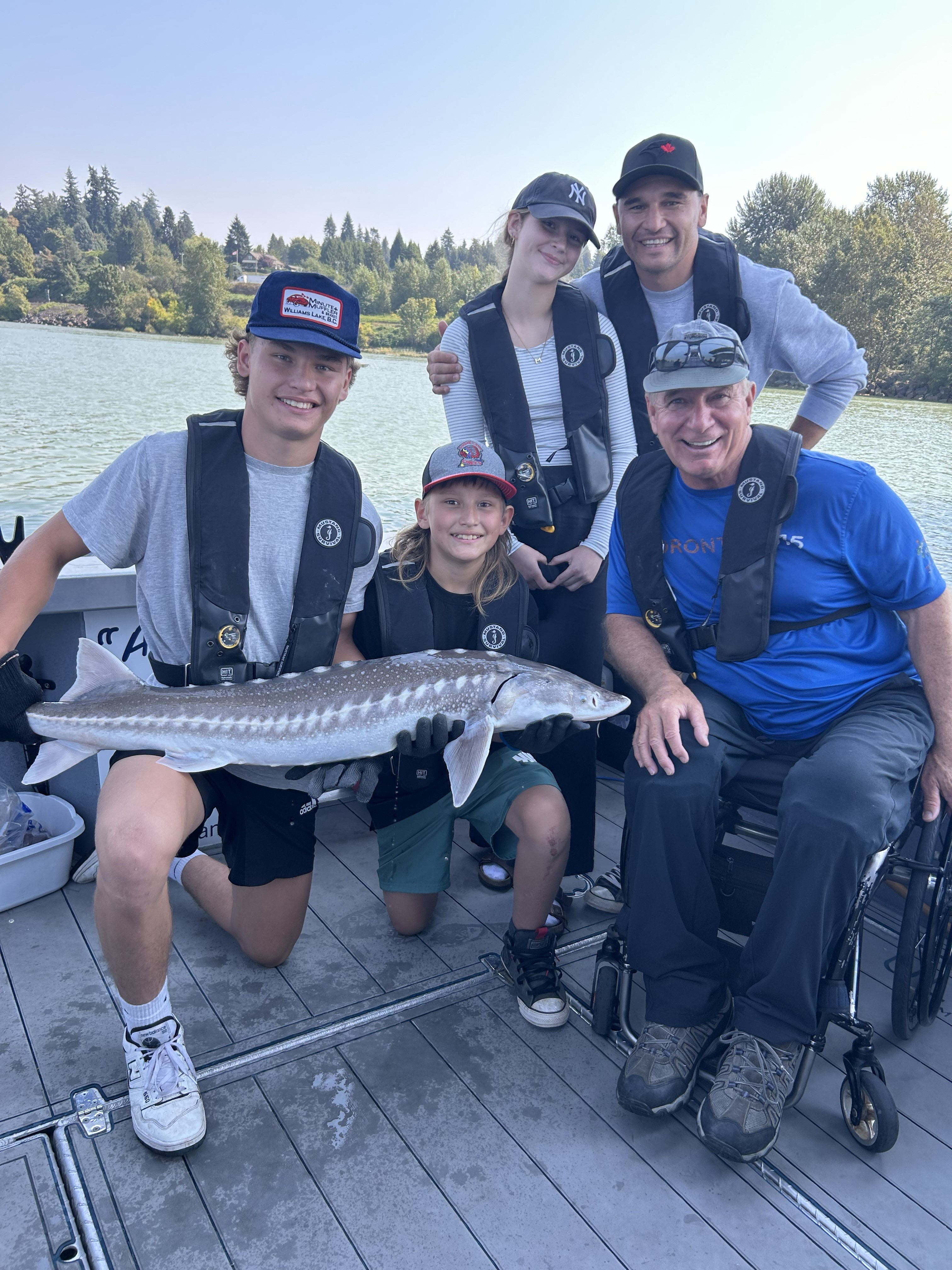
A Shared Day on the Water
Willie first met Rick Hansen through conversations about stewardship, conservation, and the Fraser River. A passionate fisherman himself, Willie quickly found common ground with someone who has spent decades advocating not only for accessibility, but also for the health of Canada's waterways.
Over time, Rick extended several invitations to join him on the water. Busy family schedules and community commitments made it difficult to find a date that worked until one finally aligned with a family trip to the Lower Mainland.
When Rick encouraged Willie to bring his children, their response was immediate.
"I said, 'Hey, we get to go sturgeon fishing with Rick Hansen,' and they're like, 'Who's Rick Hansen?'"
A moment later, one of his daughters made the connection.
"'You mean that guy that there's a statue of?'"
"That's the guy."
As Willie described listening to his children laugh through their headsets while Rick shared stories about the river and its history, it is clear that the experience touched something deeper.
"You got to see and hear those kids just having a good time, and that's all healing for me," said Willie.
That commitment to being present for his children has shaped much of his life as a parent. Whether coaching hockey, building a backyard rink, travelling to tournaments, or spending time outdoors, Willie understands that shared experiences become the stories families carry with them for years.
Seeing Accessibility Through a Different Lens
What surprised Willie was how little he thought about the accessible features on the ‘Everyone Everywhere’ once the day began. The accessible washroom, the non-slip flooring, the spacious layout and the communication headsets all worked in tandem to allow everyone on board to focus on the same thing: enjoying the day.
Before stepping aboard the boat, Willie understood the importance of accessibility but hadn’t fully considered how often barriers prevent people from participating in activities others enjoy without a second thought.
Now, when he visits a trail or thinks about future building projects in his central British Columbian community, he finds himself considering: "Could you get a wheelchair on these trails? What kind of accessibility do we have here that we need to start having a conversation around?"
Those questions have become increasingly relevant as Williams Lake First Nation and its people, T’exelcemc, embarks on several major development projects, including an Elders Health and Culture Building, a reconciliation park, community gathering spaces, and future recreational facilities.
"It'll have to be accessible," said Willie. "Whether it's walking, whether it's with a cane, whether it's with their walkers, whether it's in a wheelchair, we need to make sure that they can feel safe and welcome in these spaces."
Accessibility, Culture, and Healing
As Chief, Willie often speaks about the importance of language revitalization, cultural renewal and reconnecting people to the land. Those experiences, he says, are central to healing and well-being for Indigenous communities.
"A big part of our balance as Indigenous people is being able to provide for ourselves," he said. "It's about finding the balance in this modern world that we live in by holding up our culture, our language, and our ceremony."
That balance often comes through spending time outdoors—fishing, hunting, gathering medicines, visiting sacred places and connecting with the land that has sustained communities for generations. Willie said those experiences become far more difficult when barriers exist.
"You add the fast-paced world that we live in to somebody who has mobility issues, and it's even that much harder for them to get out onto the land or damn near impossible for them to get out onto the water," he said.
That reality is what makes programs like the Accessible Outdoors Program so meaningful. The opportunity to be on the water is about connection—to nature, to culture, to family and to community. It is about ensuring that people have the opportunity to experience the sights, sounds, and sense of belonging that come from being outdoors.
"It's being able to be out on the water and have that experience of the fish and the sounds and the smells even," Willie said. "It has to be a part of our healing journey."
Looking Ahead
As RHF’s Accessible Outdoors Program continues to grow, Willie hopes more people will have the opportunity to experience what his family found that day on the Fraser River.
In particular, he would like to see people with mobility disabilities from his own region spend time aboard ‘Everyone, Everywhere’ and discover what becomes possible when accessibility is built in from the start.
For Willie, the day remains a reminder that accessibility is about connection – to family, culture, community, and to the land and water that sustain us.