The Inclusion of Accessibility at Vancouver’s FIFA Fan Festival

It’s clear that Joe Schneider gets accessibility.
We’re at Hastings Park in Vancouver, British Columbia. It’s an hour before the noon kickoff between Canada and Switzerland and Joe points out all the accessibility features on site as we make our way through the PNE grounds. As a production manager with InLive, he is part of the team involved in delivering the FIFA Fan Festival.
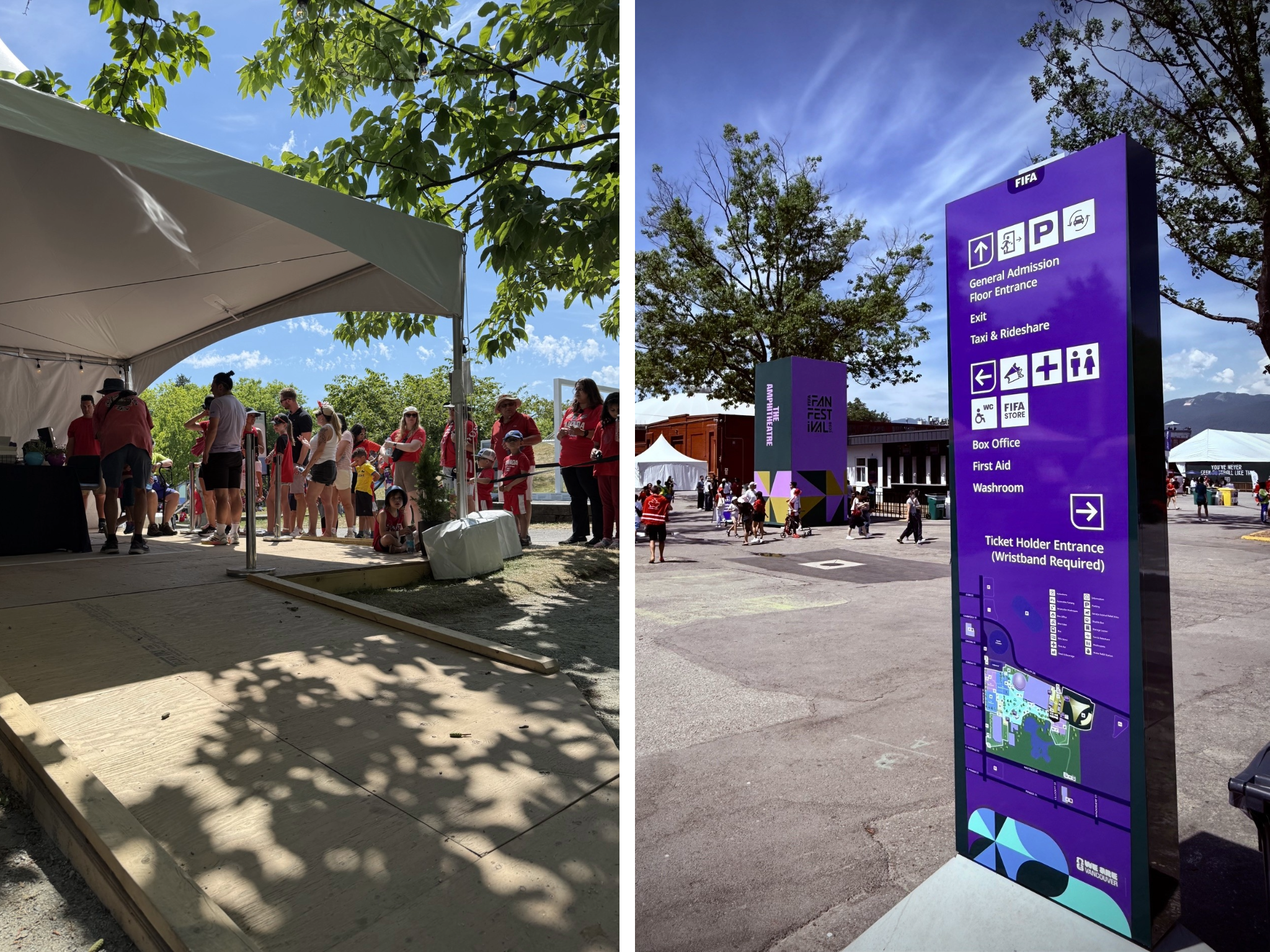
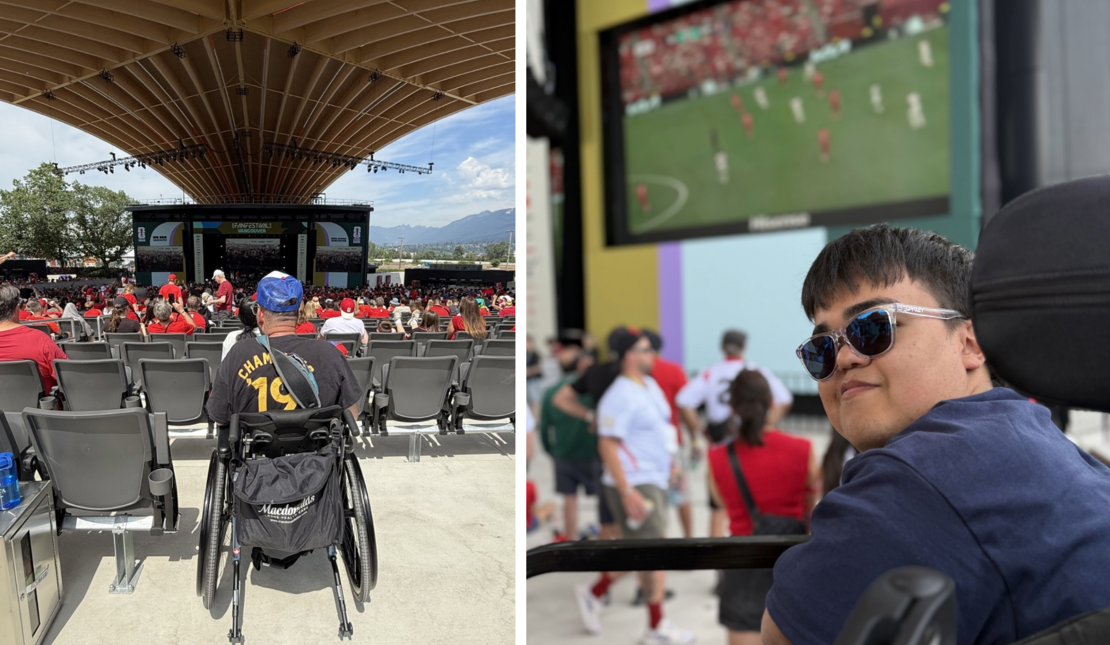
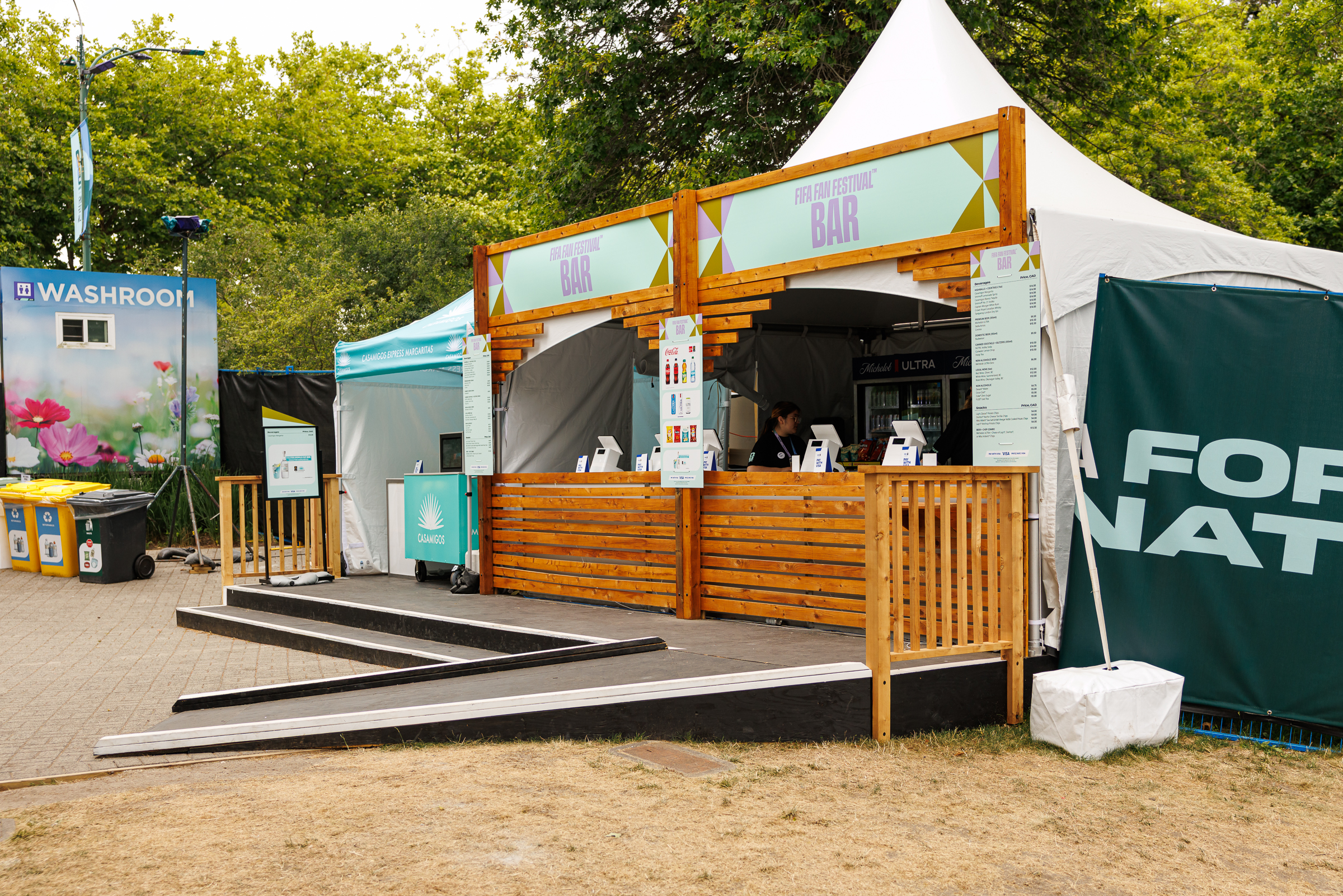
The place is already packed with Team Canada soccer fans, many wearing Canadian flags like superhero capes. Most will be too absorbed in the action unfolding across the festival’s 12 screens to notice the absence of steps across much of the site, the ramps leading to elevated platforms for games and sponsor activations, or the Coca-Cola picnic tables designed with extended tabletops and additional knee clearance so someone using a wheelchair can pull right up and be alongside family and friends.
Before taking the Rick Hansen Foundation Accessibility Certification (RHFAC) Fundamentals course earlier this year, Joe said he probably wouldn't have noticed these things either.
“It just blew my mind,” he said of the course. “There were so many things I hadn’t considered before, and it really set us on a great path forward to be more accessible and inclusive.”
Joe and the InLive team have spent months immersed in the logistics of delivering the Fan Festival for the City of Vancouver that welcomes as many as 25,000 people at a time. There were the usual schedules to coordinate, contractors to manage, vendors to support, and countless other moving pieces to pull together for the World Cup festival running from June 11 to July 19.
Seeing Things Differently
As we walk through the site, Joe notes accessibility features like someone showing off a new home.
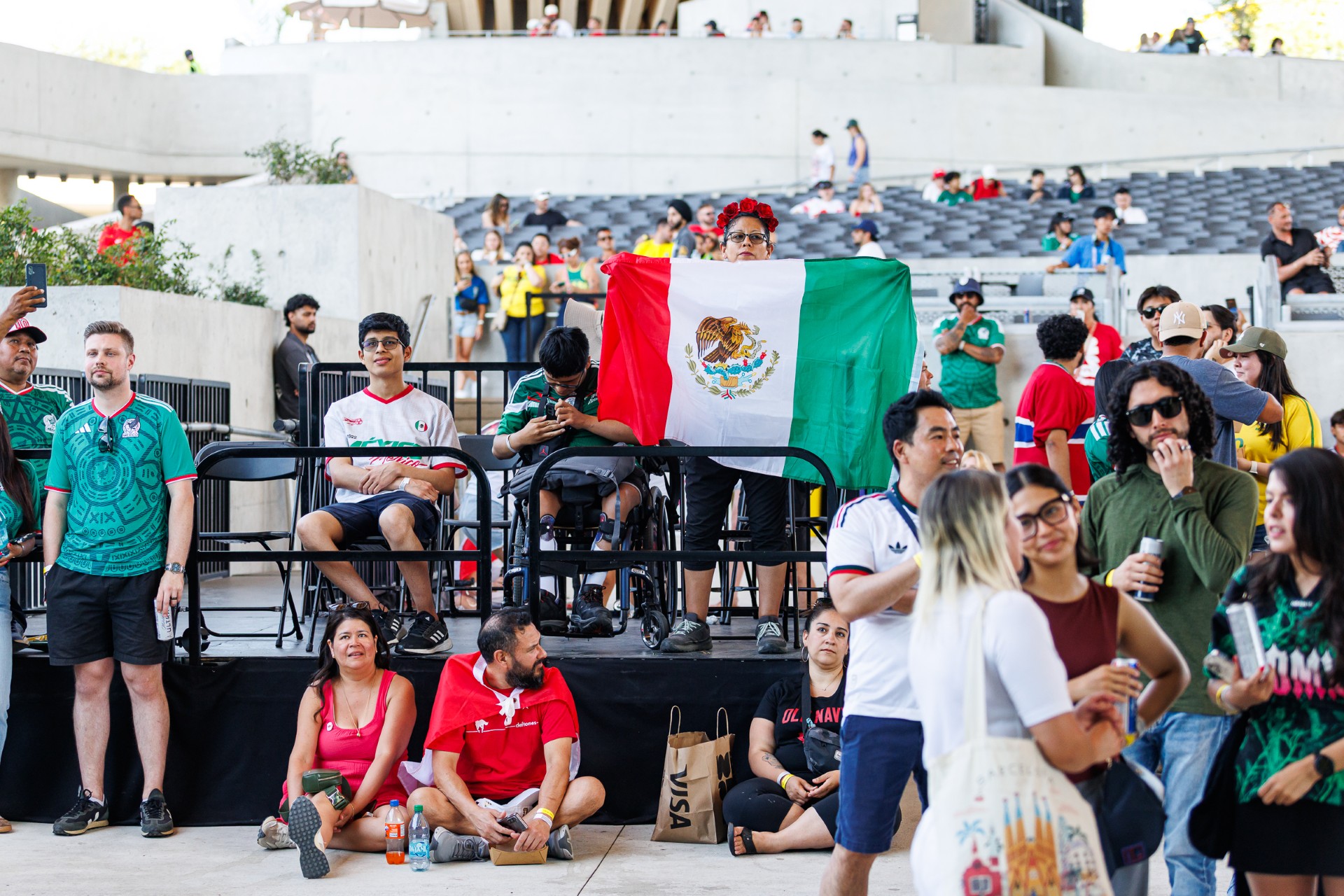
There are accessible viewing platforms at both the Amphitheatre and the main viewing areas, complete with companion seating. The Family Hub includes accessible washrooms, a nursing space with a microwave for heating bottles, and a Sensory Nook tucked away from the bustle of the crowds. Inside are bean bag chairs, fidget toys, soft flooring, and low lighting for anyone who needs a quieter place to regroup before heading back into the excitement.
The Hidden Disabilities Sunflower program is also available for people who have non-visible disabilities and may want to indicate they could benefit from a little extra understanding or support. Joe said he has already seen a few visitors wearing the sunflower lanyards.
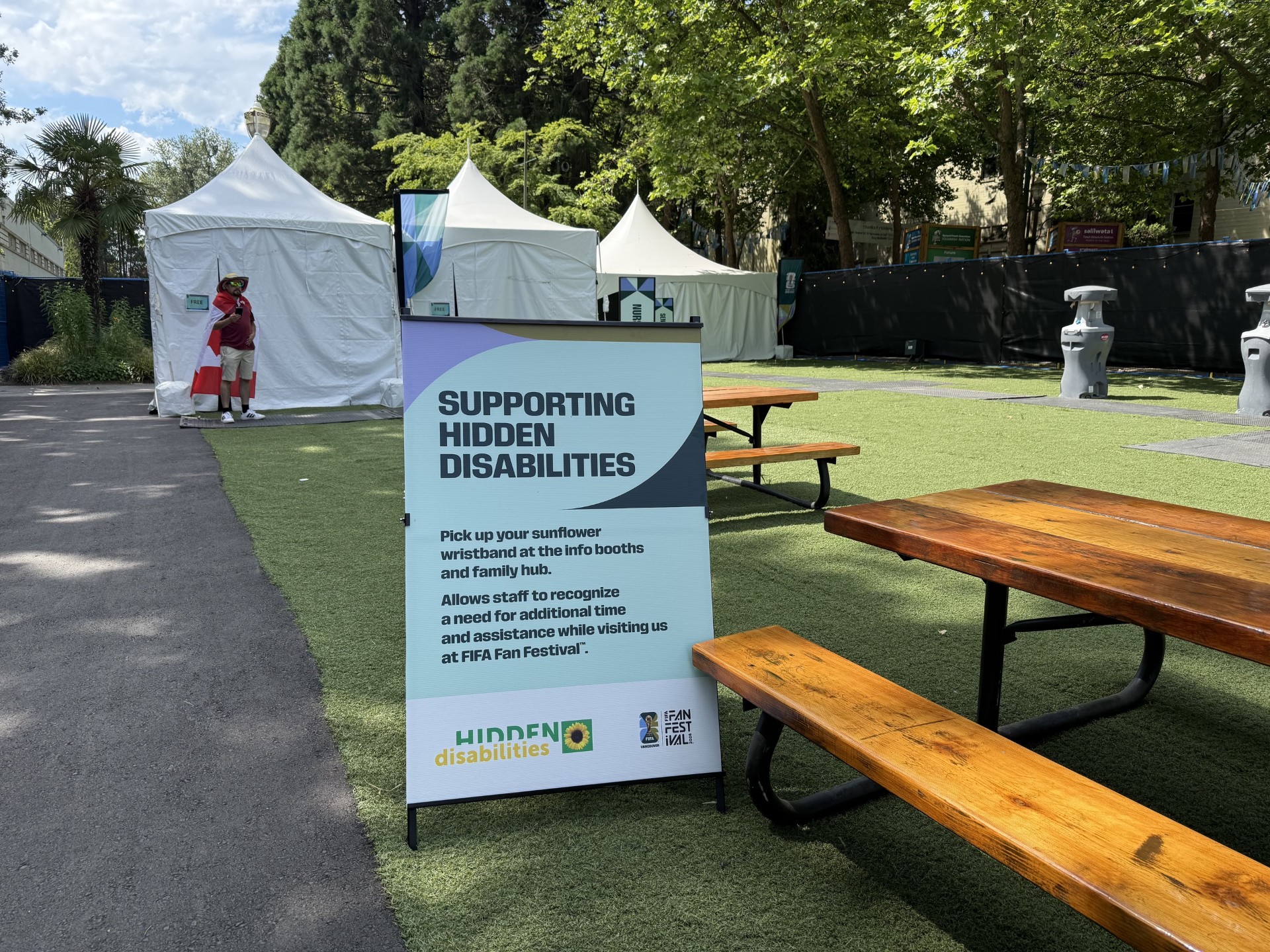
Staff and volunteers receive accessibility training as well. One wheelchair user I spoke with described himself as "delighted" with the accessibility features, noting that a volunteer pointed out the accessible viewing platform before he even had to ask.
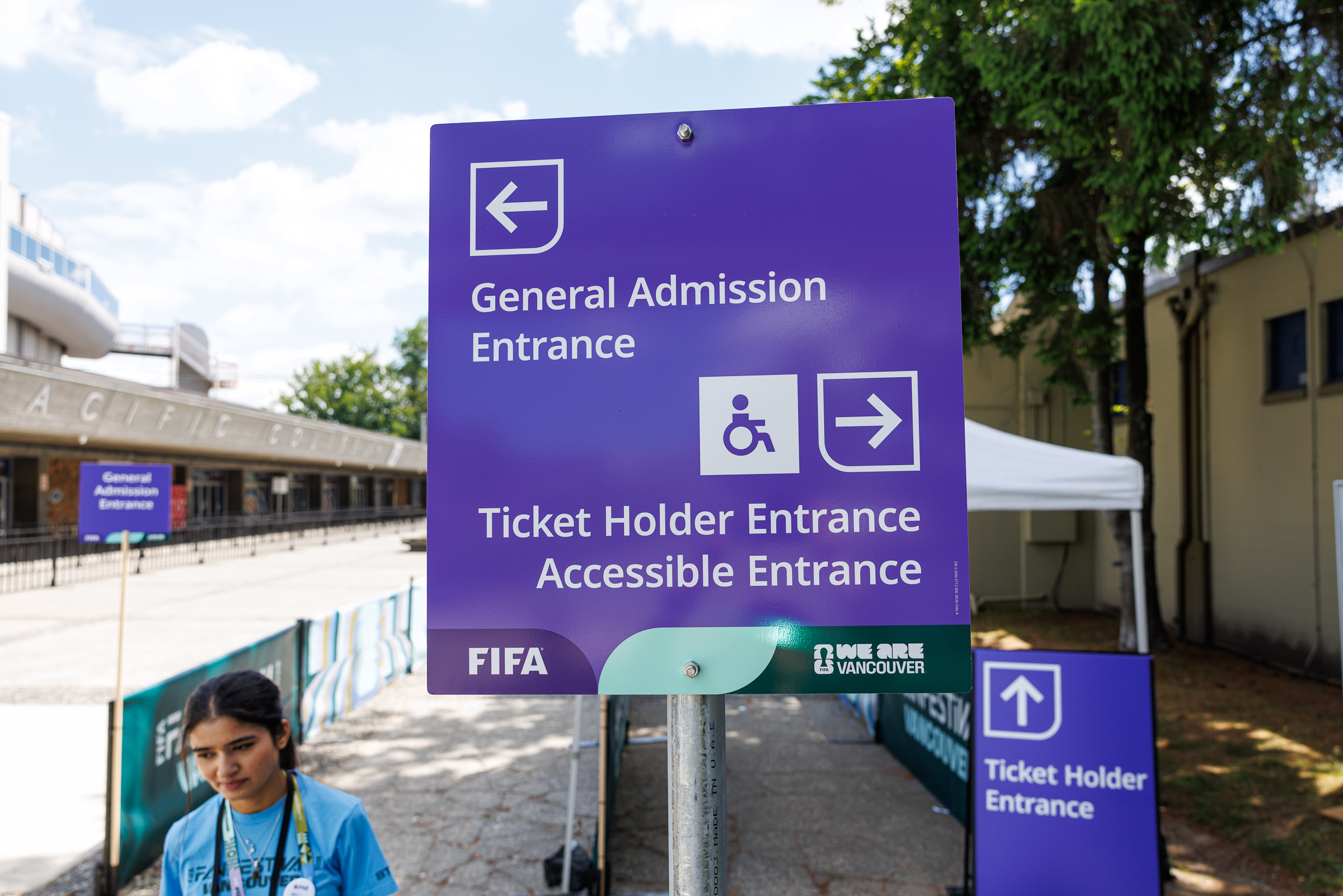
The list goes on: hearing assistance devices and wheelchairs available through information booths, animal relief areas on both sides of the site, dining areas with tables at varying heights, clear wayfinding signage, accessible washrooms, and accessible entrances at every gate.
Many of these features were refined following a review by the RHFAC team, who examined hundreds of pages of plans and drawings. The Access In Motion team, an accessibility consulting division of the Rick Hansen Foundation, later conducted a site visit to identify practical improvements that could still be incorporated before the first fans arrived.
Some recommendations were straightforward. Accessible parking stalls were widened using cones. A second service animal relief area was added. Sheltered waiting areas and priority seating were introduced near transit loading areas. Accessible picnic seating was expanded and food vendor counters lowered where possible to support more independent access. Others were more nuanced, like ensuring accessible pathways remained firm and easy to navigate despite the temporary nature of the site.
Progress, Not Perfection
There is much to celebrate at the FIFA Fan Festival and, at the same time, Joe is quick to point out areas he would still love to improve.
A ramp leading to one activation area is narrower than he would like. The rideshare pick-up and drop-off area is further from the entrance than ideal. The path through one parking lot could be safer and more direct.
The FIFA Fan Festival is, of course, temporary, which makes some changes inherently impossible. Unlike designing a new building from scratch, the Fan Festival sits within the Park’s existing Pacific National Exhibition, a site whose infrastructure predates today's accessibility expectations by decades.
"We're doing the best with what we have," Joe said. "But being as accessible as possible is really important to us."
I appreciate that answer because it doesn't pretend the work is finished. Accessibility is never really finished. It evolves as our understanding evolves. Best practices, language, and expectations change. The important thing is remaining willing to listen, learn, and improve.
Taking RHFAC Fundamentals shifted Joe's thinking from getting people into a space to asking whether they could move through it independently, comfortably and with dignity. And that willingness to acknowledge limitations was as impressive as the physical improvements themselves.
When I asked whether he had received much feedback from visitors, he said he hadn't heard very much. His answer wasn’t a surprise because the best accessibility often goes unnoticed.
But at the FIFA Fan Festival, it means people can celebrate their team's goals alongside their loved ones, find a quiet place when they need a break, order their own food, navigate independently and experience the energy of a global sporting event in the same way everyone else does.
"And that's the measure of success," Joe said. "Everybody should be able to enjoy this event equally."
Interested in learning about accessibility? RHFAC Fundamentals is designed to educate about the needs of people with disabilities and how physical spaces can be made more accessible. The course is four weeks in duration, online, and is self-paced. Learn more about RHFAC Fundamentals on our website.