Measuring the World in Effort

If Michelle Mahoney were to ever meet you in person, she might glance at your hands. She’ll notice if you’re wearing an X-Ring, given to graduates of St. Francis Xavier University. She has one too. The ring, which looks exactly like what you might think, tells Michelle something about where you’ve been and what you’ve earned. Michelle graduated from St. Francis Xavier in 1995 with a Bachelor of Arts and as she puts it, a Major in Independence (sociology).
Michelle sees details most people miss. It’s how she moves through the world.
A door threshold half an inch too high. An accessible door button that works but not where you’re standing. A curb cut that exists, technically, but not where anyone needs it. These are the details most people glide past without a second thought. For Michelle, they are the difference between access and exclusion. Between participation and being left at the door.
Michelle was born with Arthrogryposis, a condition that affects the joints and muscles of the body. She has limited mobility in her arms, hands, and knees. She was born with clubbed feet and a dislocated hip. Doctors told her parents she would probably never walk. But she did.
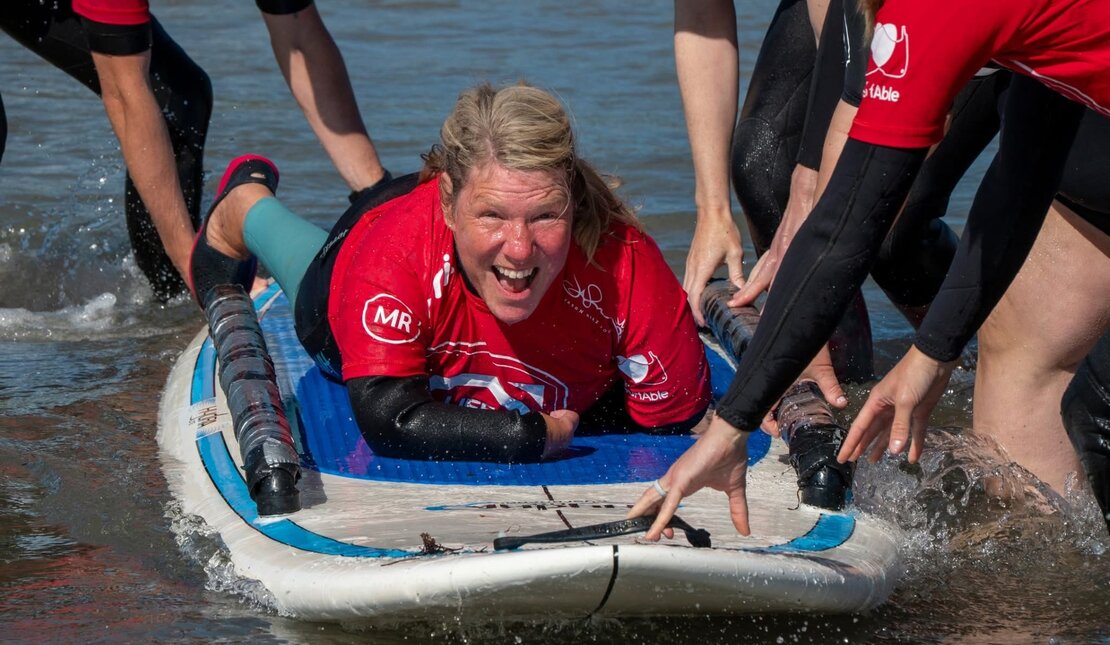
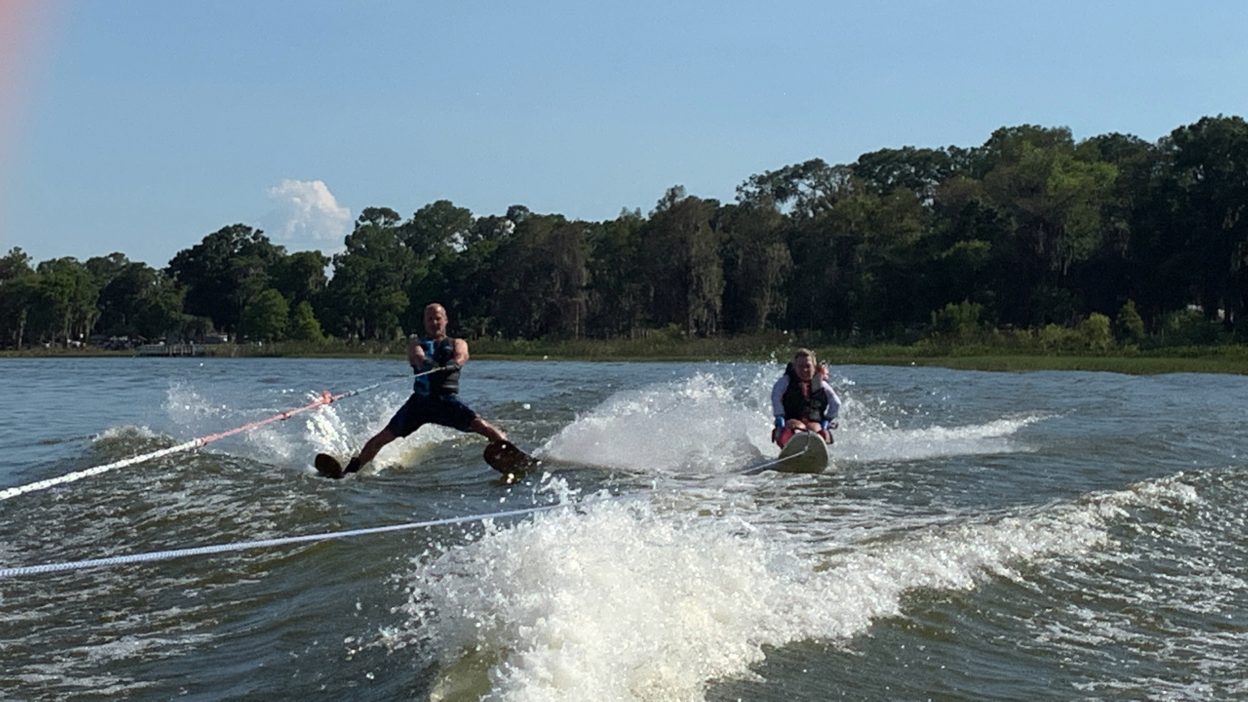
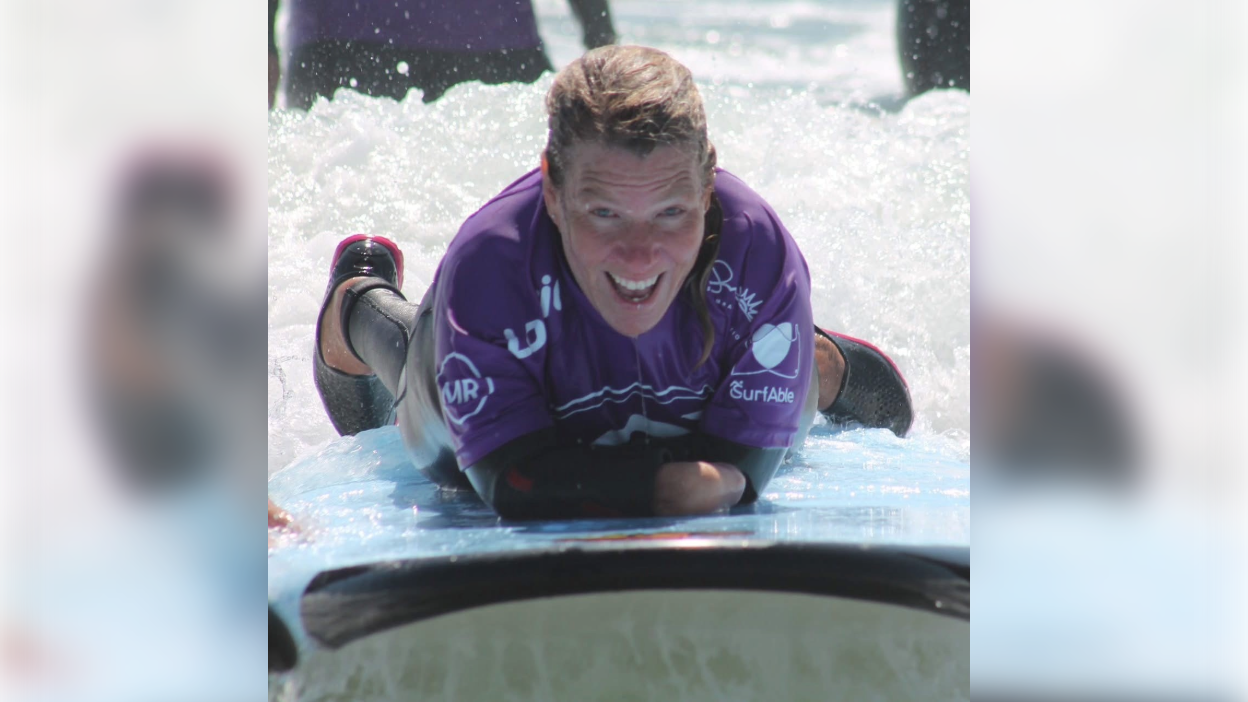
She skis. Surfs. Water-skis. Works. Travels. Advises. Leads.
Her life motto is “I can do anything; it just might take me a little longer. I am unstoppable.”
The Barriers Others Miss
That “little longer” is where most of the world reveals itself. Because the time, effort, and energy are currency when you’re navigating spaces never designed with you in mind, spaces built for a narrow and out-of-date idea of who belongs.
Michelle has learned to measure environments not just in inches and degrees, but in effort. How much it takes to open a door. To cross a threshold. To move through a building that hasn’t considered you. And once you start measuring like that, you don’t stop.
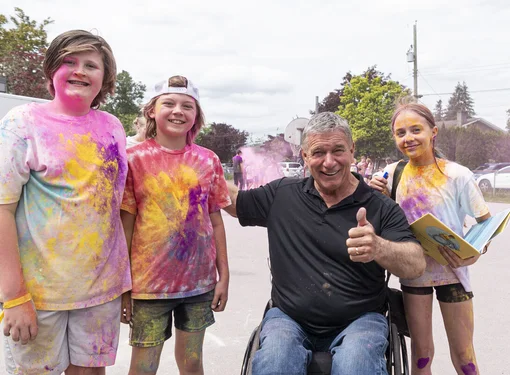
On a recent visit to Ottawa, Michelle spotted Rick Hansen on Parliament Hill. She flagged him down and reminded him they met years earlier in her hometown of Halifax. Then, without missing a beat, said: “I’m YOU certified.”
They both laughed and posed for a photo. Michelle is, in fact, a Rick Hansen Foundation Accessibility Certification™ (RHFAC) Professional, which means she has the skills to assess buildings and sites for accessibility through the RHFAC measurement tool.
In her role as Accessibility Officer at Kings University College, she applies that lens every day. It’s a historic campus, with all the constraints that come with old buildings. But this is where Michelle excels, finding the small fixes that make a big difference.
Once a month, she walks the campus with the facilities director. They notice barriers and plan to fix them. One day, she mentioned a door threshold to a washroom, a small lip between the two floors. It was easy to miss and easy to trip over. It was reported to facilities and was removed.
“The next time I went downstairs where that washroom was located, that threshold was gone,” she said. “I just stood there and thought, ‘this is amazing.’”
The door threshold was just a little thing, and its absence may not have been noticed by many. But that’s the key to accessibility, when it’s done well it’s invisible. It becomes part of the space instead of a feature of it.
Beyond her workplace, Michelle has assessed women’s shelters across Nova Scotia, translating lived experience into practical change. Beyond auditing spaces, she helps organizations understand what meaningful access looks like, even when certification isn’t on the table. One of the homes she was asked to assess only had stairs at the entrance.
“I said I can’t do it,” Michelle recalled. “If there’s no accessible entrance, it’s not accessible. What’s the point?”
Nova Scotia’s Accessibility Journey
Nova Scotia plays a role in this story. It is one of the oldest provinces in the country, rich in history and character, and is also shaped by an aging population and a higher prevalence of disability than the rest of the country with nearly 2 in 5 people having a disability, compared to the national average of 1 in 4.
That reality is felt in everyday ways. A provincial government poll shows that people encounter several barriers, including winter conditions that make sidewalks impassable, public transportation that doesn’t quite connect, and community spaces that are technically accessible, but not usable in practice. That same poll shows that people want better—71% of Nova Scotians say accessibility is very important to them—but the built environment, health care access, and persistent attitudinal barriers continue to exist. (Source: Government of Nova Scotia, Disability Statistics poll 2024 https://accessible.novascotia.ca/about-disability-nova-scotia)
What emerges is a province that understands the urgency of accessibility, even as it wrestles with the complexity of getting there.
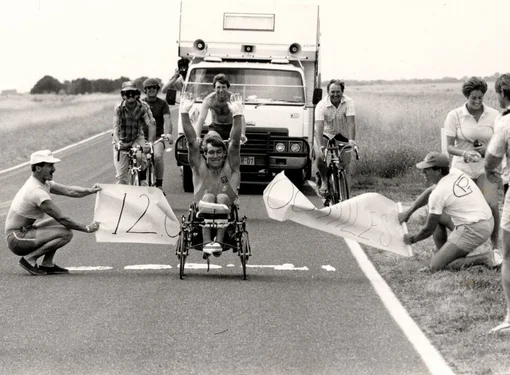
And yet, Nova Scotia has also been a quiet catalyst for change. In the wake of the Man In Motion World Tour, communities here were among the first to organize, formalizing Access Awareness Week in 1987 —the same year the Tour concluded — long before it became National AccessAbility Week. That early leadership still echoes today in the province’s commitment to becoming accessible, with legislation, standards, and public engagement pushing the work forward.
Michelle is part of that momentum, contributing her lived experience to transportation standards and broader policy conversations. She knows the goal of an accessible Canada by 2040 is ambitious. But she also understands that change here, as everywhere, is cumulative. It happens in thresholds removed, in doorknobs replaced with levers. In design decisions that include accessibility in the planning stages.
“It can’t be done in a day,” she said. “If we all do a little bit every day — that’s how it happens.”
The Need to Remove All Barriers
There are the barriers in the built environment. And then there are the barriers created by people’s attitudes.
For example, when Michelle gets into her sit-ski on top of the mountain, she has no problem chatting with and answering questions from curious children. She revels in their expressions when she tells them that “yes, I can even drive a car!” It’s others, well-meaning adults who exclaim, “Look at you!” Michelle gently pushes back with: “Well, I’m doing exactly what you’re doing - just differently.” Michelle doesn’t want to be inspirational, at least not in the way people often mean it.
While ramps, tripping hazards, automatic doors all matter, the work is accepting that every individual is different. It’s understanding that accessibility is a mindset. It’s a willingness to ask what someone needs to fully participate and design for that from the start.
It’s the difference between being able to enter a space and being excluded from it entirely. And eliminating that gap is a job that belongs to all of us.
“It’s not just my responsibility,” Michelle often reminds herself. “Everyone has a part to play.”
On Parliament Hill, in that brief, joyful moment with Rick, Michelle’s “I’m You-certified” was a nod to belonging and progress. And what’s possible when we decide, collectively, to do better.
The work to become an accessible country takes intention, expertise, and sustained effort. By supporting RHF, you help remove barriers, advance inclusive design, and create spaces where everyone can participate fully. Please consider making a gift today.