Celebrating International Women’s Day

Collinda Joseph
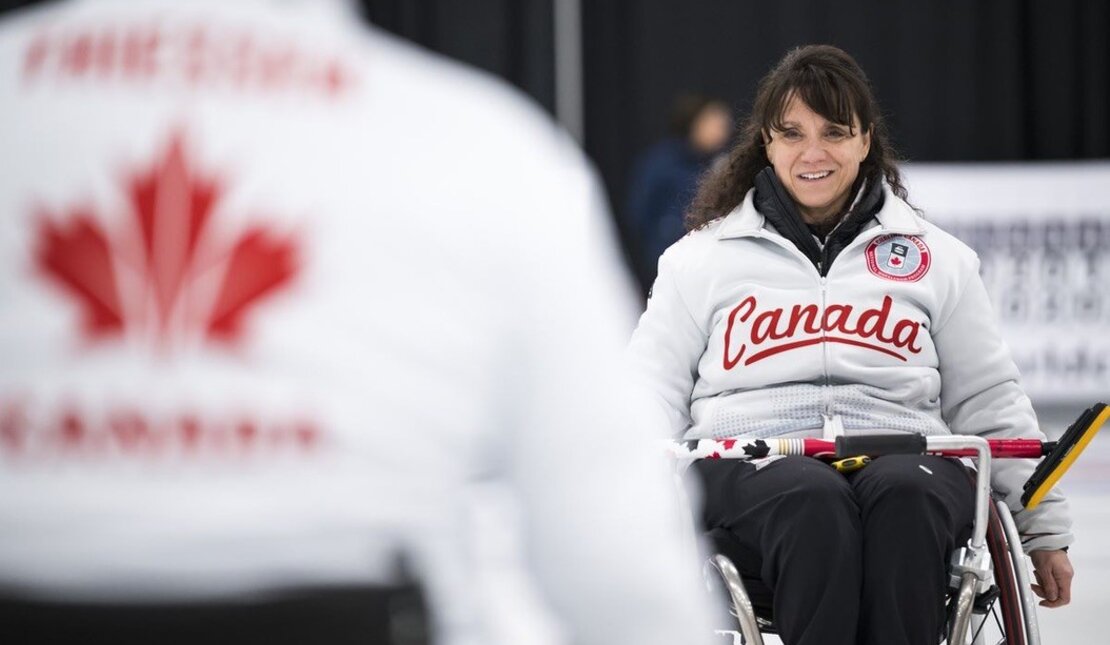
On March 7, 2026, Collinda Joseph will compete in her first game of the Milano Cortina Paralympic Winter Games, seated at one end of the ice, focused on the narrow line where intention meets physics.
The following day, March 8, is when the world marks International Women’s Day.
The timing is fitting. Wheelchair curling is a sport without sweeping, without last-second correction. Once a stone leaves an athlete’s hand, there’s no rushing in to fix what’s gone slightly off course. You release, you watch, you live with the result. Progress, in curling and elsewhere, is rarely dramatic. It’s precise. It’s patient. And it’s built over time.
Collinda knows this well. Before she ever touched a curling stone, she was a competitive diver growing up in Ottawa. At 18, a train accident in France caused a spinal cord injury and abruptly changed the trajectory of her life. What followed was a long period of recalibration that included introductions to sports: wheelchair tennis, skiing, track and field, and wheelchair basketball in which she competed for 15 years.
Basketball was fast and physical, but over time it began to take a toll on the shoulders. So, when a local curling club hosted a “Give It a Go” event, Collinda decided to try something new.
“I instantly fell in love with the sport,” she said.
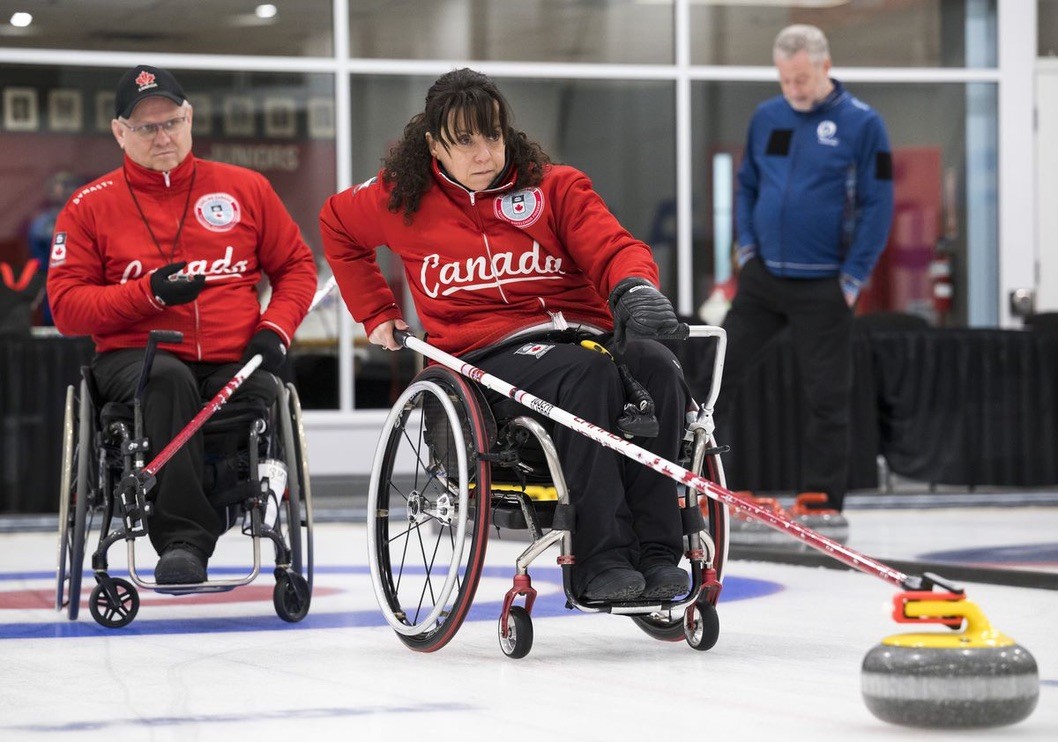
Wheelchair curling looks quiet, even restrained, but it is relentlessly exacting. Athletes throw from a stationary position. There is no sweeping. Every micro decision made around weight distribution, line, release must be exact from the start.
“You’re just watching the rock go down the ice thinking, ‘oh no, that’s not going to make it,’” Collinda laughed. “There’s a lot of swearing.”
Over time, the sport taught her something she didn’t expect; patience, and a kind of self-forgiveness she didn’t always have.
“Mistakes happen,” she said. “It took me a long time to really understand that, and to be okay with it.”
That mindset carries beyond the ice. Off it, Collinda has spent more than 30 years working in accessibility, including senior roles at Accessibility Standards Canada and the National Research Council. Her work has focused on shifting standards development away from bare minimums and toward best practices, particularly in the built environment. (Collinda will presenting at the APN: Inclusive by Design conference March 30 – 31, as part of a panel discussion called From Standards to Homes: Accelerating Accessible Housing Across Canada.)
One of the most significant changes she’s witnessed has been structural. At Accessibility Standards Canada, technical committees must include at least 30 per cent people with disabilities, ensuring that those most affected by the built environment help shape how it’s designed.
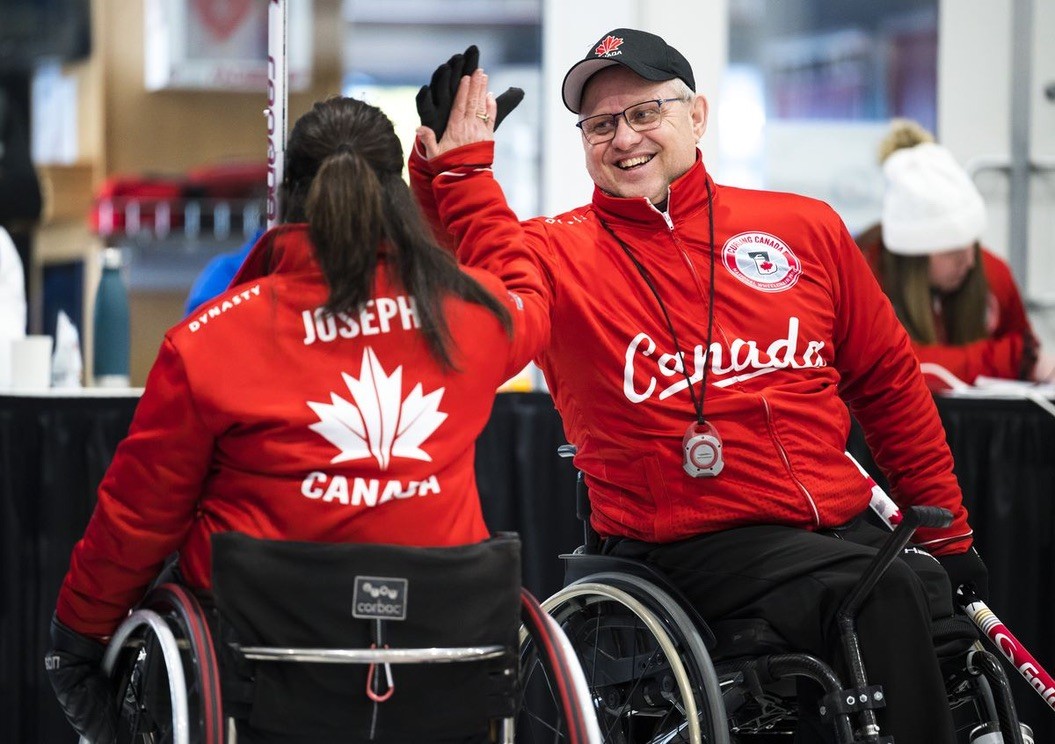
“For a long time, standards were built around able-bodied men,” Collinda said. “Reach ranges, heights, assumptions about movement don’t reflect women, and they don’t reflect people with disabilities.”
Her work often involves slowing conversations down, explaining why a half inch matters, why an “almost accessible” doorway isn’t accessible at all.
“I’m much more tolerant of mistakes on the ice than I am of a lack of accessibility,” she said.
As Team Canada takes to the sheets at Milano Cortina, Collinda described the familiar mental swings of elite competition around confidence giving way to doubt, then back again. The Canadians are ranked second in the world, drawn from athletes across the country, shaped over years of selection and training.
“We have the potential to be number one,” Collinda said. “But it really comes down to sticking with the process, one game at a time.”
It’s a philosophy that mirrors her work in accessibility, and perhaps the truth behind International Women’s Day itself: systems change when women show up, speak up, and commit to the long game.
Vasharna Thangavel
Vasharna Thangavel is a Health Sciences student at Western University, with ambitions that stretch toward medicine, research, and healthcare. She’s also a member of the Rick Hansen Foundation (RHF) School Program Youth Leadership Committee, where she works alongside other young advocates focused on accessibility, inclusion, and disability justice.
This year, committee members are collaborating on an e-magazine designed for students in grades three to six — an accessible, age-appropriate resource that introduces concepts like allyship, universal design, and disability inclusion early, before stigma has a chance to calcify.
That focus on early intervention isn’t accidental for Vasharna.
Growing up, she witnessed the everyday realities and quiet exclusions faced by a parent with an invisible disability. Even as a child, she felt the weight of explaining things others took for granted: why her family used accessible parking, why disability didn’t always look the way people expected.
“When you’re young, those conversations are hard,” she said. “And often, you’re on your own.”
Rather than turning away from that discomfort, Vasharna began to work toward changing it. In high school, she created a braille resource for a school project, then sought out the communities where it could be used, eventually volunteering at Toronto’s Holland Bloorview Kids Rehabilitation Hospital. It was there that she became more familiar with RHF and joined the Youth Leadership Committee.
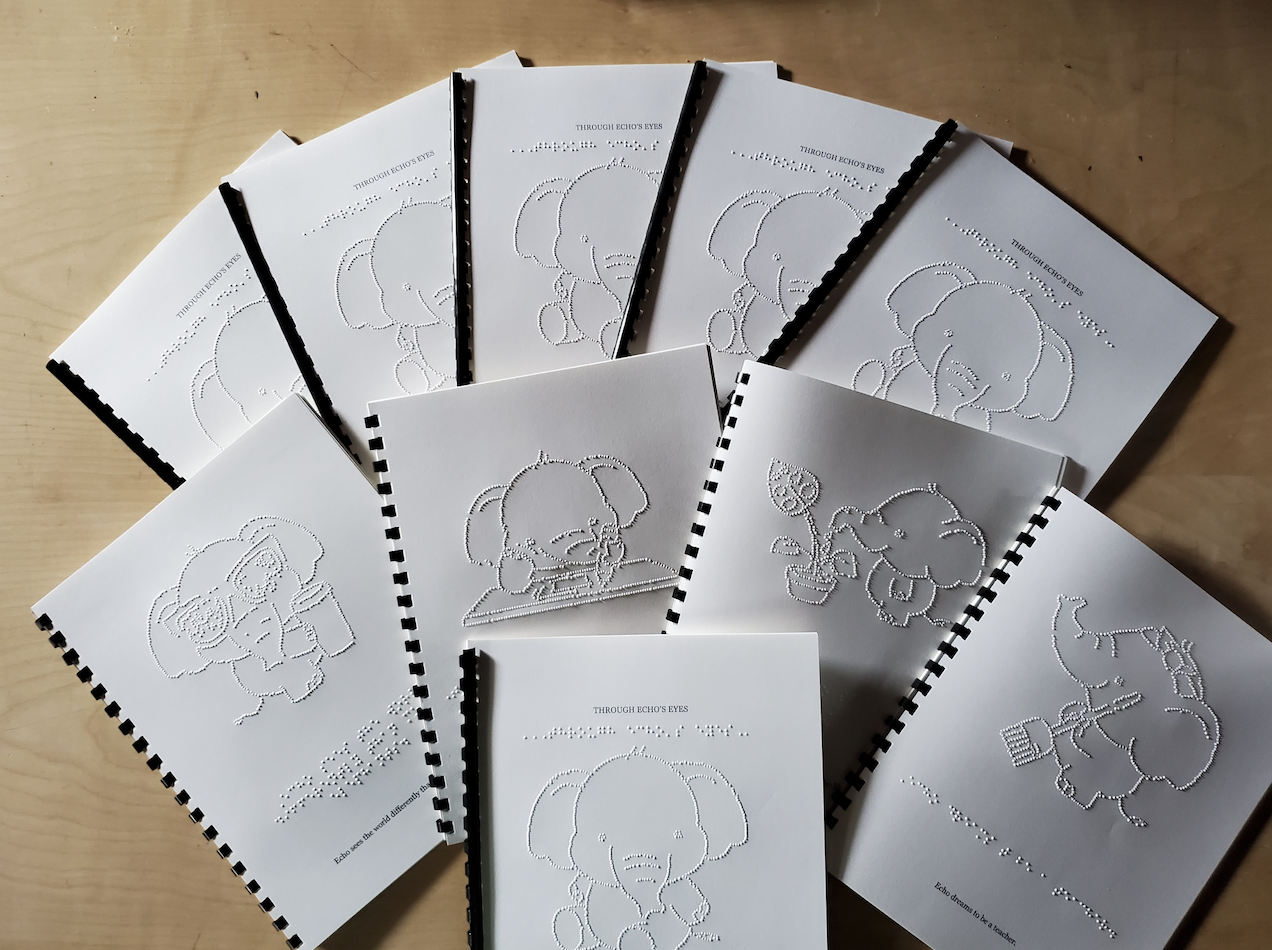
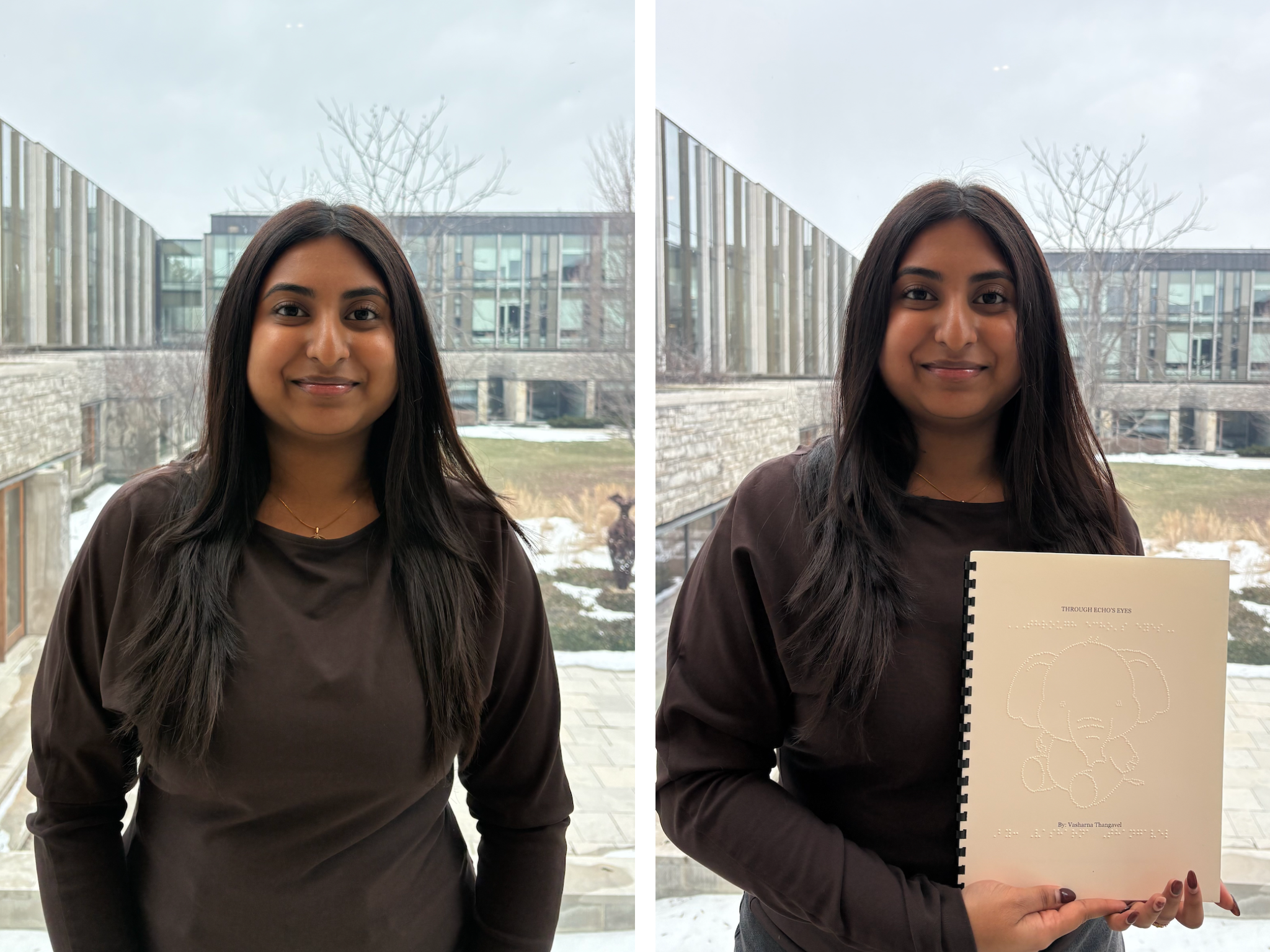
Her children’s book, ‘Through Echo’s Eyes,’ grew from the same impulse wanting to educate kids early, when ideas about difference are still forming. Publishing the book came with its own challenges, particularly around braille standards and production, but Vasharna persisted, donating copies to local schools and children’s hospitals and directing proceeds back into the organizations that supported the work.
At university, she’s seen both progress and gaps. She’s served on Western’s accessibility committee, helped advance peer note-sharing programs, and advocated for low-sensory options during orientation and campus events. Awareness is growing, she said, but accessibility is still too often treated as optional.
For Vasharna, International Women’s Day is about imagining what comes next.
An inclusive future, she believes, is one where difference is the norm, and where young people learn early that access is not a special accommodation, but a shared responsibility.
“There isn’t any problem that’s too big to be solved,” she said. “You just have to start at where you are.”
Erica Scarff
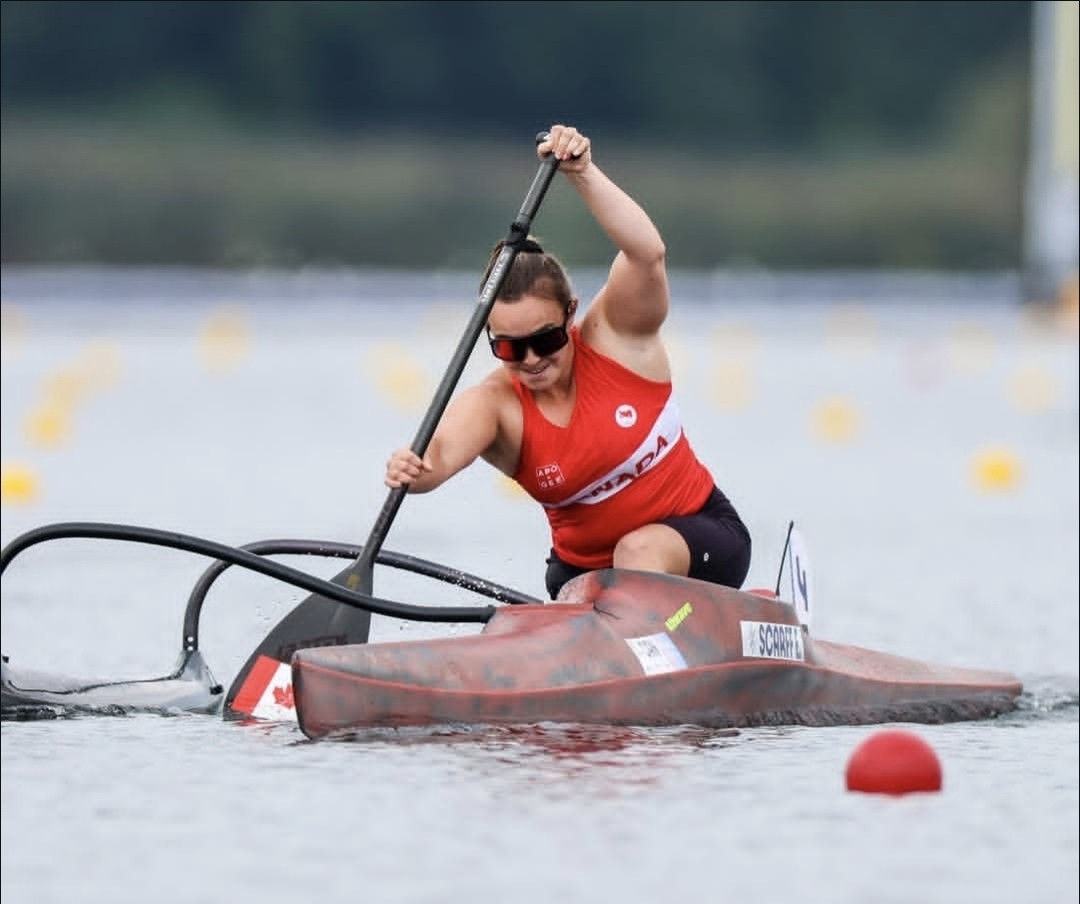
It wasn’t a talent pipeline or a national program, Erica Scarff’s introduction to Para canoe came through a chance encounter at a prosthetics clinic. While waiting for her appointment, she met a coach who invited her to try kayaking. Had that meeting happened on a different day or even a different time, Erica’s path might have looked quite different.
Erica grew up in Mississauga and was a competitive gymnast as a child. At 12, she was diagnosed with osteosarcoma, a rare bone cancer – the same cancer Terry Fox had. The diagnosis, and the amputation that followed, ended her gymnastics career, and reshaped her sense of what the future might hold.
Like many young people who acquire a disability, Erica didn’t immediately see what was possible. She didn’t know the Paralympics existed. She didn’t see women like herself in high-performance sport. It took time and exposure for new possibilities to come into focus.
She made her Paralympic debut at Rio 2016 at just 20 years old, finishing sixth in Para kayak. Momentum followed, then abruptly stalled. In 2018, Erica was hit by a car in a pedestrian accident, suffering serious injuries that sidelined her from sport and altered her daily life. She missed qualification for Tokyo 2020, a setback that forced another recalibration.
What followed wasn’t a straightforward comeback to elite sports. When Para canoe events in her classification were officially added to the Paris 2024 Paralympics, bringing gender parity to the sport for the first time, it opened a door that hadn’t existed before. Erica made the switch from kayak to canoe, embraced the steep learning curve, and qualified for Paris with a silver medal at the 2023 World Championships.
Looking back, she described Paris as a step forward for women coming up behind her. “That visibility matters,” Erica said. “It changes what people imagine for themselves.”
Now an RHF School Program Ambassador, Erica is eager to speak directly to students, especially girls with disabilities who may not yet see themselves reflected in sport, leadership, or public life.
When she was young, she added, role models like Terry Fox and Rick Hansen mattered, but she longed to see someone closer to her own age, someone living the reality she was navigating in real time.
“If you don’t see it, it’s hard to dream it,” she said.
For Erica, her wish for International Women’s Day is making sure that more young people know what’s possible so that fewer futures hinge on chance encounters.
Whether through sport, advocacy, or early education, each of these women is helping shape a world where access is expected and possibility is shared.