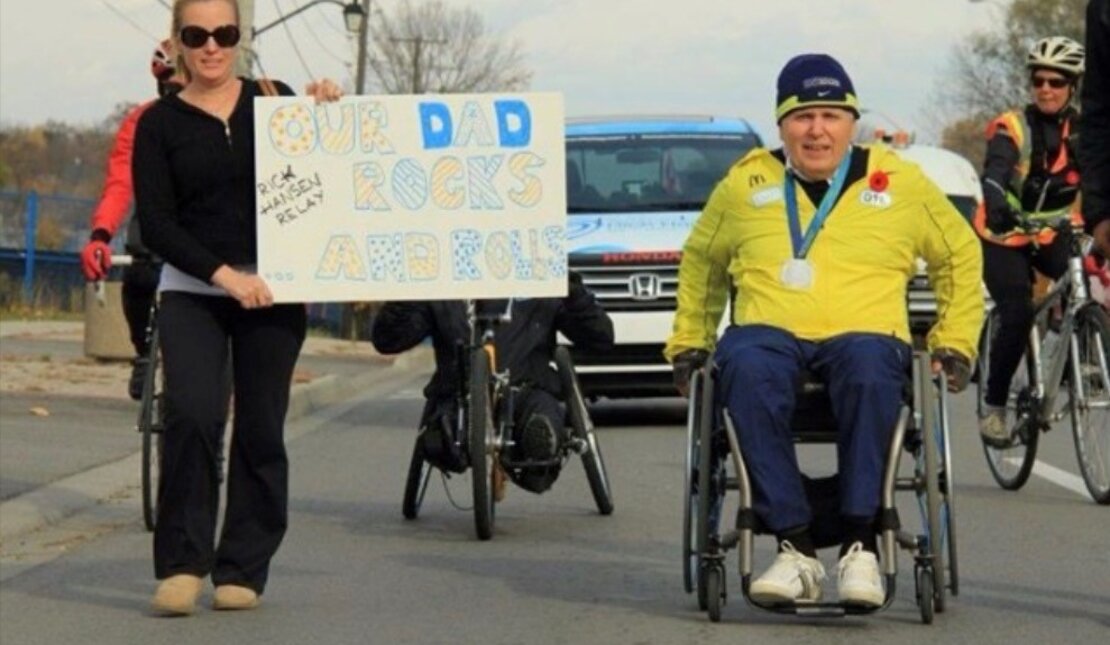
A Life Dedicated to Movement

Carl Hennum has spent most of his life thinking about movement – in how people get from one place to another, and what it takes to make that possible.
For forty years, his career with Ontario’s Ministry of Transportation revolved around that question. As assistant deputy minister, he oversaw the building and maintenance of Ontario’s highways, along with ferry operations and remote airports. It was movement at scale and, when it worked well, people didn’t think about it at all as they moved seamlessly through the province.
Then, in July 2006, everything changed.
Carl was sixty-five and newly retired when he fell from a low roof while cleaning siding on his home. The accident left him paralyzed from the waist down. After decades of thinking about distance in macro terms; suddenly it became micro – the space between a doorway and a dining table, a curb and a sidewalk, an entrance, and a sense of belonging.
Movement became personal: the difference between participation and being left out.
A New Way of Movement
Rehabilitation was a strange kind of equalizer for Carl. In the hospital, everyone around him used a wheelchair. Everyone was going through the same thing. But when Carl returned home, he became something else entirely: the only wheelchair user he knew. In the city where he lives, he went from blending in to standing out. And that shift was difficult.
Still, Carl considers himself fortunate. He had already had a career, a family, and a good life. His home is now accessible, and he can move between rooms, enjoy his patio, and live fairly independently. But once he leaves his house, barriers quickly appear. Friends, family, and even strangers often help him navigate.
“The restaurants we visit improvise,” Carl said. “I’ve entered more than a few through the kitchen. If you ever want to know how clean a restaurant really is, ask someone in a wheelchair.”
While people are often willing to help, Carl pointed out that assistance isn’t the same as access. Good intentions don’t replace good design.
That’s why the work of the Rick Hansen Foundation (RHF) matters so much to Carl.
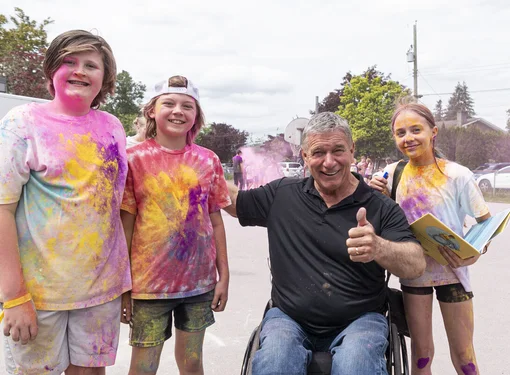
Through the RHF School Program, young people learn early that disability is part of the human experience. When children grow up understanding accessibility, empathy becomes instinctive. Inclusion becomes normal. That kind of learning shapes how communities function in the future.
And through RHF Accessibility Certification™ (RHFAC), accessibility becomes measurable. It becomes something you can assess, improve, and get right for the 1 in 4 people in Canada with a disability. RHFAC gives building owners, designers, and communities a shared language to understand where they are and where they need to do better.
“That matters not just for people like me, but for the younger people I met in rehabilitation, people just starting out,” Carl said. “Accessibility gives them a chance to pursue careers, build relationships, and live social lives that aren’t constrained by barriers.”
Carl didn’t expect to keep learning about movement after retirement. But once you need accessibility, you see immediately how essential it is to embed it into our communities from the start, he pointed out.
“After experiencing curb cuts that lead nowhere, ramps stuck in odd places, and other solutions that exist but fail in usability, I’ve learned – helped and educate others – why it is critical to consult people with disabilities when creating environments meant to serve them. “
Those experiences taught him something important: if you want spaces to work for people with disabilities, you need to involve people with disabilities in designing them.
The Importance of Staying Active
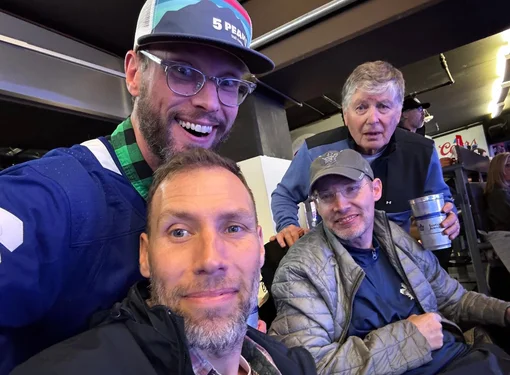
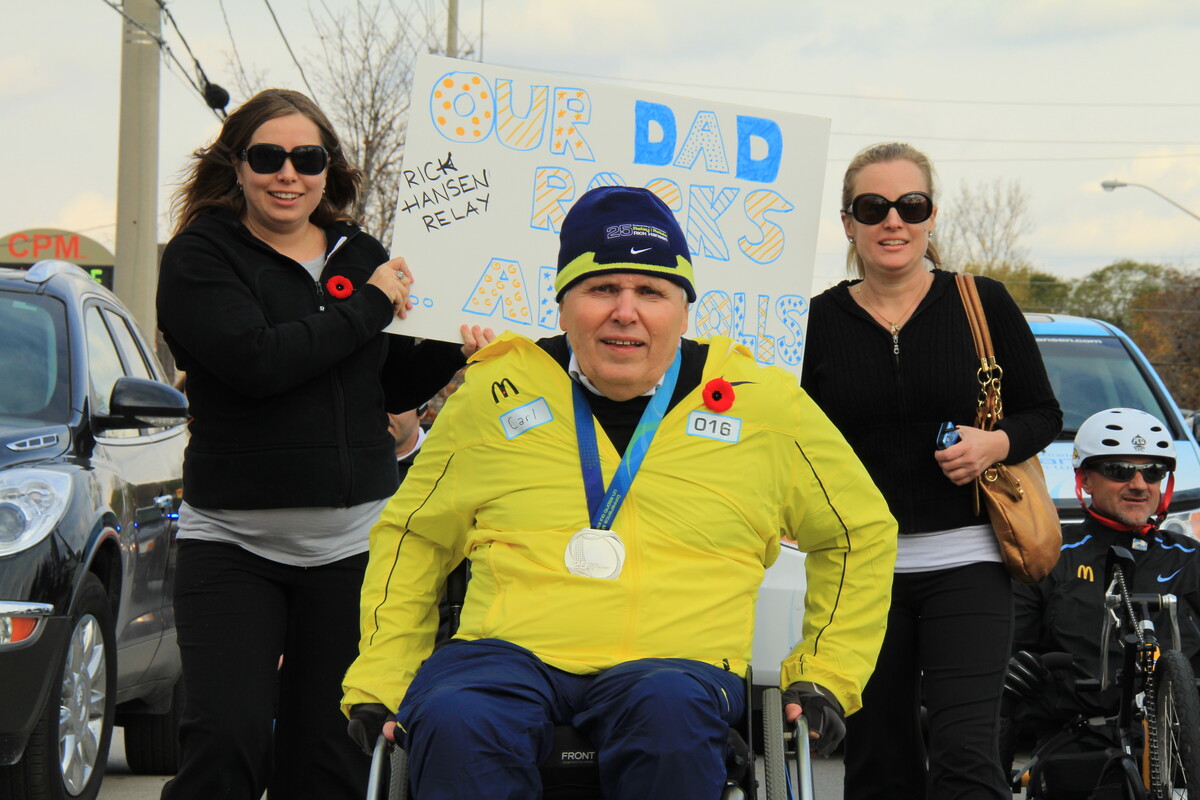
Since his injury, Carl and his family have participated in fundraisers connected to RHF. HIs daughters, Sonia and Christina, took the lead and brought him into a community he didn’t even know he was missing. One daughter lives in Idaho, the other in nearby Mississauga, but both showed up for Carl.
“Their belief in me helped me believe in myself again.”
He’s remained active since the accident. He skis. He plays tennis, golfs, and curls. He stays engaged and curious. He feels like he belongs in this world. That sense of belonging, Carl believes, is not accidental. It’s the result of awareness, education, and leadership. It’s the result of people choosing to build a world that works for more of us, he added.
At eighty-five years old, Carl still believes movement matters. But he now understands that movement is about more than getting from point A to point B. It’s really about the freedom to participate fully in community life.
When you support RHF, you’re helping create a future where accessibility is expected. Where young people grow up understanding the importance of disability equity. Where buildings work for everyone. And where no one must wonder whether they’ll be carried through a kitchen just to share a meal with friends and family.
Please consider making the gift of access today. Your donation will empower people of all abilities and ensure everyone can fully participate in life.
Thank you for being part of this powerful movement of Many In Motion.