Getting There isn’t the Easy Part

For many, transportation is background noise: you leave the house, you get to where you’re going, you complain about traffic, you forget it happened.
For people with disabilities, getting there can be the whole story. It’s an intricate braid of extra planning, extra energy, extra advocacy, and the constant mental math of what could go wrong this time. That invisible labour sits inside everyday life the way a stone sits in a shoe: unnoticed by the outside eye, but impossible to ignore for the person experiencing it.
It’s why the newly released report ‘Getting There: Accessible Transportation in Canada’, tabled under the Accessible Canada Act (ACA), lands with such force. Because even as Canada makes meaningful progress in making buildings and public spaces more accessible, people still must be able to reach them.
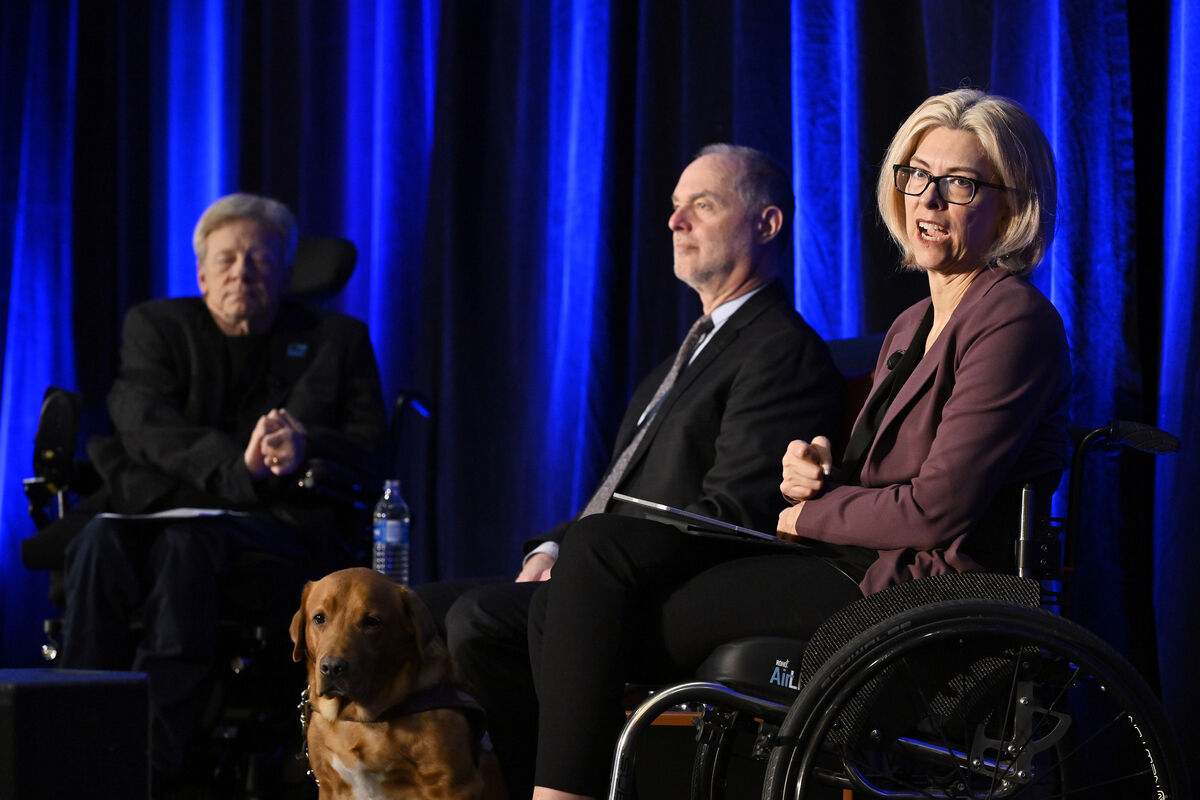
The recently published report was prepared by Chief Accessibility Officer Stephanie Cadieux and her team. “Accessible transportation is critical for the more than 27% of the Canadian population who live with disabilities,” Cadieux said in her accompanying statement released Feb. 19, 2026. “Without it, they are excluded from participating fully in society.”
Every Journey is a Chain Where Every Link Matters
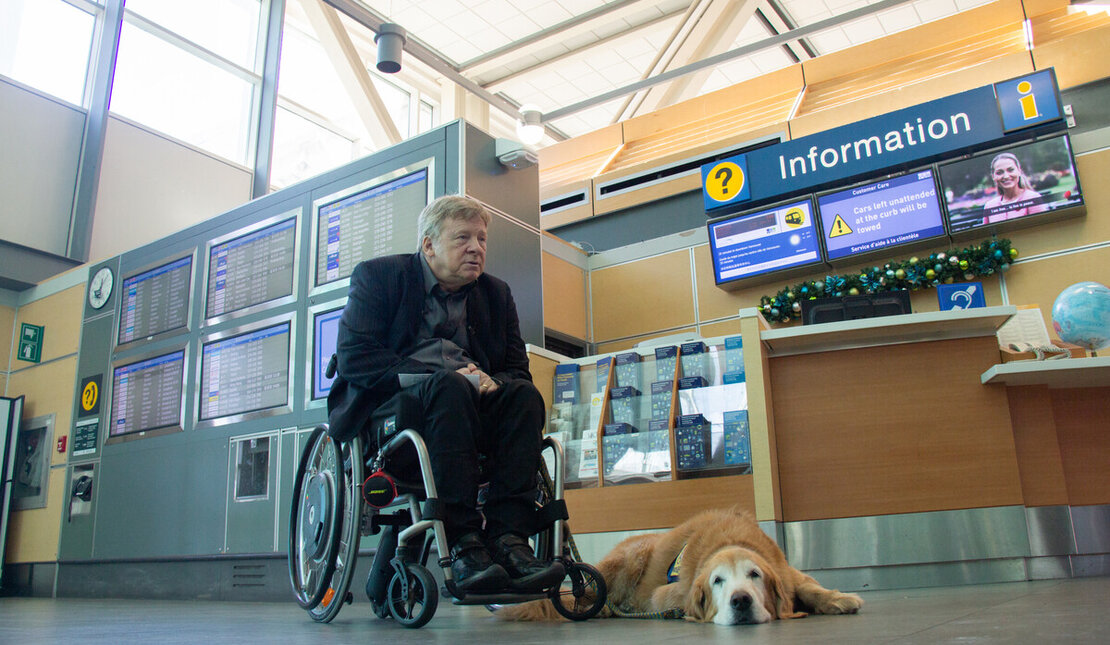
The report is built around the idea that travel comprises the entire journey from booking a ticket, navigating a terminal, hearing (or seeing) announcements, finding a safe drop-off, accessing a bus stop, locating an elevator that actually works, and interacting with staff when something changes fast.
Because travel crosses jurisdictions – municipal, provincial, territorial, federal, international – a journey can be accessible in one segment and impossible in the next. A flight may be “accessible” on paper but then impossible if there’s no reliable accessible taxi, or if a bus stop at the airport is cut off by construction, or if signage is nowhere to be found.
However, the report is candid about progress made.
Canada is a leader in some areas of accessible transportation, including the One Person, One Fare policy for domestic travel (an extra adjacent seat at no extra cost when needed for disability-related reasons, such as travelling with a support person or dog).
Practical improvements across air, rail, marine, and public transit systems are highlighted. Specifically, efforts to improve the handling of mobility aids; new guidance and training tools; accessibility standards and research being developed; and airport initiatives designed to increase independence and reduce stress for travellers with disabilities. Some companies are continuing to build their service capacity. For example, Yellow Cabs in Vancouver has 63 accessible taxis, making up 15% of its fleet.
The report also points to a broader cultural shift that’s beginning to take hold: accessibility isn’t only the job of transportation providers. Under the ACA, federally regulated organizations are expected to identify, remove, and prevent barriers in their own context even if they aren’t airlines, rail companies, or ferry operators.
Where the system is still failing people
Now for the hard truth: too many Canadians with disabilities are still encountering barriers. In some places it is unclear whether transportation is more accessible now than when the ACA came into force, partly because meaningful data to measure progress is not being collected.
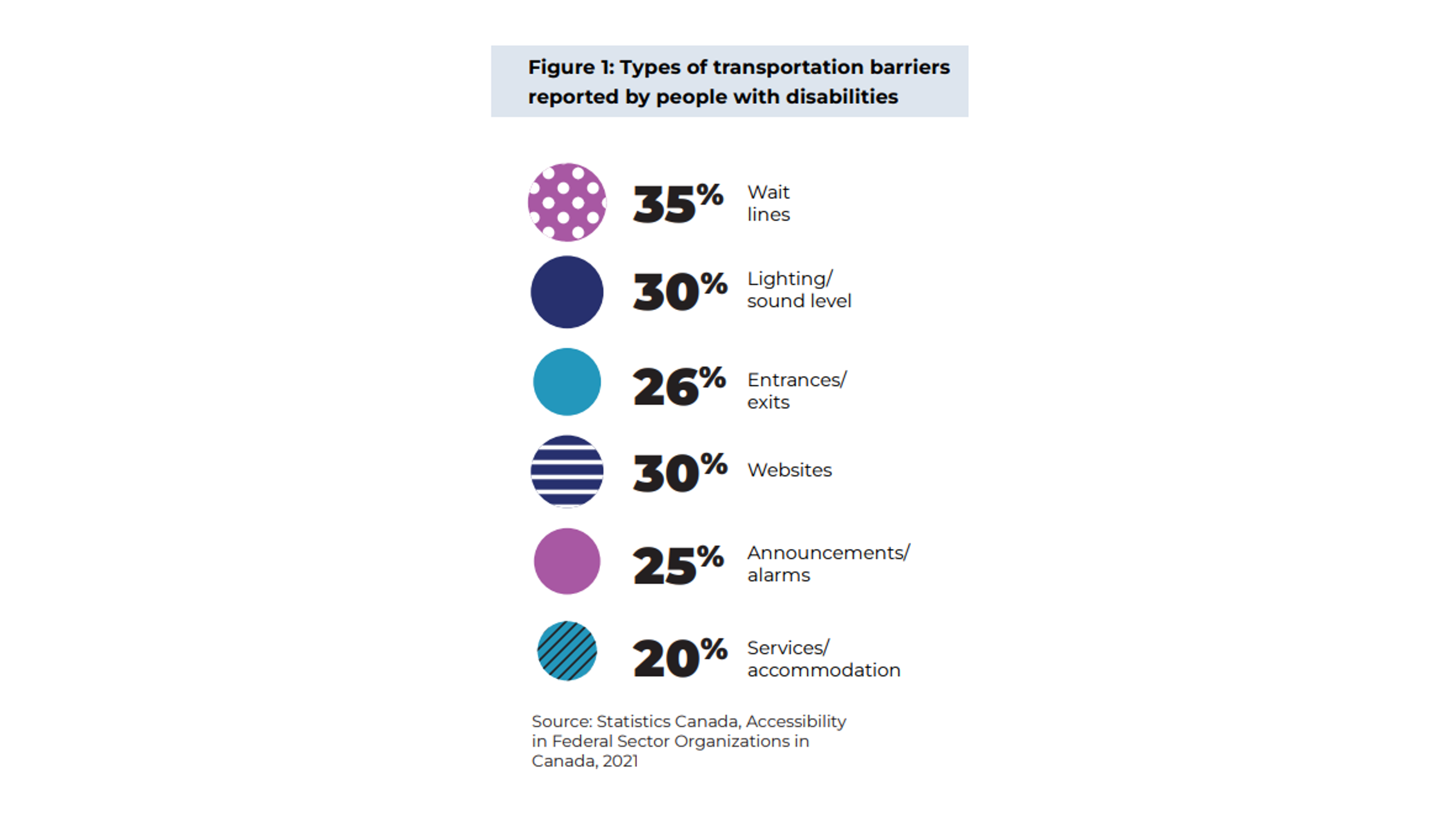
The numbers are sobering: A 2021 Statistics Canada survey found that 63% of people with disabilities encountered a barrier when using federally regulated transportation. Barriers were reported the most with hearing difficulties (78%), physical difficulties (74%), seeing difficulties (72%), cognitive difficulties (68%), and mental health-related difficulties (61%). Examples of barriers reported included long wait lines, including lack of accessible seating and alternative service options, or line queues (35%), websites for reservations and travel information (30%), lighting or sound levels (30%), entrances or exits (26%) announcements or alarms (25%) and level of service or accommodations (20%).
As David Dame, Senior Director of Human-Centered Design & Product Accessibility at Microsoft, wrote: “Transportation is the hinge between independence and isolation. Accessible transportation is not about convenience. It's about participation. It's the difference between showing up at work or staying home, attending a wedding or sending regrets, living fully or living confined. When transportation works, it unlocks employment, healthcare, and community. When it doesn't, the world gets smaller fast. It costs all of us."
The report also identifies “thin spots” where the journey breaks down most often: limited availability of accessible taxis and frequent ride refusals; inconsistent accessibility training; inaccessible information and communications; confusing wayfinding; aging rail and marine infrastructure; and misalignment between accessibility regulations across jurisdictions.
When accessible transportation is unreliable, everything downstream is affected, including employment, education, healthcare, social life, even the basic ability to be spontaneous.
As senator Chantal Petitclerc noted in the report: “People with disabilities want to be active. They want it to be easy. They don't want to be spending hours and days booking transport. They want to be able to be spontaneous… Everyone has a role to play, but we must always ensure that people with disabilities are at the center of decisions and at the heart of the work.”
What Needs to Happen Next
The report’s recommendations are practical and point to a shared responsibility that includes government, industry, and everybody who designs systems, services, and spaces:
Coordination across jurisdictions so the entire travel journey works, door to door, and not in isolated pockets.
Better data collection and transparency, including stronger public reporting so that progress and target fixes are tracked.
Meaningful accessibility training created with and by people with disabilities and taken seriously by front-line staff and leadership – such as the training offered by the Rick Hansen Foundation (RHF).
Investment in accessible infrastructure, especially in rural and remote communities where options are already limited.
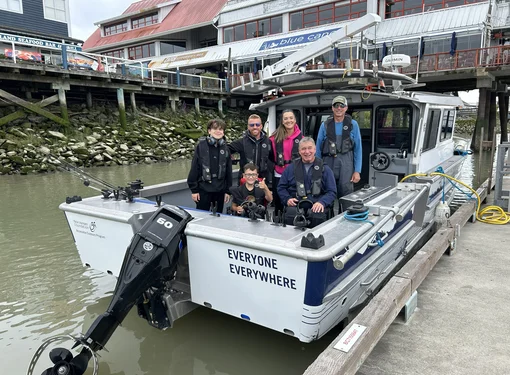
The report also insists on something that shouldn’t be radical: accessibility can’t be treated as optional, or as a “nice-to-have” that slides down the priority list when budgets tighten or attention shifts elsewhere. Investment in infrastructure is key. (For instance, there are more than 180 ferry routes across all provinces and most territories in Canada, accounting for 60 million rides yearly. Like trains, ferries rely on infrastructure that is aging, such as docks, terminals, and vessels.)
A Starting Point to Make Access Real
Accessibility must be embedded, measured, improved, and maintained over time – not treated as a static check box. With more than 1 in 4 Canadians identifying as having a disability, along with our aging population, that principle matters now more than ever.
This is the work the report points towards – and it is also the purpose of RHF Accessibility Certification™ (RHFAC), a rigorous, evidence-based program that measures and improves accessibility in the built environment so that access isn’t left to chance. Halifax Stanfield International Airport’s renewed RHFAC Gold certification is a good example of what it looks like when an organization treats accessibility as continual improvement rather than a one-time achievement.
But as this report makes clear, accessible places matter as much as the transportation that gets people to them.
The recommendation is straightforward: start where you have control. Build accessibility into planning, procurement, and policy. Prioritize training grounded in lived experience. Invite people with disabilities into the rooms where decisions are made.
Because reaching a barrier-free Canada by 2040 will take a collective effort, and it is up to all of us to make sure we get there.
The full report, ‘Getting There, Accessible Transportation in Canada’, is available at the Government of Canada’s website.