A Place to Work, a Place to Belong
For someone who has spent months or years looking for work, a job offer can bring relief, hope and the chance to plan ahead. It can mean having an income, contributing their skills and taking part in everyday working life alongside others.
But getting the job is only the beginning. What happens next matters just as much.
A month to look at how far we have come
October is Disability Employment Awareness Month across Canada, while British Columbia recognizes it provincially in the month of September. The month brings attention to the skills people with disabilities offer and the barriers that still keep many people from finding and keeping a job.
It also gives us a reason to pause. Are our workplaces becoming more accessible? Are people with disabilities getting opportunities to grow? How do we know whether our efforts are making a difference?
Pledge to Measure offers employers one way to begin answering these questions. Developed by Accessible Employers and operated by Open Door Group, it helps organizations track disability inclusion among employees and senior leaders. Gathering information over time helps employers understand where they stand and where they need to act.
Participation is growing. In 2026, 83 employers took part, compared with 74 in 2025. Across participating organizations, 13,143 employees shared that they had a disability in 2026, compared with 11,590 the year before. These figures show a growing commitment to measuring disability inclusion and talking about it openly.
The Rick Hansen Foundation is one of those employers. Participation in its staff survey increased between the two years. Among respondents, the share who reported having a disability rose from 36% in 2025 to 41% in 2026.
These numbers give employers information to work with, but they do not tell the whole story. More people answering a survey does not necessarily mean that barriers have disappeared. We also need to listen to what employee’s experience throughout their working day.
Access starts before the job offer
Before someone can become an employee, they need a fair chance to apply.
Imagine finding a job that fits your skills, then discovering that the application form does not work with your assistive technology. Perhaps the font size or the poor colour contrast makes the posting difficult to read. Or an interview invitation arrives, but you are unsure whether you can ask for an adjustment, or whether you can access the office building.
What should be an exciting opportunity becomes another barrier to work through.
Accessible hiring starts with clear job postings; application systems people can use and an invitation to ask for accommodations during recruitment. It also means reviewing candidates fairly and questioning assumptions about how someone speaks, moves, reads or completes a task.
The Rick Hansen Foundation offers an example. Its Work With Us webpage encourages applications from people with disabilities. Applicants can choose to share their disability in their cover letter, and those applications receive additional consideration. Human team members review applications and make hiring decisions without using AI screening tools.
For someone who has faced repeated rejection because of assumptions about their disability, being considered for their skills can restore hope. It can open a door that has felt closed for a long time.
Inclusion is felt in the working day
Once someone is hired, inclusion becomes part of daily life.
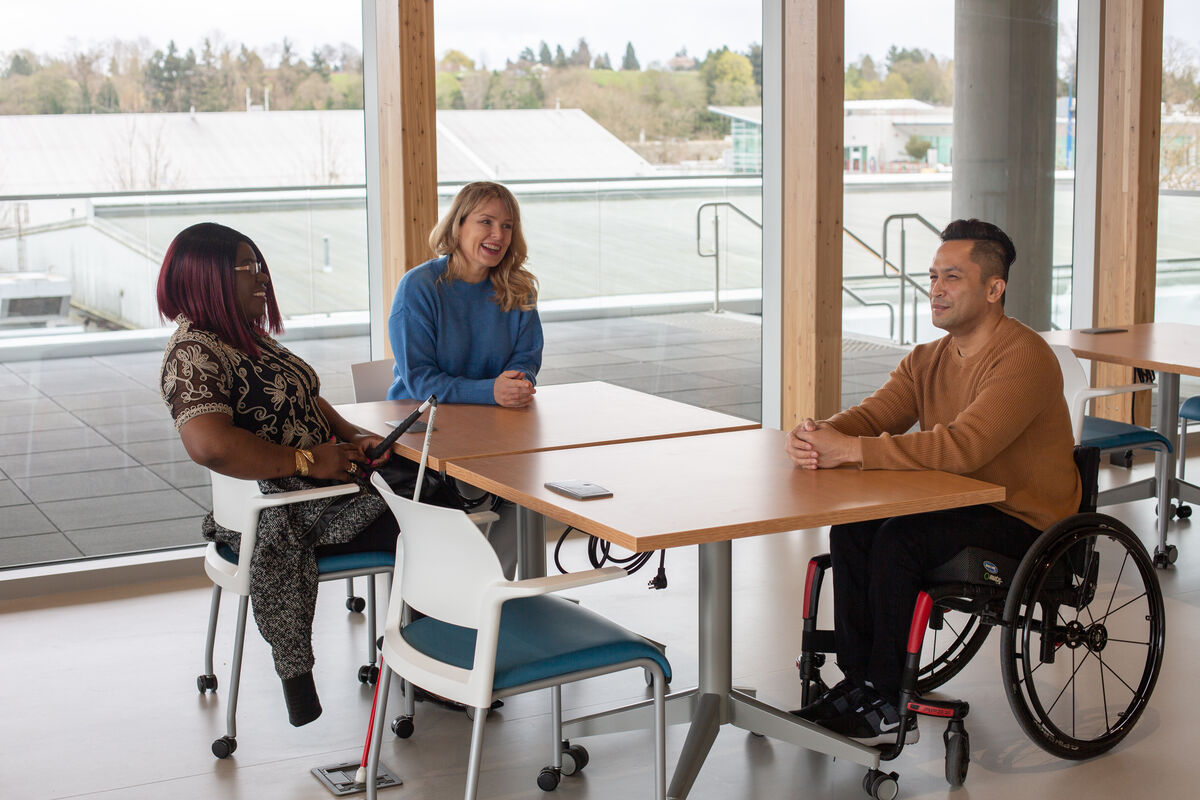
It means being able to enter and move around the office, read the documents colleagues receive and use the tools needed to complete a task. It means taking part in meetings, being heard and having opportunities to learn and grow.
It also means being able to explain a need without feeling embarrassed or worrying that you are asking for too much.
Accommodation helps make this possible. It may involve accessible software, a different document format, a change in schedule or another way of doing a task. The starting point is a conversation with the employee: What is getting in the way, and what would help?
At the Rick Hansen Foundation, the Accommodation Policy focuses on barriers in the workplace and what needs to change so a person can participate fully. It also points staff towards resources such as the Job Demands and Accommodation Planning Tool, which helps people with ongoing or changing health conditions explore support that fits their work.
I have experienced what this kind of thinking can make possible.
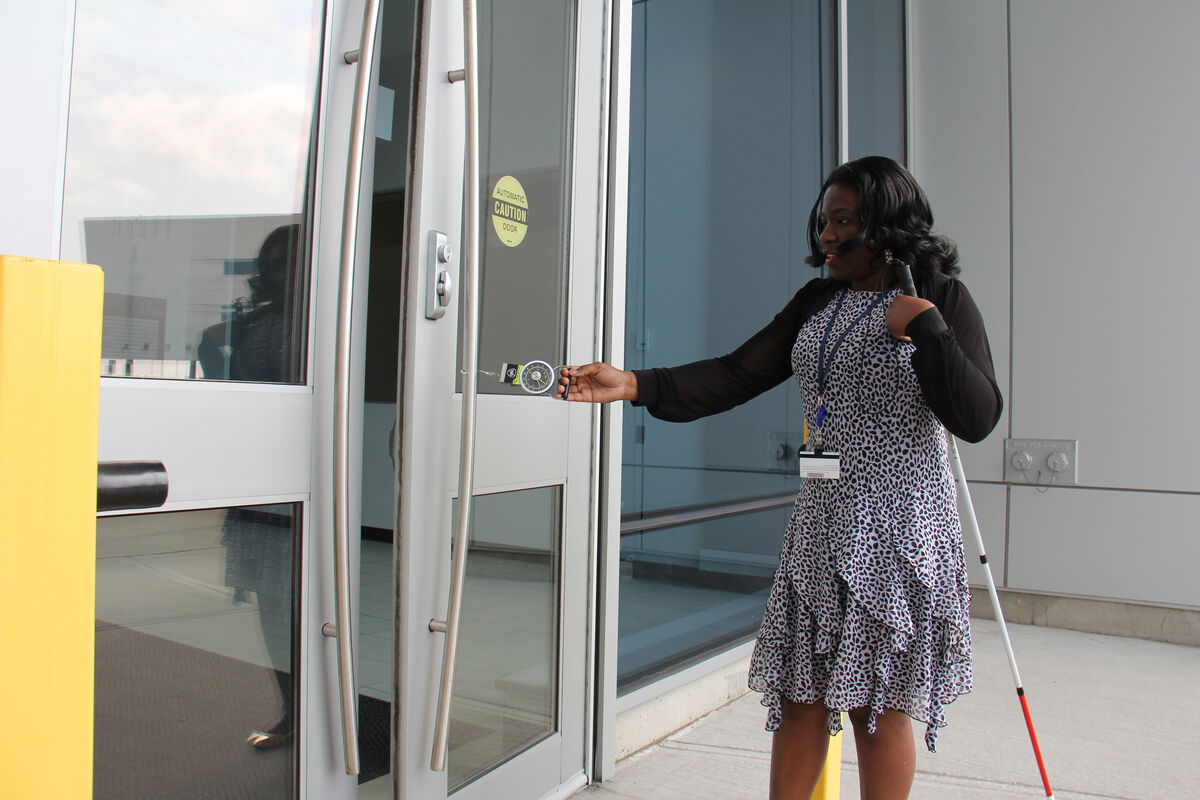
Years ago, through a job creation partnership between the Government of British Columbia and the Rick Hansen Foundation, I applied to become an Access Specialist assessing buildings and outdoor spaces. As a person who is blind, I could not complete all parts of an assessment on my own.
Instead of turning down my application, the hiring manager looked at how our team could work together. I was paired with a colleague with a mobility disability who also could not complete every part of an assessment alone. He brought extensive experience in the built environment and was skilled at presenting our services to potential clients.
Our skills complemented each other. Together, we assessed sites across the Lower Mainland. For example, I would hold the measuring tape while he read the measurements. I would position the slope reader to measure the slope of parking spaces while he read the values and took notes. He then passed the data to me, and I translated it into the reports.
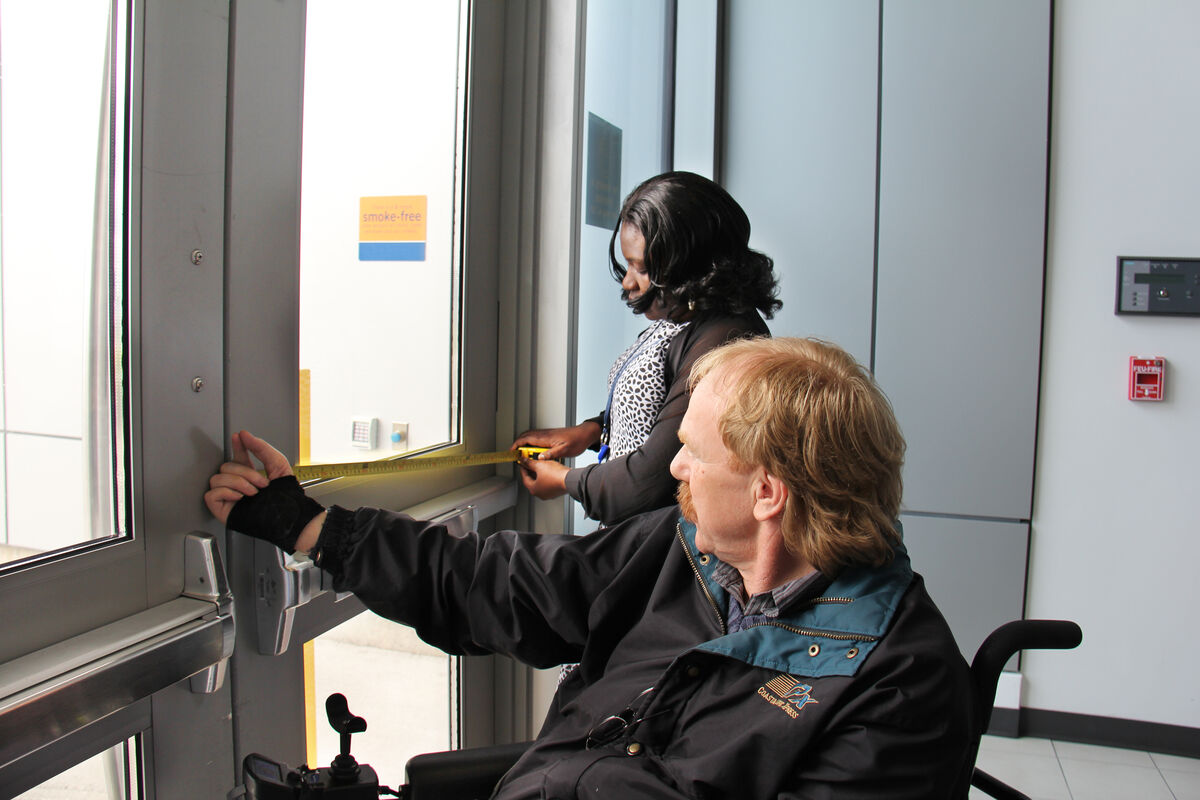
Other teams on the project worked in a similar way, sharing tasks according to their skills and access needs. The project was successful.
Had the hiring manager focused only on what each of us could not do alone, we might both have missed that opportunity. By looking at what we could contribute together, she made room for us to do the work.
That experience also shows why attitudes matter.
Some barriers are harder to notice than an inaccessible entrance or document. They appear when someone assumes a colleague cannot handle a task, speaks to someone else instead of addressing them directly, or leaves them out of an opportunity without asking what would help. These are attitudinal barriers: beliefs and behaviours that limit someone’s participation.
A workplace can have accessible spaces and clear policies, yet a person with a disability can still feel excluded. Being overlooked or having to prove your ability again and again can affect your confidence and sense of belonging. Unfortunately, this is the story of many employed people with disabilities. These barriers may go unnoticed by the people creating them, while being deeply felt by those affected by them.
This is why learning together is important. The Rick Hansen Foundation holds sessions on unconscious bias to help staff examine how their assumptions affect decisions and how they see colleagues with disabilities. Its IDEA Committee also arranges guest speakers twice a year so staff can hear different lived experiences. Inclusion & Accessibility Training is part of onboarding and mandatory for all staff, and Human Resources considers disability inclusion when reviewing policies and procedures.
These efforts give people opportunities to learn, reflect and change how they work with others. Their value is felt when a colleague listens, asks rather than assumes, and follows through on support.
Disability Employment Awareness Month invites each of us to think about our part in this work. We may review applications, organize events or share documents. Each task gives us a chance to remove a barrier.
What could we change? Whose abilities have we underestimated? What have we assumed is working without asking?
A job offer opens the door. Our everyday choices help make the workplace a place where someone can belong.