Moving Forward: Geoffrey Maguire on Finding Hope

Like many Canadians, Geoffrey Maguire thought he understood what Rick Hansen had accomplished.
He remembered hearing about the Man In Motion World Tour and knew, in broad terms, that Rick had wheeled around the world to raise awareness about the potential of people with disabilities. He knew it was an extraordinary achievement.
What he didn't fully understand at the time was the physical and mental effort involved.
Geoffrey had a busy life that revolved around movement. He coached ice hockey, ran marathons, and spent his free time on golf courses and in the outdoors. Disability was not something he spent much time thinking about because, like many people, he never imagined it would become part of his own story.
Then, in 2006, everything changed. He was diagnosed with multiple sclerosis.
Geoffrey didn’t mince words when he described how he felt when he received the news. “The biggest thing was the anger,” he said. “The anger for having lost what I had.”
The losses were tangible and immediate. Activities that had once defined his life became more difficult and, eventually, impossible. Over time, his mobility declined. By 2018, he was using a wheelchair full-time.
For Geoffrey, adapting physically was only part of what he was going through. There was also the emotional impact of losing parts of the life and identity he had known. He describes those years as a mental health battle, marked by grief, frustration, and anger. Looking back, Geoffrey figures that anger stayed with him for more than a decade.
The Book that Changed Everything
The shift happened about three years ago. Geoffrey picked up Rick Hansen’s autobiography, ‘Man in Motion’. Co-written by Rick and Jim Taylor, the book recounts Rick’s rehabilitation after the accident that left him paralyzed from the waist down, his return to competitive sports and, of course, the Man In Motion World Tour.
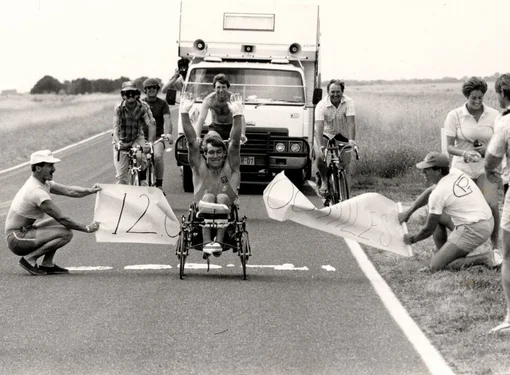
Beginning in 1985, the Tour took Rick and his team through 34 countries over two years, two months and two days, raising awareness of the potential of people with disabilities, funds for spinal cord injury research and rehabilitation, and the need to remove barriers to participation.
Geoffrey began reading more out of interest than in search of inspiration. But as he learned about Rick's early days following his injury, the gruelling demands of the Tour and the setbacks along the way, he found himself returning to the same thought: “I can't believe what this guy did.”
He also read Rick's story as someone who understood what it meant to lose mobility and reimagine a life.
“I have this newfound respect for Rick,” Geoffrey said. “To be able to dream, and act on, something as big as wheeling your way around the world, well, it really changed my perspective.”
Rick's story resonated in a way it couldn't have when Geoffrey first heard about the Tour decades earlier. Geoffrey had spent years focused on what he had lost. Now he was reading about someone who had also faced an unexpected and life-altering change and found a way forward.
“Rick had it much more difficult than I did and was able to accomplish so, so, so much more than I even dreamed of at that time,” he said.
He was equally struck by the role Rick’s wife, Amanda, played throughout the story. Having dealt with significant challenges within his own family, Geoffrey says he gained a deeper appreciation for the people who help carry us through life's most difficult chapters.
Accessibility Leads to a Better Life
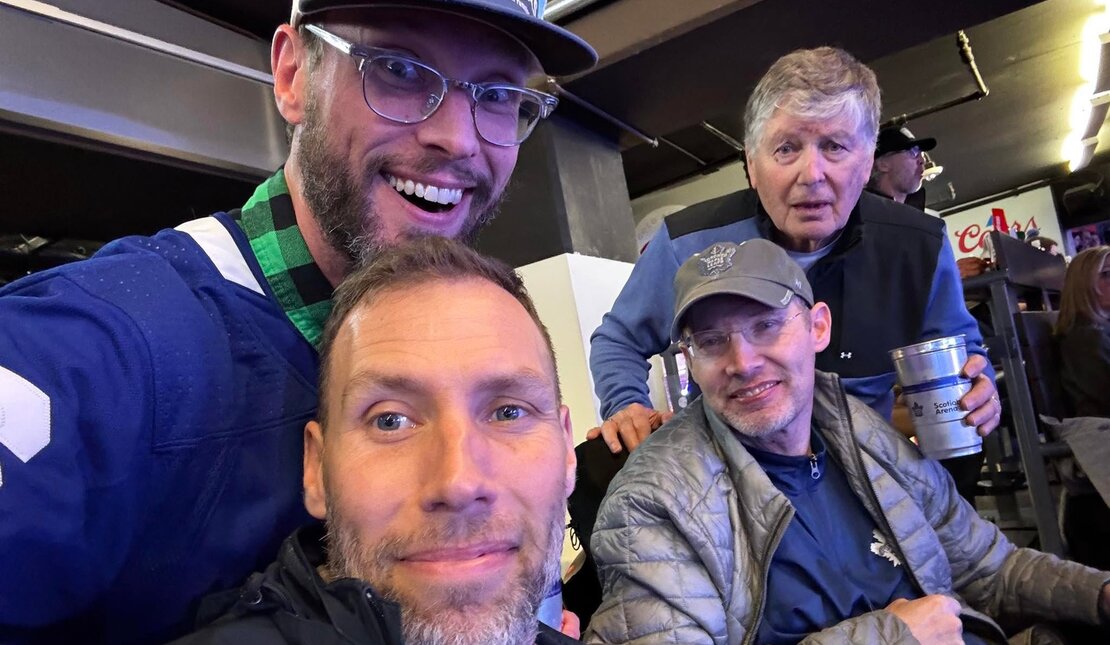
These days, Geoffrey continues to navigate the realities of life as a wheelchair user. Some of the barriers are physical, while others are less visible. Everyday tasks that many people never think about can require planning, patience and energy. Something as routine as shopping can become complicated when stores are inaccessible or when people view disability as an inconvenience rather than a reality.
But one of the biggest challenges?
“Going anywhere in my chair,” Geoffrey said.
Access to buildings, washrooms, parking lots, and public spaces continues to be inconsistent. Something as simple as a missing curb cut between an accessible parking space and a storefront can become an unexpected barrier. Even now, Geoffrey finds himself noticing barriers he once would have walked past without a second thought. Like many people who acquire disabilities later in life, he said he didn't truly understand these challenges until he began experiencing them himself.
That is one reason he supports the work of the Rick Hansen Foundation.
While legislation such as the Accessible Canada Act has helped advance accessibility in federally regulated areas, there is still much work to do. Meaningful accessibility goes beyond meeting minimum building requirements. It is about making everyday life easier, more welcoming and more inclusive for everyone.
And that, Geoffrey said, is key: “Whatever you do to make things easier is a good thing.”
It's a simple philosophy, but one that can change communities. Geoffrey's support of the Rick Hansen Foundation reflects his belief that this work matters.
And when asked what he would say directly to Rick Hansen, Geoffrey is quick to answer.
“I don't think you really have any idea what impact you've had on me. You made a huge, huge difference to my life.”
For years, Geoffrey said, he felt as though he was the only person grappling with something like this. Reading Rick's story helped change that. The challenges and barriers that come with navigating the world in a wheelchair have not disappeared, but the way Geoffrey meets them has.
Looking back, Geoffrey figures anger shaped more than a decade of his life. If there's one thing he hopes others can learn from his experience, it's this:
“Based on the mistakes that I have made, don't let anger be the thing that leads you,” he said.
Mental health challenges can affect anyone. If you or someone you know needs support, information about mental health resources and services is available through the Government of Canada website. If you or someone you know needs crisis support, call or text 9-8-8. Support is available 24 hours a day, seven days a week across Canada.