Neurodiversity Week

Our differences make us richer, stronger, and far more interesting. It is by celebrating and being curious about this individuality that we build a more inclusive and welcoming world.
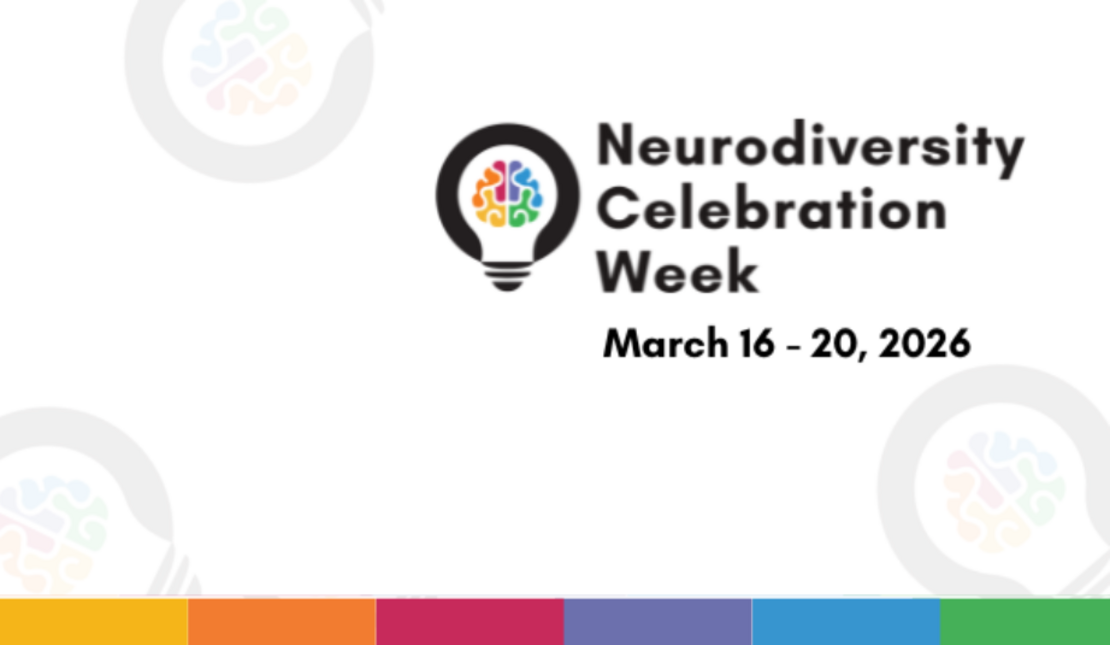
Neurodiversity Celebration Week 2026
March 16 to 20 2026 marks Neurodiversity Celebration Week. This week, we celebrate the notion that people experience and interact with the world in many different ways.
Neurodiversity Celebration Week was founded in 2018 by Siena Castellon, a young author and autism and neurodiversity advocate from Ireland. Now a worldwide initiative, the week intends to educate, raise awareness, and challenge stereotypes and misconceptions about neurodevelopmental differences and learning disabilities.
Aiming to transform how neurodivergent individuals are perceived and supported, Neurodiversity Celebration Week asks organizations around the world to recognise the many skills and talents of neurodivergent individuals. The week also asks us to work together to create more inclusive and equitable cultures that celebrate differences and empower every individual.
Neurodiversity: A Primer
The term “neurodivergent” describes a mind that functions and processes information differently from what is considered typical or “neurotypical”.
The concept challenges the idea that there is a single, “normal” or “right” way for our brains to function, or for us to think, learn, and behave. Because of this neurodiversity, we process information and communicate in many different ways. These differences are not deficits but just facets of our human uniqueness. Diversity is natural and should be respected.
There are many different neurotypes such as ASD (Autism Spectrum Disorder), ADHD (Attention-Deficit/Hyperactivity Disorder), dyslexia, DCD (dyspraxia), dyscalculia, and other cognitive and developmental differences and/or learning disabilities. Emerging during the 1990s, the neurodiversity movement aimed to increase acceptance of all people while embracing our differences. The term was originally coined by Judy Singer, an Australian sociologist, to promote equality and inclusion of neurological diversities. Neurodiversity research and education have expanded greatly since, improving our understanding of how we view and address certain conditions and differences.
It’s important to note that words matter in neurodiversity, with some individuals and advocacy organizations preferring ‘person-first’ language (“a person with autism”) while other individuals prefer ‘identity-first’ language (“an autistic person”). The key, as always, is to respectfully ask a person directly about their preferred language, rather than making assumptions.
From Awareness to Action
This year, Neurodiversity Celebration Week is focusing on the theme “From Awareness to Action: Making Organisational Change Happen”. Here at the Rick Hansen Foundation, we have been actioning neurodiversity inclusion through our RHF Accessibility Certification™ program, particularly since the launch of RHFAC™ survey 4.0 in January 2024. This iteration of our first-of-its-kind built environment ratings survey contains new criteria to evaluate how readily buildings and locations accommodate people with various neurological experiences.
The criteria used to evaluate “Mind-Friendly Environments” through the RHFAC™ survey include whether there are designated areas within the site intended to reduce or minimize sensory stimulation, for example a dedicated respite or sensory room. The survey also asks whether the site includes landmarks along circulation routes to improve site orientation and memory recall, particularly important for individuals with learning or intellectual disabilities. Lighting intensity and consistency is also considered, with attention paid to whether the space is free from strobing, flickering, or noise-producing lights. In addition, the survey asks whether sounds and scents are contained and purposeful, and whether temperatures remain consistent and comfortable throughout the space.
These assessment factors are designed to create neuroinclusive environments that are beneficial to all space users. By building an environment that is mindful of the different ways our minds work, we also draw our attention towards creating spaces which are more focused on the human experience – more comfortable, more navigable, and more welcoming for all.
In celebrating and welcoming all forms of diversity, we continue to work towards a world that is more inclusive and accessible to everyone.
Learn more about the RHF Accessibility Certification™ program here, and discover the resources, webinars, and events of Neurodiversity Celebration Week on the event’s website, here.