Introducing a New Generation to Rick Hansen

As the Rick Hansen Foundation School Program piloted its inaugural Many In Motion Day – held virtually and in person at the four Rick Hansen-named schools across Canada on June 2 – Langley Fine Arts School was already demonstrating what happens when accessibility education begins at the grassroots level.
Long before the idea became part of a national initiative, a parent approached teachers Karen Lowrie and Sarah Thorne with a simple question: Why wasn't Rick Hansen's story being celebrated at school? The question struck a chord.
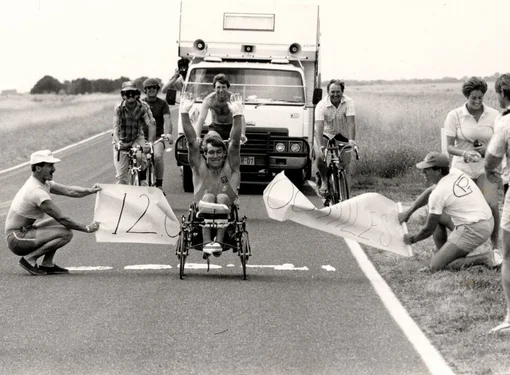
As soon as Karen heard Rick's name, she said she was transported back to her own childhood in Maple Ridge, where she remembers gathering with classmates to watch Rick wheel through town during the Man In Motion World Tour 40 years ago. She remembers it being “such a big deal.”
What surprised her was discovering many children in her life had never heard of him.
"I was really surprised that my own children and almost none of the students knew who Rick Hansen is," she says. "They don't know him. And he's a living hero."
The realization felt especially striking given Rick's place in Canadian history. Forty years ago, Canadians from all corners of the country cheered Rick on as he wheeled around the world to challenge perceptions about disability and raise money for spinal cord injury research and rehabilitation. For many of today's students, however, that chapter of history feels distant or unfamiliar.
Rather than simply lamenting that reality, Karen and Sarah decided to do something about it. They created Rick Hansen Day at Langley Fine Arts School, now an annual event.
Learning by Doing
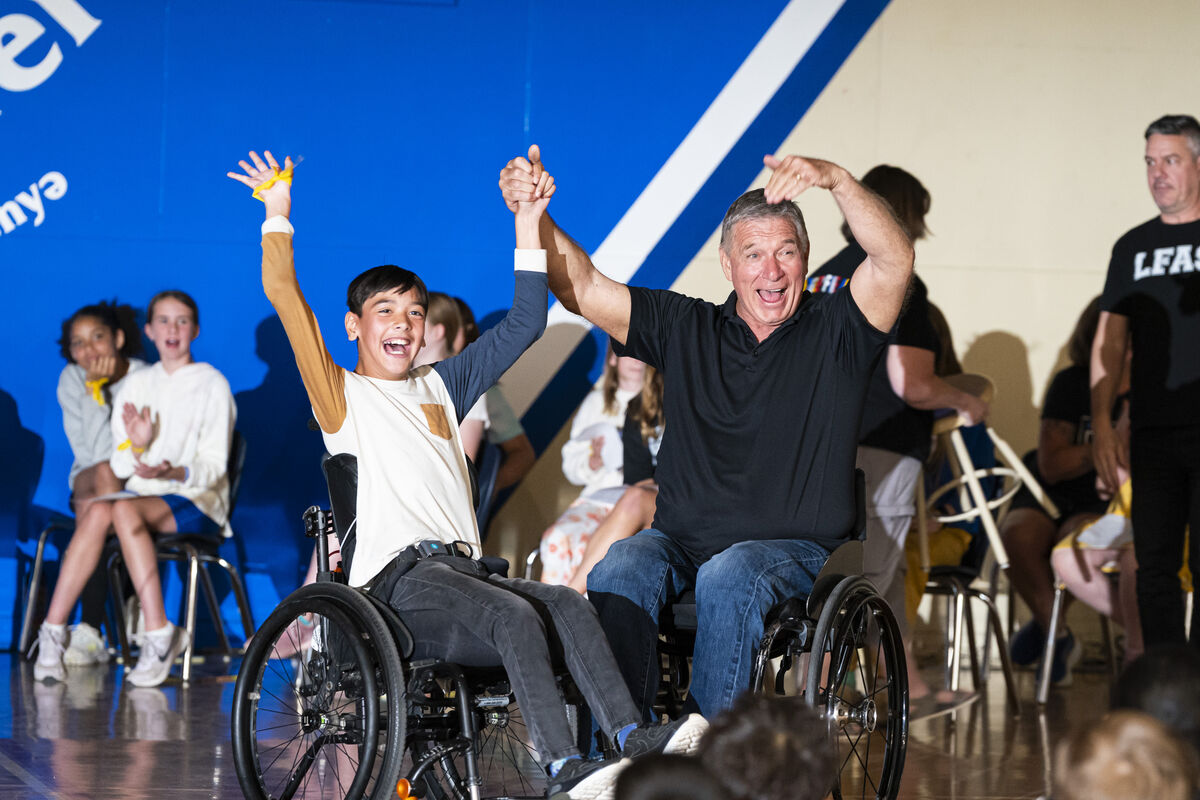
From the beginning, the goal was never just to teach students facts about Rick Hansen's journey. Karen and Sarah wanted students to experience accessibility in a way that felt personal and meaningful.
With support from the Langley School District, the school borrowed wheelchairs typically used for wheelchair basketball and invited students to navigate parts of the school from a different perspective. Before the activity could even begin, students encountered an unexpected challenge. Pathways needed to be cleared of rocks and debris, and routes had to be carefully planned to ensure they were accessible.
"They all commented how difficult it is to navigate a wheelchair," Karen says. "They thought it was going to be easy, and it was not easy.".
The experience generated conversations that extended far beyond the day's activities. Students began noticing details they had previously overlooked and questioning whether certain spaces were as accessible as they could be.
"We'd go somewhere and they go, 'Well, this isn't accessible,'" Karen said.
Much of the hands-on accessibility component was championed by Sarah, who helped organize the wheelchairs, coordinate accessible routes around the school, and encourage students to think critically about barriers.
Whenever the middle school team plans activities, Karen said, Sarah is often the person asking, "Is this inclusive?"
That question is now one that the students ask themselves.
From Awareness to Action
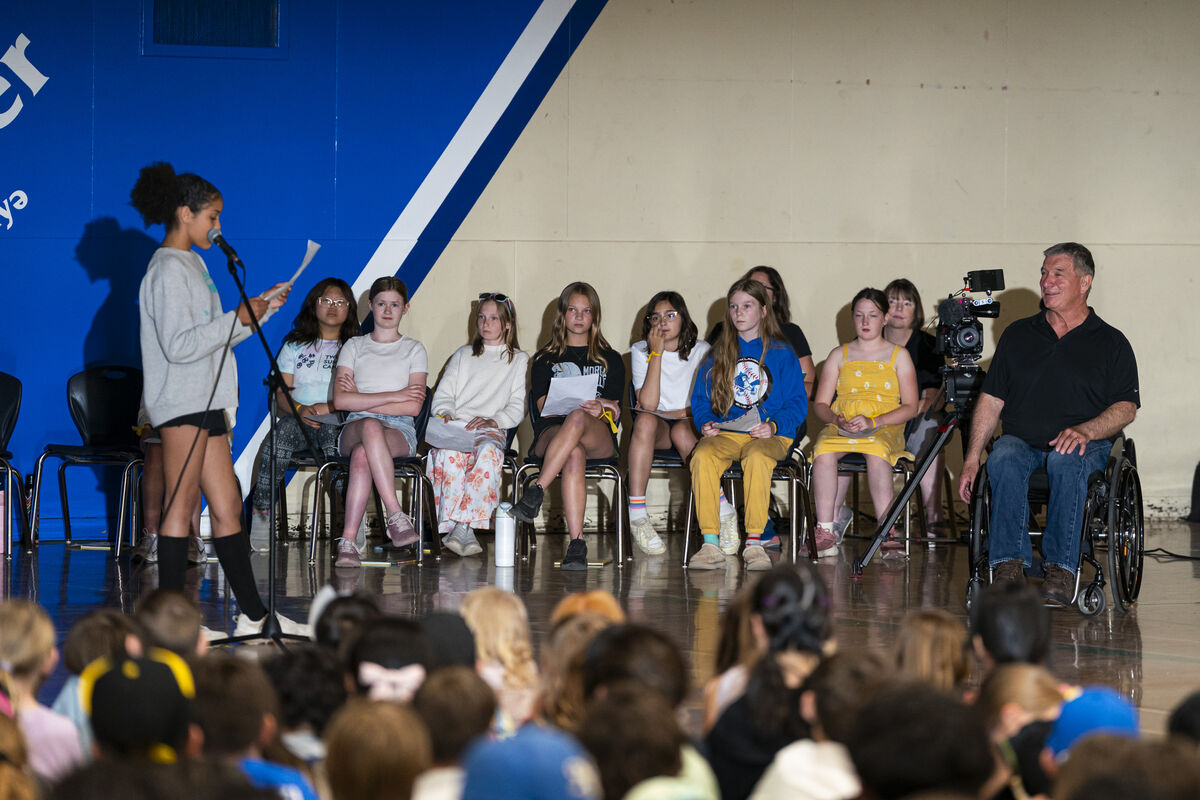
The conversations soon spread throughout the school. Students created posters highlighting Rick Hansen's story and displayed them throughout the building. They delivered announcements over the PA system and introduced younger students to a Canadian figure many had never encountered before.
The response was immediate. Karen's own daughters, who attend the school, began asking questions at home after seeing the posters and hearing the announcements.
"We ended up looking him up at home to answer all of their questions as well."
What started in the middle school classrooms gradually expanded outward, sparking conversations among students of all ages.
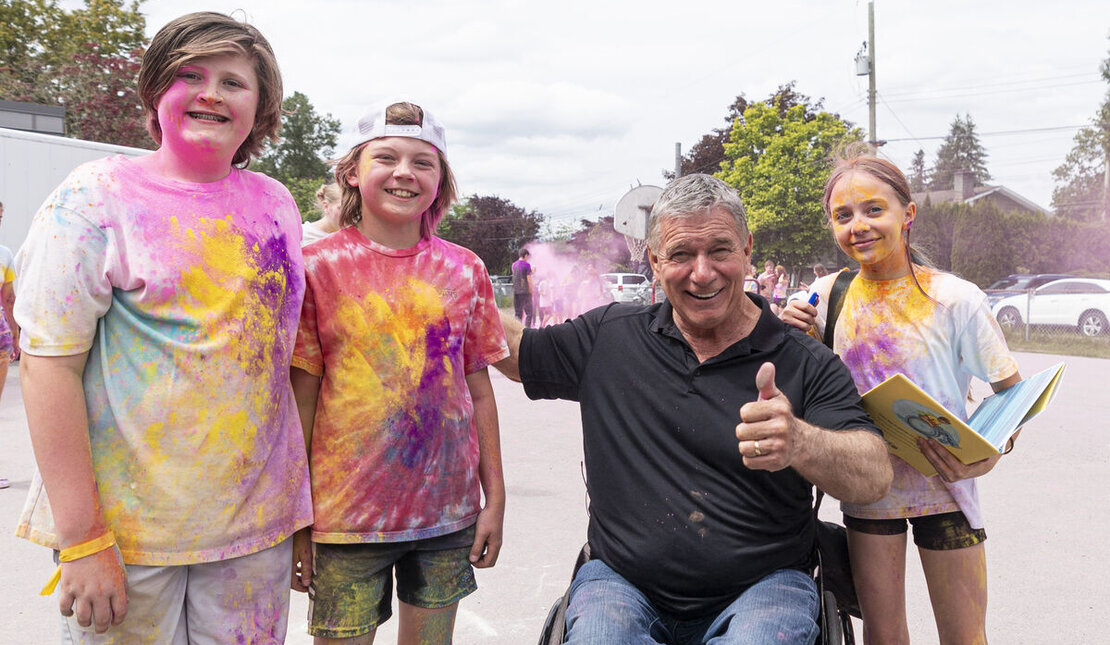
This year, Grade 6 students also participated in the new Many In Motion Day while continuing traditions they had already established within the school community. Alongside accessibility activities, the Colour Run and Roll, students took part in the school's annual Entrepreneur Fair, creating and selling products ranging from handmade soap and jewellery to candles, bookmarks, stickers and crocheted items.
This year, they raised approximately $200 for the Rick Hansen Foundation. Some students even chose to donate more than the required portion of their profits.
The fundraising was purposeful, but Karen and Sarah believe the bigger impact came from the conversations taking place alongside it. At Langley Fine Arts School, accessibility became something students actively discussed rather than something they heard and then moved on. It became something they discussed, questioned, and connected to in their everyday lives.
Last year, the celebration expanded to include the entire school. Rick Hansen himself attended, giving students an opportunity to meet the person whose story had inspired the event in the first place. Music students even performed a special arrangement of John Parr’s ‘St. Elmo’s Fire: Man in Motion’ song. It was a memorable moment that connected past and present in a unique way.
Rethinking Inclusion
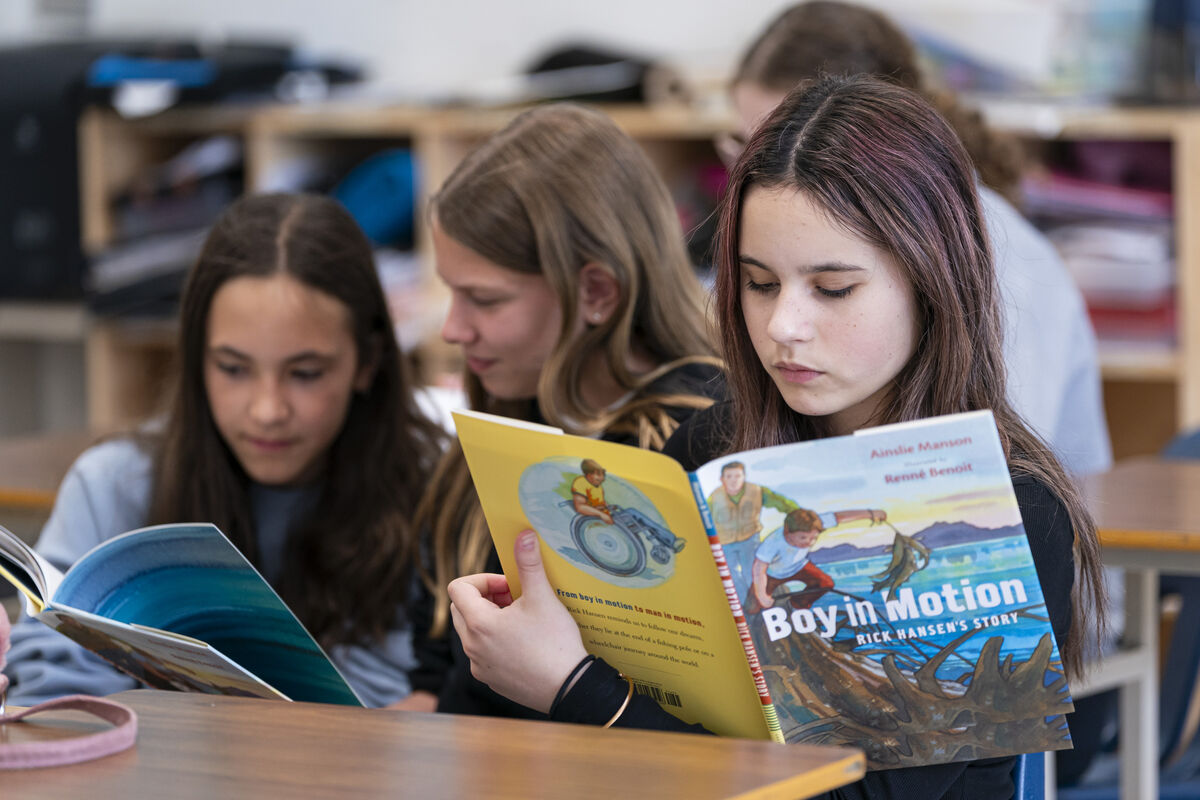
One of the most lasting outcomes of Rick Hansen Day has been how it reinforced conversations about inclusion that already exist throughout the school. Inclusive Sports Day, a longstanding tradition at Langley Fine Arts started by Sarah, encourages students to think carefully about how activities can be designed so everyone can participate.
Student leaders work together to create, plan, and lead games for younger students, considering how children of different ages, abilities and experiences will engage with each activity. Inspired by conversations about accessibility, students brought an even deeper awareness to that process.
"They were super, super creative in finding ways to make the games engaging and fun and accessible and inclusive," Sarah said.
Rather than creating separate experiences for different groups, students looked for ways to ensure everyone could participate together. In doing so, they began thinking like inclusive leaders, considering not only what would work for them, but what would work for others.
“They now ask themselves, ‘How can we make spaces more welcoming’ and ‘How can we remove barriers to ensure that everyone belongs?” Sarah said.
Karen said the experience prompted her to look differently at her own classroom and consider how accessible it would be for all learners. Sarah described a similar shift. Even family decisions, from classroom layouts to children's birthday parties, are now viewed through a broader lens of inclusion and belonging.
Added Karen: "It's definitely something I think about more now.”