A Day Behind A World Without Barriers

There is an old piano in the green room, books lining one wall, and a card game between Maliyah Chung and her mom underway at a table.
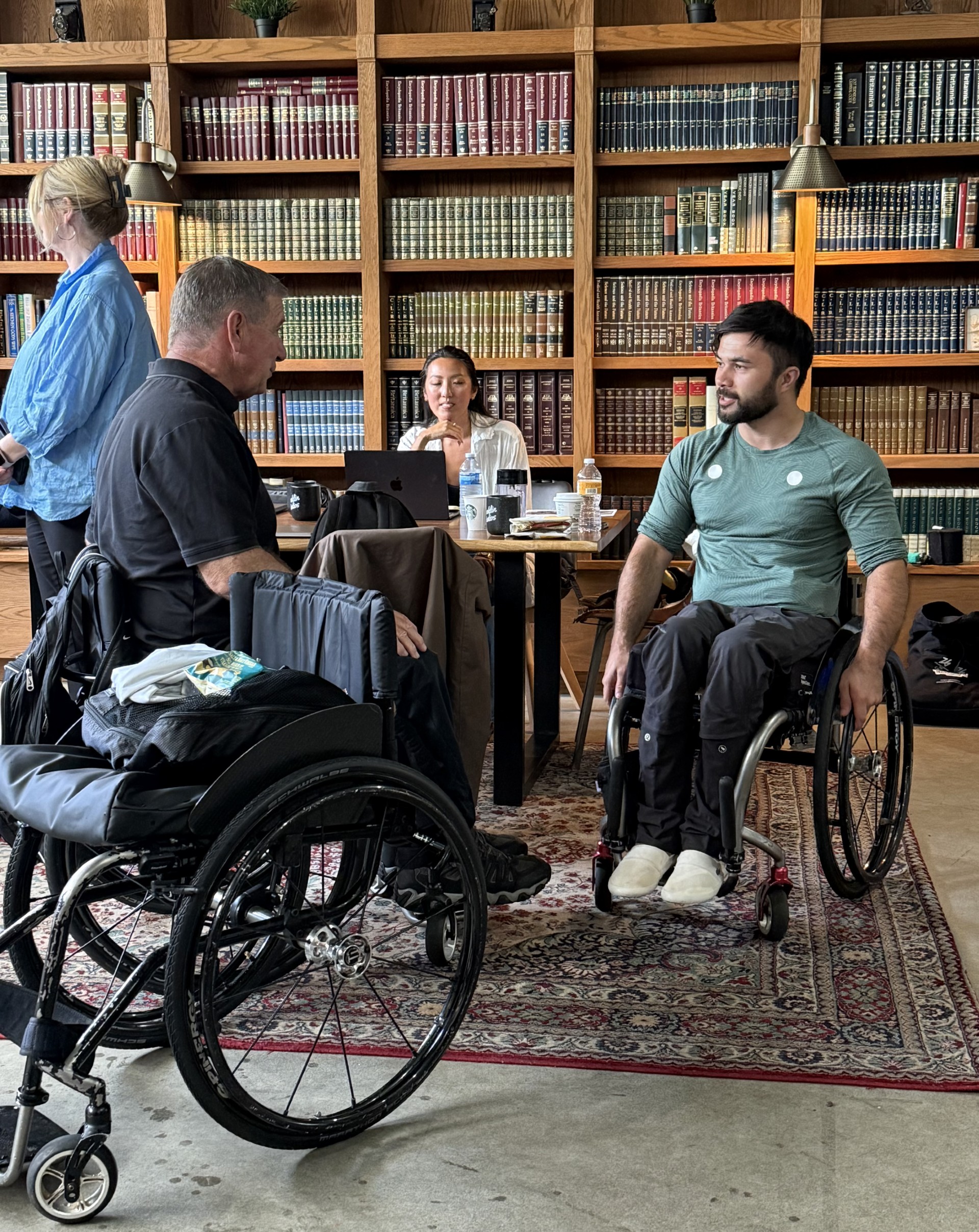
At the other end sits Leo Sammarelli, an athlete and adaptive boxing coach whom some Rick Hansen Foundation (RHF) followers might recognize from an earlier campaign, where he was filmed hauling himself and his wheelchair up a long flight of concrete stairs at Simon Fraser University.
On the shooting stage in the East Vancouver film studio, things are considerably less sedate.
There are graduation caps to be thrown, boxing gloves to lace up, a brick wall waiting for a sledgehammer, and an artificial rainstorm powerful enough to leave Rick Hansen drenched.
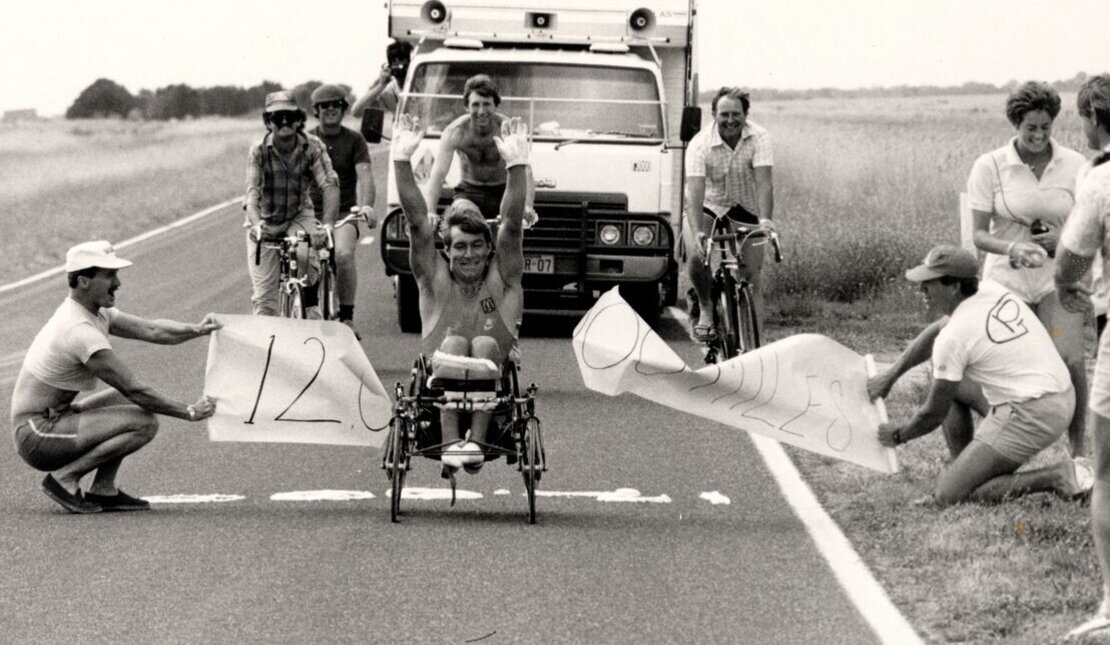
This is the set of A World Without Barriers, RHF’s new national campaign marking the 40th anniversary of the Man In Motion World Tour. Developed with RHF’s long-time pro bono creative partner VML Canada, the campaign draws on archival footage and one of the Tour’s most recognizable sights: Rick bursting through banners as kilometre after kilometre accumulated behind him.
The new campaign carries that imagery forward, connecting it to the barriers RHF has worked to break in the decades since. Through initiatives that redefine accessibility, change attitudes and remove barriers to inclusion, the Foundation has helped create a more accessible Canada. Its work spans schools, communities and outdoor spaces, while also supporting research and care related to spinal cord injury and neurotrauma.
Forty years after the Tour, there are still barriers to break.
It Takes Many In Motion
The people gathered on set represent different generations and experiences of disability: Leo; student and RHF School Program Youth Leadership Committee member Maliyah; artist and RHF Ambassador and Youth Leadership Committee member Emily DeBoer; RHF accessibility specialist Laetitia Mfamobani; Michael Maughan; and Rick himself.
While shooting progresses on the stage, the green room is for conversations. Leo and I spoke about the last time I saw him in front of a camera and about the adaptive boxing gym he has since opened. A Para Nordic silver medallist at the Canada Winter Games, he has spent much of his life as an athlete. We also spoke about the theme of the day – barriers.
To Leo, many of them are both glaringly obvious and frustratingly preventable. Often, he said, people just need to notice them, and care enough to do something about them.
Nearby, Emily and Laetitia chatted about art. Emily, who has a Master of Fine Arts, once posed a question to me during an interview a couple years ago. It stuck with me: “How was it ever decided that stairs should be the default in the design of buildings?”
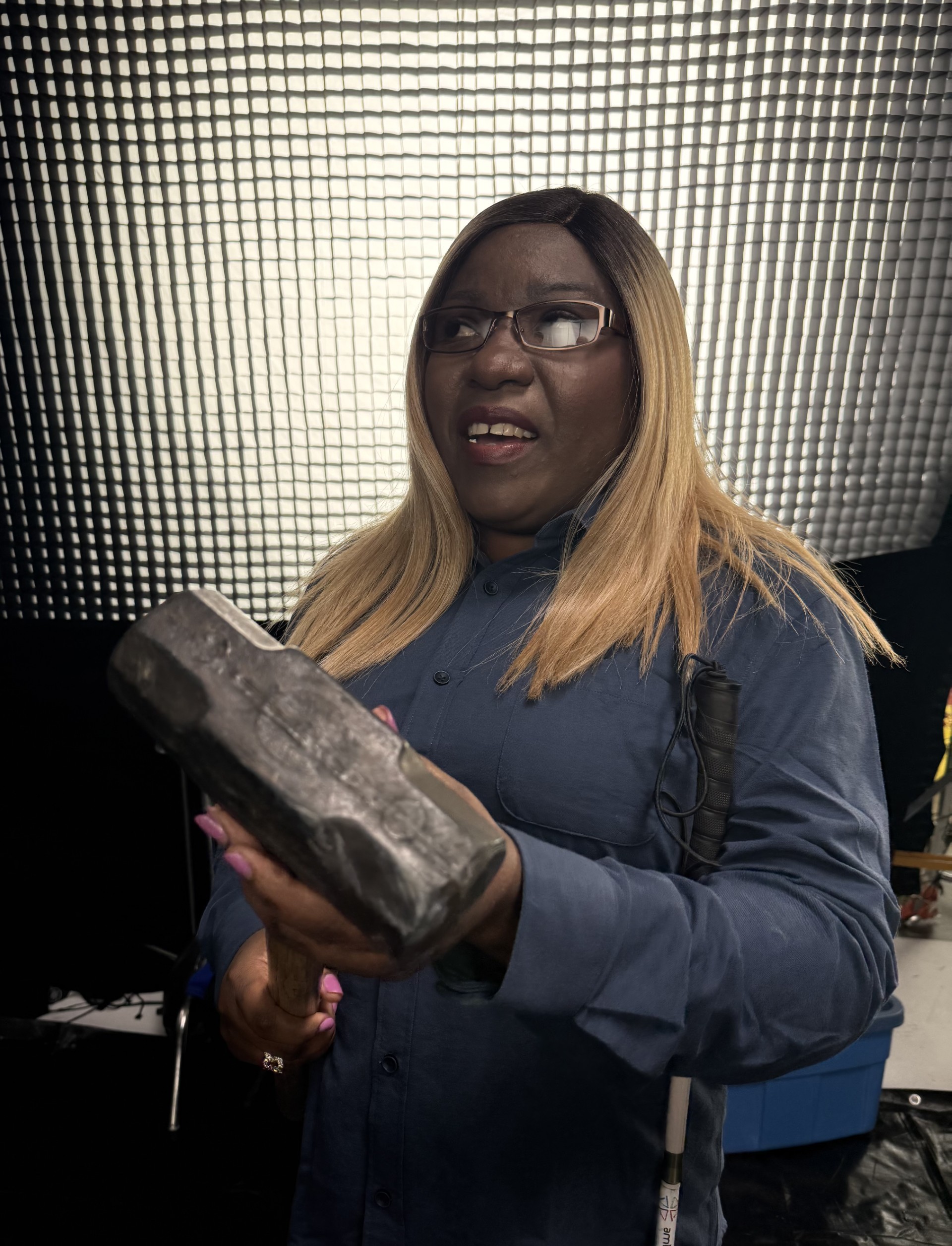
For Laetitia, who is blind, the scene involves her wearing a construction vest, safety glasses, gloves, and swinging a prop sledgehammer. In front of her stood a brick wall beneath the words ‘REDEFINE ACCESSIBILITY.’
Her first attempt at hitting the prop wall was tentative. The scene is reset during which Laetitia begins thinking about barriers she has encountered since losing her sight as a child. She remembered being pushed out of the school system in Grade 6 because her school could not accommodate her, then returning to a mainstream high school years later. She thought about university, finding work, and the years spent proving that blindness did not make her incapable.
When she swung again, it’s with such force that the bricks go flying.
“I have literally had to break barriers every single day,” she told me later. “Why can’t people understand that having a disability doesn’t mean you can’t do anything? It just means you do things different.”
For her part, Maliyah wore a graduation gown and cap – fitting as she just graduated high school and began her first year of university - surrounded by dozens of more caps tossed into the air and captured in slow motion. Behind her, the banner reads ‘SUPPORT DREAMS’.
She said she was excited to meet Rick on set and ask him in person about the Man In Motion World Tour, particularly which was the most memorable of the 34 countries. Rick told her China, where the sight of a young wheelchair user travelling through the country under his own power challenged assumptions about disability.
“I just think what he did is so amazing, all with a manual wheelchair too,” Maliyah said.
Four decades separate that journey from the young woman now sitting across from him. When Maliyah describes navigating the world today, the unfinished work becomes remarkably ordinary: checking whether a restaurant has a step-free entrance, making sure an accessible table is available, finding out whether an elevator is working before leaving home.
A World Without Barriers, she said, would mean not having to plan for all of that. Not to mention that accessibility benefits everyone – not just people with disabilities – because it’s often just better design.
Michael was also struck by the community formed in the green room. Deaf himself, he wanted to be part of the A World Without Barriers campaign in part to challenge assumptions about what Deaf people can and cannot do.
“I wanted to make the world aware that Deaf people can do anything. Lots of people think things are impossible because we can’t hear. People think we can’t drive, but we can. Another fun one is hearing people assuming that Deaf people don’t get sick on spinning carnival rides. But we definitely can!” he said with a laugh.
For Michael, greater accessibility can begin with something as straightforward as a willingness to text or write something down to communicate.
A World Without Barriers
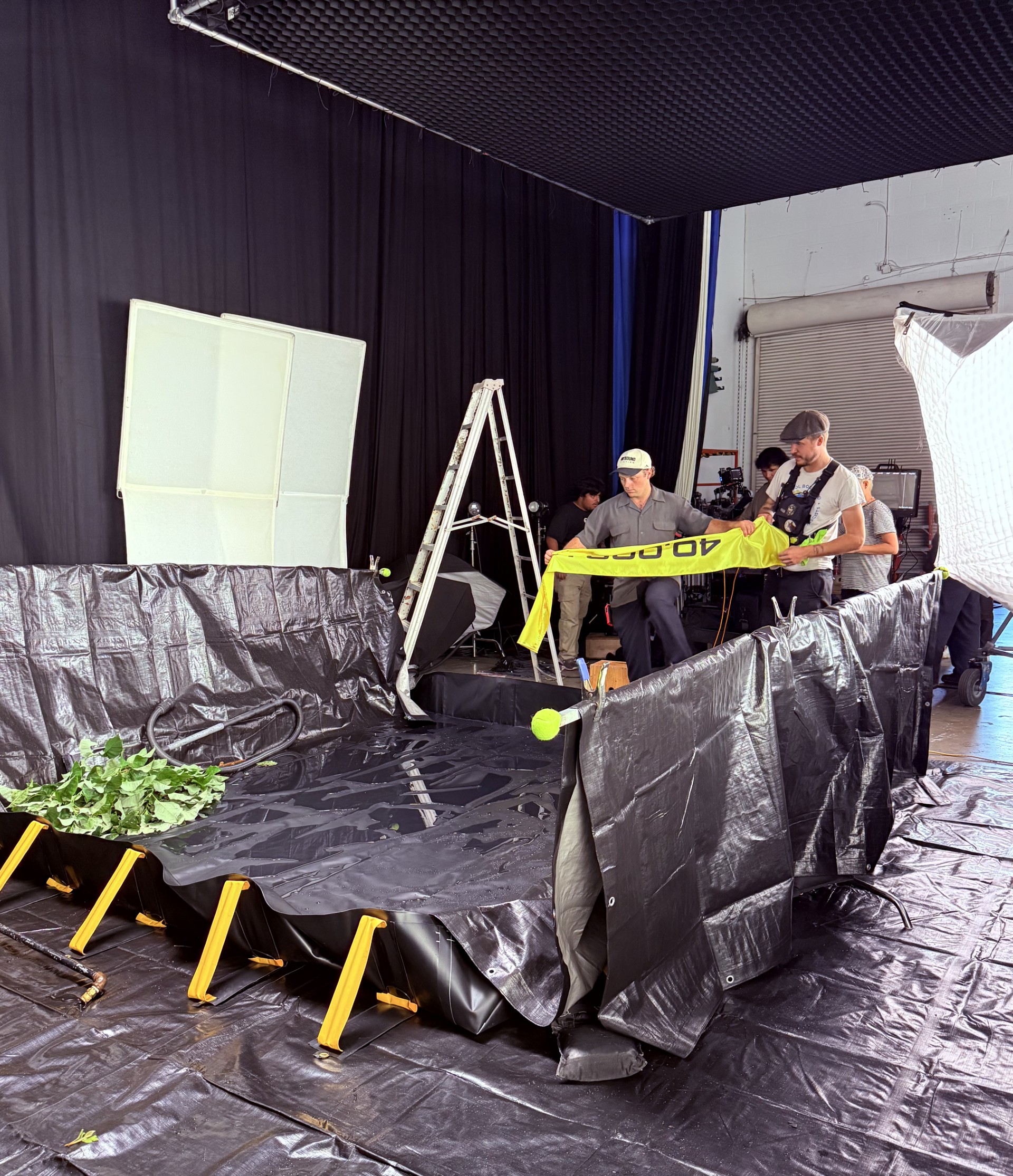
There is something fitting about watching Rick, 40 years after the Tour, agree to be repeatedly drenched for the shot. The original banners celebrated distances already travelled: 10,000 kilometres. 20,000. 30,000. Eventually 40,000. They were broken during gruelling parts of the Tour. And finally, there’s the World Without Barriers banner, naming the distance still to go.
The new campaign asks Canadians to give $40 in honour of the 40th anniversary of the Man In Motion World Tour, supporting RHF’s work to keep breaking down barriers – whether they be physical, systemic, or attitudinal.
And, for Maliyah, she has hope.
“There are so many more people that are advocating and sharing their story,” she said. “There’s more awareness about the potential of people with disabilities because of the Foundation. And I think that’s really great because it’s definitely making a huge impact.”
Help break through the barriers that remain. Donate $40 in honour of 40 years of the Man In Motion World Tour and help build A World Without Barriers.