The Power of Accessible Communities – Webinar, Dec 3, 2025

“As someone who’s navigated life with a disability, I know how transformative it can be when a community removes barriers. Not just physical ones, but attitudinal, systemic ones that shape everyday experiences.”
These were the words of Christopher Sutton, Canada’s Accessibility Commissioner at the Human Rights Commission and moderator of the Rick Hansen Foundation (RHF)’s The Power of Accessible Communities webinar, in celebration of International Day for Persons with Disabilities on December 3, 2025.
This is “a day to raise awareness and promote the rights and wellbeing of persons with disabilities in all aspects of society,” noted Rick Hansen, RHF Founder, in the webinar introductory video to announce the launch of the RBC Barrier Buster Grants Program. The Program will award 40 grants of up to $40,000 each for community-based accessibility improvement projects across the country. Learn more about this fantastic initiative.
The RBC Barrier Buster Grants Program launched in honour of the 40th Anniversary of Rick’s Man In Motion World Tour. “We’ve come a long way since 1985,” Rick said. “But unfortunately, people with disabilities continue to face significant barriers to participation in the places that we live, work, learn, and play.”
There couldn’t be a more fitting moment for RHF to bring together leaders and innovators in the accessibility space to discuss barriers and opportunities for people with disabilities in the built environment across Canada. The panelists included:
- Mary Ann Bent, Manager of Accessible Navigation and Wayfinding Solutions at CNIB Access Labs
- Dr. Paul Clark, Paralympian, semi-retired optometrist, and accessibility champion
- Dr. Darda Sales, Paralympian and dual sport World Champion with a PhD in para-athlete development
- Mia de Freitas, RBC’s Director, Accessibility Enablement
- Dr. Teale Phelps Bondaroff, Councillor in the District of Saanich and Director of Research at OceanAsia
During the wide-ranging discussion, panelists shared their personal and professional experiences related to accessibility barriers and opportunities in the built environment.
Designing Accessibly for Everyone – Now and in the Future
The first topic asked panelists to share examples of where designing accessibly ended up benefiting everyone in the community. From curb cuts helping those with strollers and scooters, to transit announcements benefiting daily commuters, panelists gave examples of how, as Rick noted in his video, “accessibility in the built environment benefits everyone – small children, parents… older adults, and seniors”.
Councillor Teale Phelps Dondaroff emphasized the low relative cost of designing accessibly. “Spend the tiny amount of money up front,” he implored, noting that investments of just an additional 0.4% - 1% can “save costs down the road, because retrofits are way more expensive.”
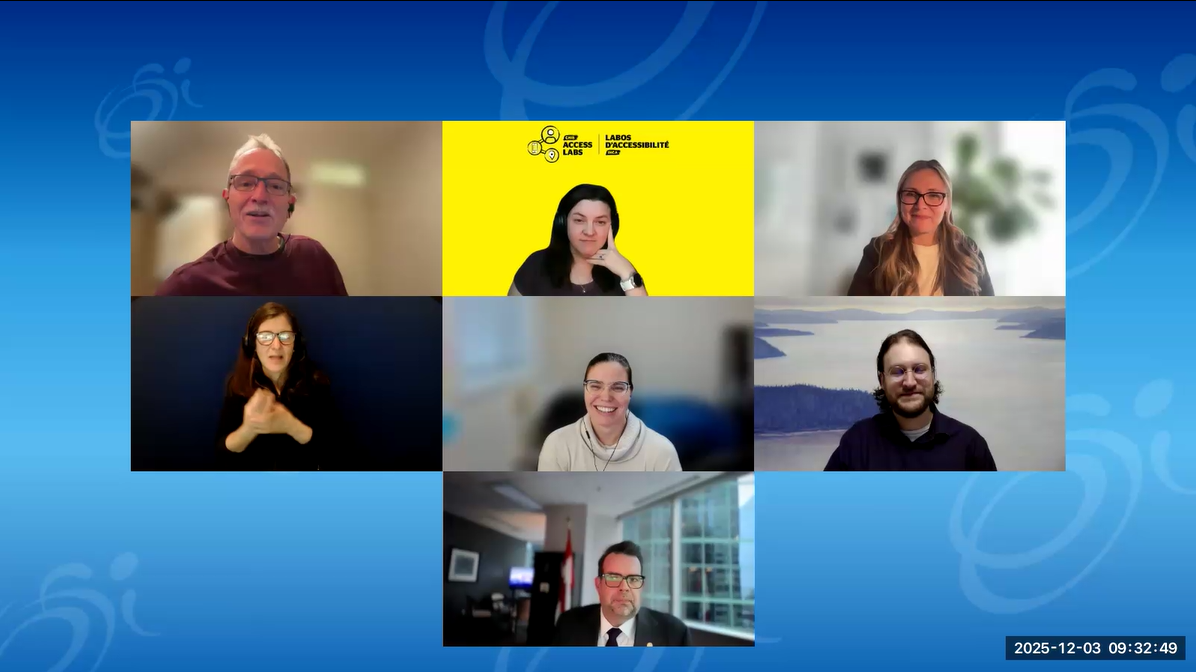
Dr. Paul Clark gave an example of an accessible kayak launch which was built in Kelowna B.C.. The kayak launch aims to assist people with disabilities who face barriers traveling over sand, but is now used widely by the community, with everyone sharing in the benefits of easier access to the water: “everybody is using it now, everybody.”
“We often forget that the built environment lasts for a really long time,” noted Teale. “The work that we do today in advocating for more accessible housing and government buildings lasts for decades or centuries.”
Bringing Awareness to Hidden Barriers
Next, panelists were asked to highlight accessibility barriers that many people don’t realize exist. Mary Ann Bent mentioned challenges along a Toronto waterfront trail including inconsistent barriers rendering the trail difficult to navigate for people with low vision. Interestingly, she also noted that predictability is not always best - changes in topography in the built environment aid with navigation, reminding us that accessibility responses shouldn’t always be cookie-cutter.
Dr. Darda Sales noted accessibility should be seen as holistic, and ‘not just a checkbox’. As an example, she mentioned an ‘accessible’ motel room where the hairdryer was too high for a person in a wheelchair to use. “The inconsistency of accessibility features makes it difficult for people to go into these environments and feel fully included, fully valued.”
Paul built on this theme, noting that banks and city halls often have an ‘accessible’ low counter, but they are rarely opened and often not even equipped. He emphasized the need to consider the full user experience, for example in contexts where power-accessible doors are not turned on – “it’s not just putting that low counter in, it’s actually doing the work to get into the building to start with.”
Mia noted how even something as simple as lighting can impact individuals. For example, low lighting makes it difficult for people with low vision, and flickering impacts some with neurological conditions. Teale continued this topic, discussing hidden or unseen disabilities – such as mental health, neurological, vision or hearing challenges – and related attitudinal biases. He emphasized the importance of responses like the Sunflower Campaign, an approach which uses visual tools for users to voluntarily share that they have a disability or condition which may not be immediately apparent. These kinds of approaches can reduce ‘explanation stress’, so that people with disabilities don’t constantly have to explain their situation.
An Investment, Not an Expense
The third topic area focused on the cost, complexity and aesthetics of accessible design. Panelists shared examples of how planning for accessibility from the start can lead to adaptability, beauty, and the creation of opportunities for innovation.
Paul highlighted Kelowna’s new fitness facility. Designed from the outset to be accessible, functionality was improved at a low cost. He also raised the example of how accessible residential buildings make it possible for residents to age in place. “If we make it accessible in the beginning, it has more value in the future,” he said. “This is an investment; this is not an expense.”
Teale spoke about the comparatively low number of elevators in Canada. He explained how restrictive North American standards lead to increased costs in elevator installation and maintenance, contributing to fewer elevators per capita here than in many European countries. “Something as small as getting the cost of elevators down… can not only improve accessibility but also improve affordability and help us tackle the housing crisis,” he said. “We can make things both more accessible and more affordable at the same time.”
Opening the Discussion: Audience Questions
Following the moderated panel discussion, audience members were invited to ask questions. Topics ranged from snow removal on sidewalks to accommodations for invisible disabilities, intersectionality for Canadian newcomers, and body diversity within accessibility responses.
On the topic of intersectionality, Mary Ann noted Access Labs’ Customer Inclusivity program and emphasized the importance of ensuring that newcomers know what accommodations exist or how to access them. “It’s something that we can never take for granted,” she said. “A lot of organizations will have accommodations available, but it’s useless if you don’t know that they exist, or how to access them.”
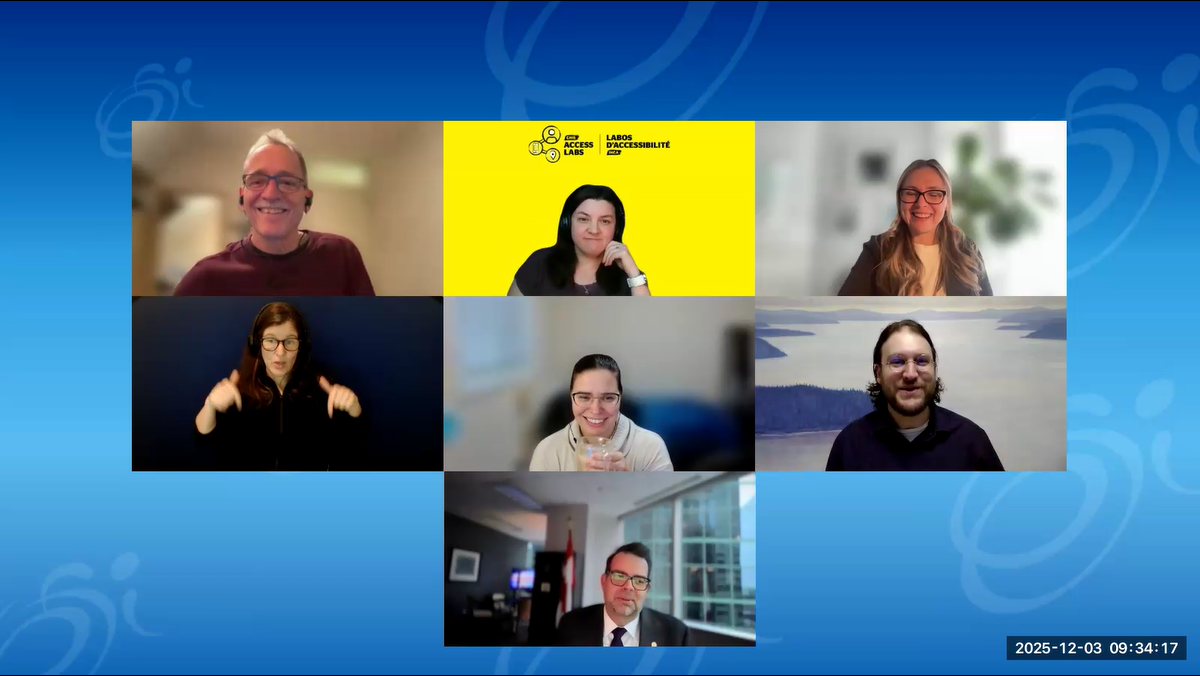
Lastly, panelists were asked how we can ensure that people with disabilities are embedded in every conversation about policies, services, and design that impacts them. Mia noted the crucial importance of seeking out contributions early, and involving a variety of individuals with different needs to ensure a breadth of perspectives. “What we really need to do is seek out input and contributions right from the beginning,” she said.
Mary Ann emphasized the importance of budgeting for user testing for those with lived experience, while Paul spoke about forward-focused attitudes, rather than placing blame. Darda emphasized the importance of consistently asking for inputs and perspectives, and showing that feedback is taken into account. Too often, “those who don’t use the accessibility features are making decisions about those accessibility features.” Truly valuing a multiplicity of perspectives leads to more effective decisions. “You don’t shovel a curb cut if you don’t use it,” Darda said. “Having those lived experiences involved in those conversations (ensures that those decisions) truly are representative and impactful.”
More than 600 people registered for RHF’s The Power of Accessible Communities webinar. In case you missed it, you can check out the webinar recording with embedded closed captioning and sign language interpretation.
Learn more and apply (before March 15, 2026) for one of 40 RBC Barrier Buster grants of up to $40,000 to complete an access-improvement project in your community.