Building Community in Delta through Accessibility

The City of Delta is home to over 108,000 individuals and encompasses three distinct communities – Ladner, North Delta, and Tsawwassen. Community is at the heart of the City of Delta’s goals, striving to create an inclusive city where everyone feels welcomed.
A part of building a community where everyone is included is accessibility and ensuring barriers are removed. The City of Delta’s Accessibility Plan has six pillars, one of which is improving access in the built environment. Further, the City’s Social Action Plan includes accessibility as a piece of what supports the creation of an equitable, vibrant, and healthy community.
Last year, Delta was one of the recipients of the Rick Hansen Foundation BC Accessibility Grants Program.
This program, supported by the Government of British Columbia, grants funding to municipalities to improve accessibility for people in their communities. Recipients of the grants receive an Rick Hansen Foundation Accessibility CertificationTM (RHFAC) rating for up to three sites to identify areas of improvement in the built environment; up to $90,000 in accessibility improvement funds; a post-improvement rating to showcase enhanced access; accessibility Awareness Training for municipal staff to foster a culture of disability inclusion; and complimentary RHFAC Training tuition grants for three eligible staff.
“We saw this opportunity as a chance to upgrade some of our facilities and begin the process of understanding how we could make some of our city-owned buildings more accessible,” Ryan Shortridge, Project Coordinator at the City of Delta said. “We are always trying to make the city more accessible for more people, and this helped us do that.”
Creating spaces where everyone can thrive
Part of the grant funding was to upgrade buildings in the city. For the City of Delta, upgrades were focused on recreational opportunities for residents and visitors.
Three sites were upgraded as part of the RHF BC Accessibility Grants program: Kennedy Seniors Recreation Centre, Ladner Leisure Centre, and the Sungod Recreation Centre. These community sites each provide the opportunity for community residents to gather, enjoy activities, and connect with one another.
“We wanted to select sites where the upgrades would have the largest impact and see the greatest number of visitors,” Shortridge explained of the three community sites.
The Kennedy Senior Center has 50-70 individuals using the site daily, providing a space where anyone over the age of 50 can partake in a wide range of leisure and recreational activities, including snooker and lawn bowling. Upgrading this site was important to the city to improve access for the many individuals with a wide range of disabilities that come to spend time.
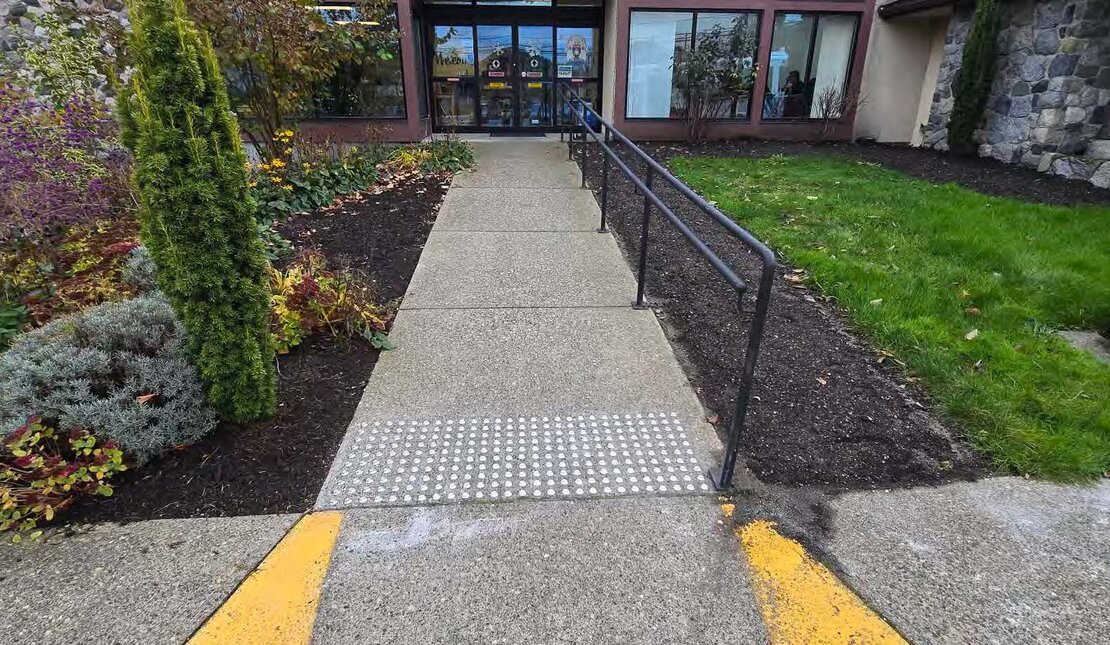
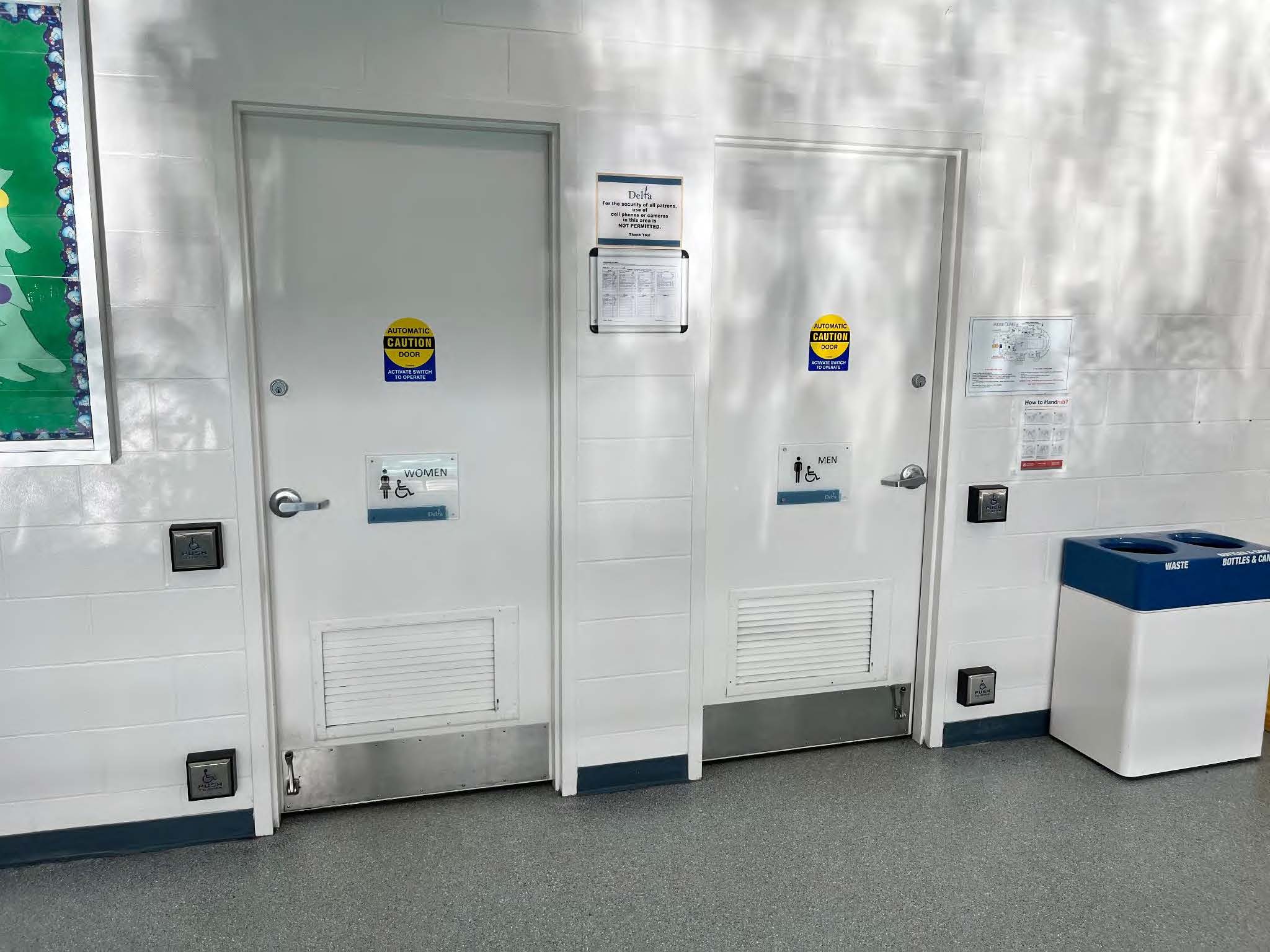
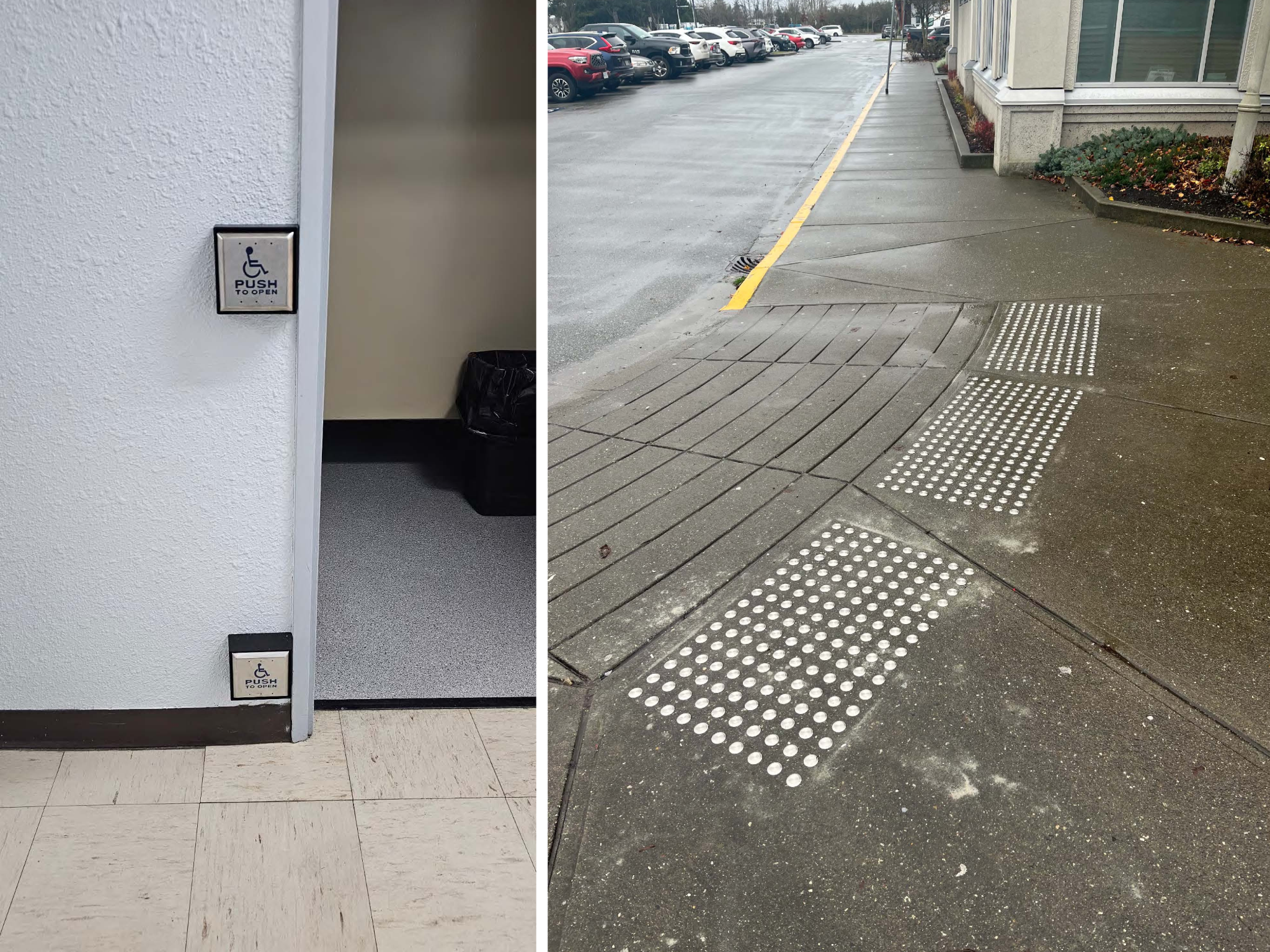
Improvements for the Kennedy Seniors Recreation Centre included installing automatic door openers on some of the washrooms on the bottom and top floors, providing access to washrooms on all levels of the site. Tactile surface indicators were installed at the back stairway and the curb cut that leads to the parking lot to indicate changes in the surface.
The Ladner Leisure Centre offers a variety of pools, a weight room, arena, and a coffee shop, among other spaces for visitors to gather and enjoy recreational activities in their own community. According to the City of Delta, the site is home to 750 – 800 visitors daily, making it a highly used facility by individuals with a wide range of abilities.
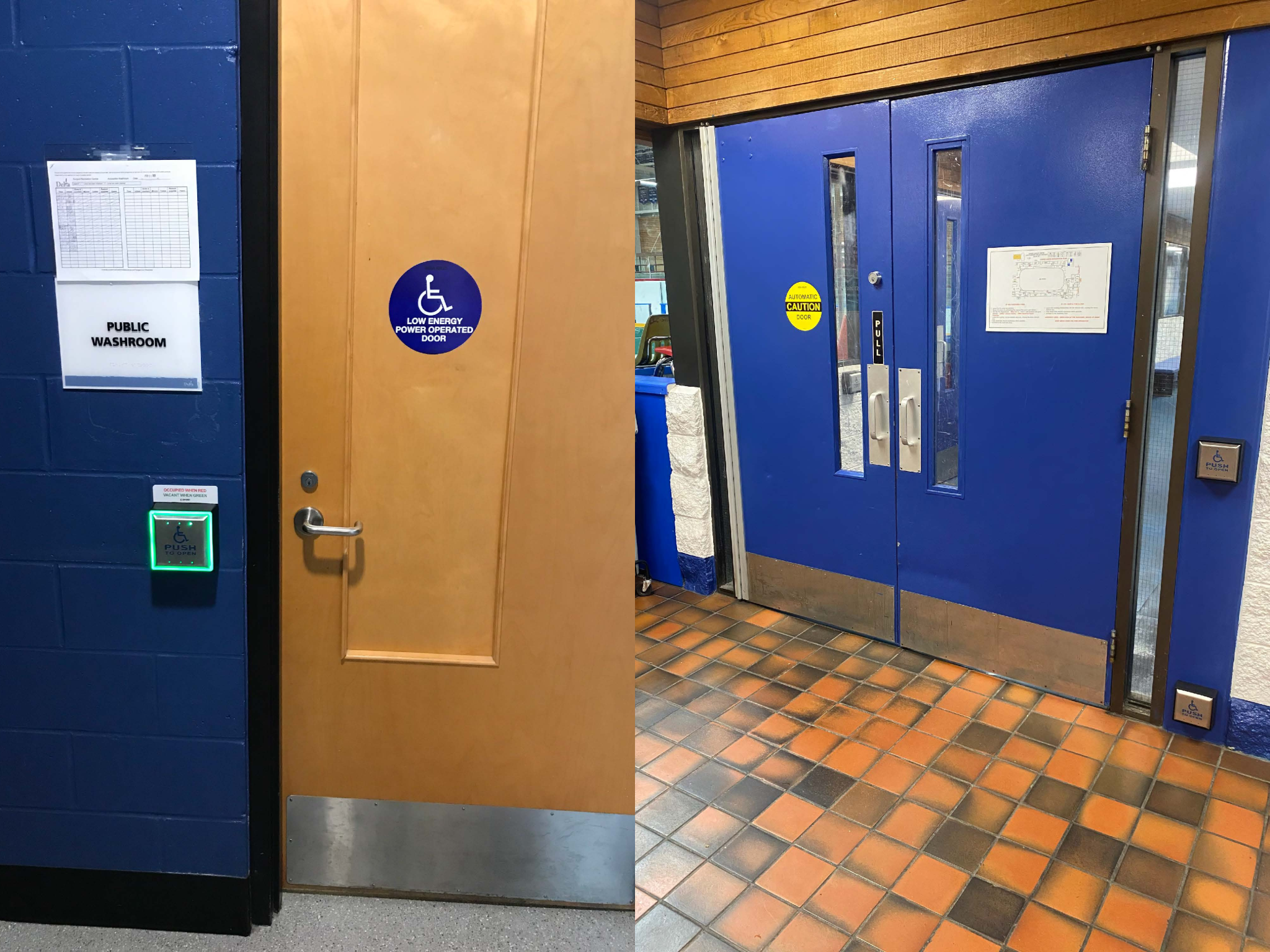
Improvements to this space include installation of automatic door openers on the washrooms in the arena and pool lobbies and the arena entry doors. This allowed individuals to enter the area directly from the lobby, rather than going through the pool lobby. Further, the City of Delta added tactile surface indicators at curb cuts entering parking lots and at ramp locations to notify the user of a change of slope.
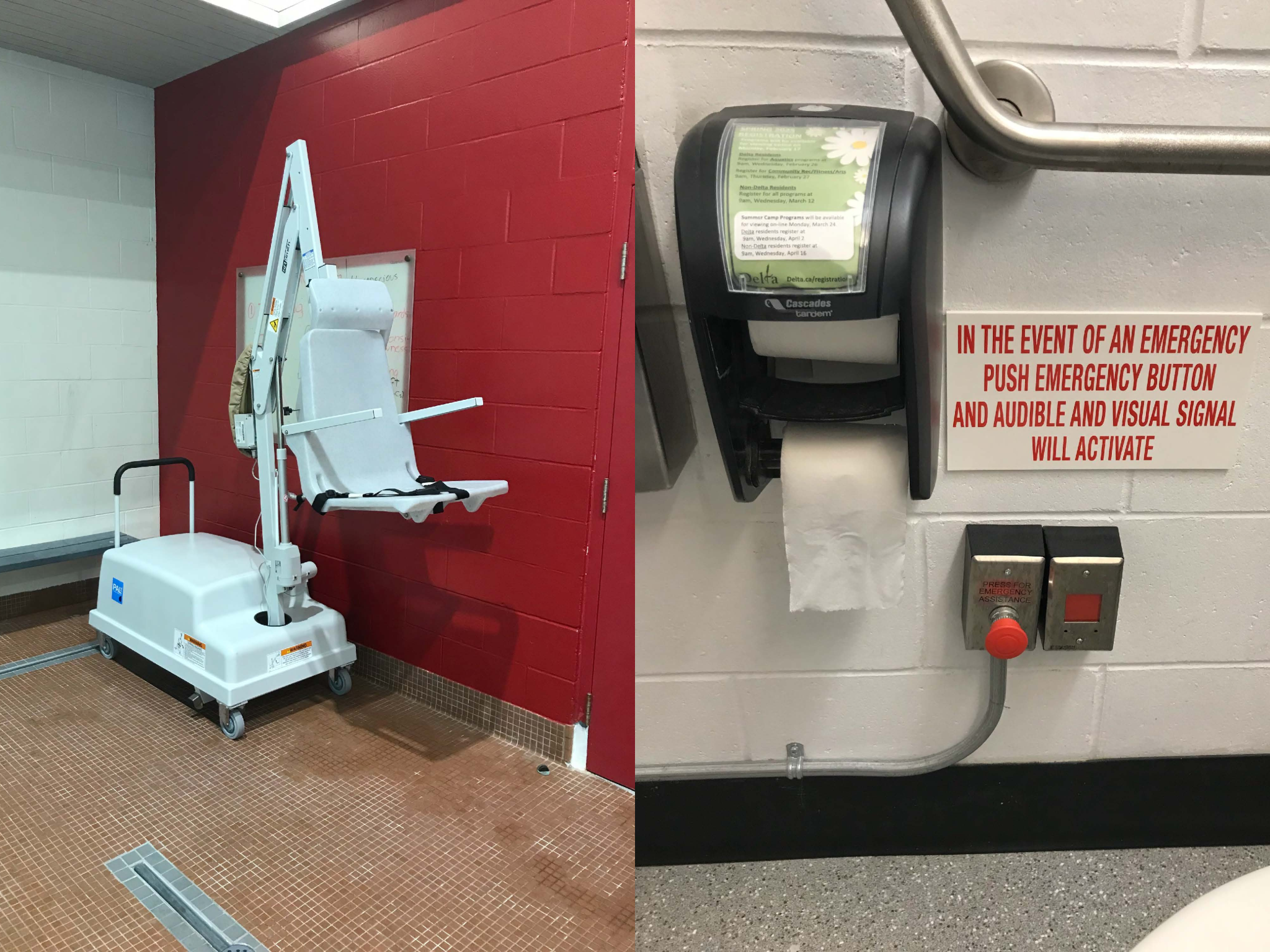
The largest of the three facilities is the Sungod Recreation Centre, which hosts 1,500-1,750 individuals each day who enjoy the four pools, arena, weight room, gym, coffee shop or meeting rooms. Upgrades included improving the single stall washroom on site to include automatic door openers, a help button and audible alarm to help make it more accessible for all. Further, automatic door openers were installed in the upper arena lobby to facilitate access to and from the concourse. Tactile surface indicators were installed at curb cuts to alert users to changes in surfaces. Finally, a pool lift was installed to help people enter the pools where there is no ramp or sloped entryway present.
Supporting education and awareness on accessibility
Another part of the grant was for staff members to take Rick Hansen Foundation Accessibility CertificationTM (RHFAC) Professional Training. Three staff members at the City of Delta, including Shortridge, were able to take the course through Vancouver Community College.
The RHFAC Professional Training course teaches individuals how to use the RHFAC methodology to rate buildings on their level of meaningful access. Upon successful completion and passing the subsequent RHFAC Professional exam, individuals will obtain their RHFAC Professional designation, qualifying them to conduct RHFAC ratings for existing buildings and pre-construction plans. The training course provides a baseline understanding of how to interpret accessibility in the built environment.
“It was really interesting to see all the elements that are included in the RHFAC Rating Survey and learn about how they all work together,” Shortridge said.
For Shortridge, the ability to share the knowledge with others is what was most exciting.
“It’s very widely applicable. We used the knowledge in these three sites, but we can now also bring this knowledge to other projects we work on outside of the grant,” he explained.
Creating a culture of disability inclusion
“Going through this project, it has certainly made staff more aware of accessibility,” Shortridge noted. “They know what to look for in the buildings they work in. They can bring concerns back and we can then try to address any barriers.”
For Shortridge and the City of Delta, this grant has helped expand the knowledge base of accessibility and going forward they want to continue to make upgrades to other city owned buildings to create a city that works for everyone.
“Accessibility is about making our facilities more inclusive,” Shortridge said. “We don’t want barriers for anyone to be able to swim or to access a fitness center. Even just someone coming to the rec center to enjoy time with their grandchild or attend a birthday party. We want to be inclusive of everyone’s needs.”