The Focus on the Next Era of Accessibility at APN2026
This story was co-written by Tessa Bolton and Rebecca Blissett.
The 2026 Accessibility Professional Network (APN) conference asked a deceptively simple question: What does it really mean to design for everyone?
The answers were complex, urgent, and at times, challenging.
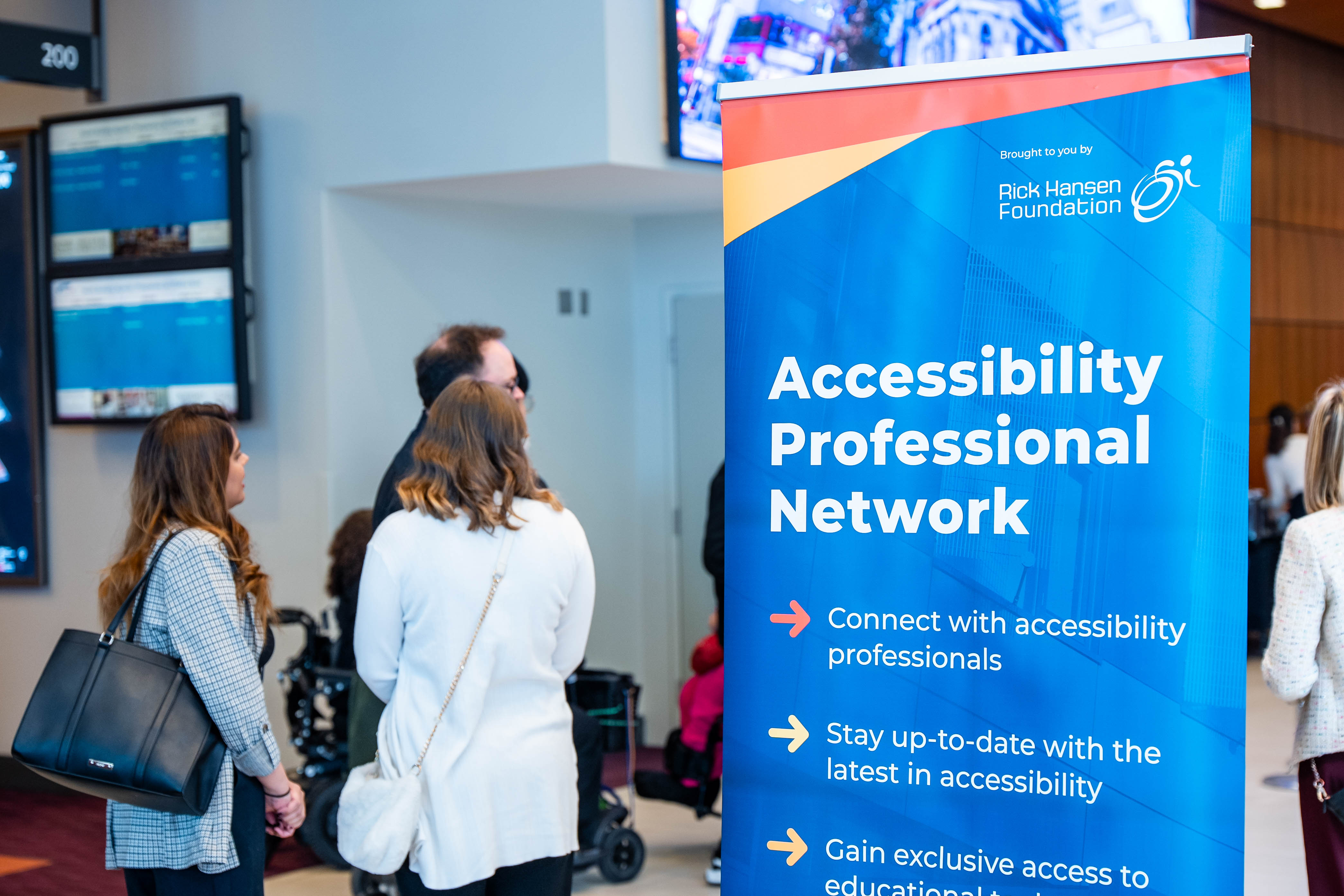
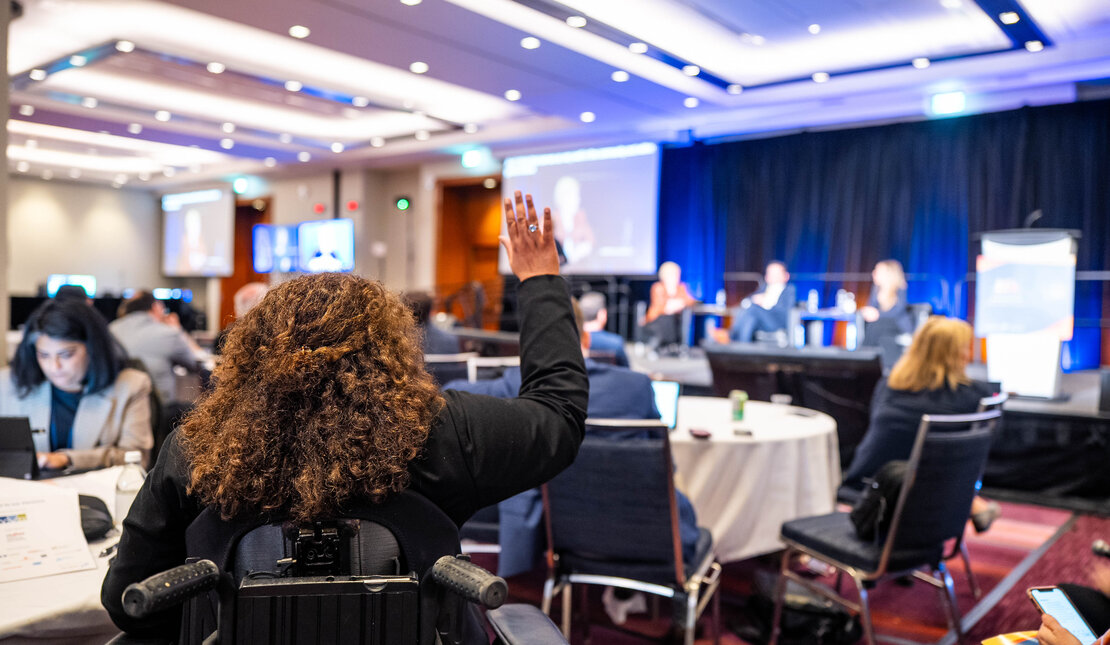
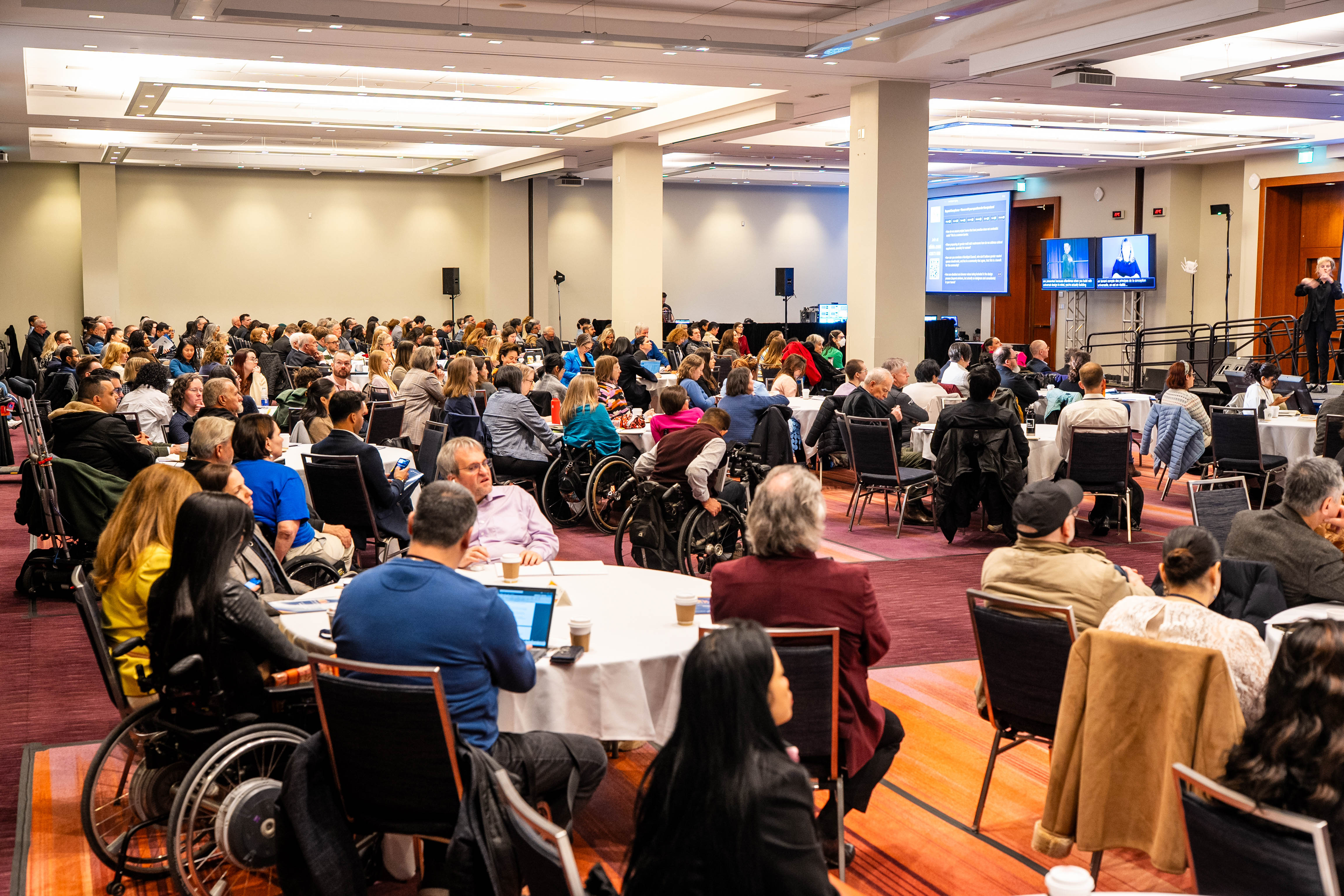
APN2026: Inclusive by Design, hosted by the Rick Hansen Foundation (RHF) and presented by the Vancouver International Airport, was the largest in APN history. It brought together over 700 architects, engineers, designers, policymakers, accessibility professionals, and leaders from across Canada and beyond. Held at Metro Toronto Convention Centre, March 30 – 31, the conference comprised a series of innovative and groundbreaking sessions and discussions related to accessibility across the built environment.
Whether the topic was housing, transportation, education, or national policy, the message was clear: meeting minimum building standards is no longer enough.
“There is such a strong sense of purpose here,” noted Parliamentary Secretary Leslie Church during the conference’s opening remarks, reflecting the electricity in the air.
RHF is proud to be a convening space, and Senior Director of Programs Amanda Basi reinforced the importance of collaboration, noting that “real progress only happens when we talk to each other, (when we) learn from each other.” This participation must be intentional, she added: “Access and inclusion does not happen by accident—it requires intention.”
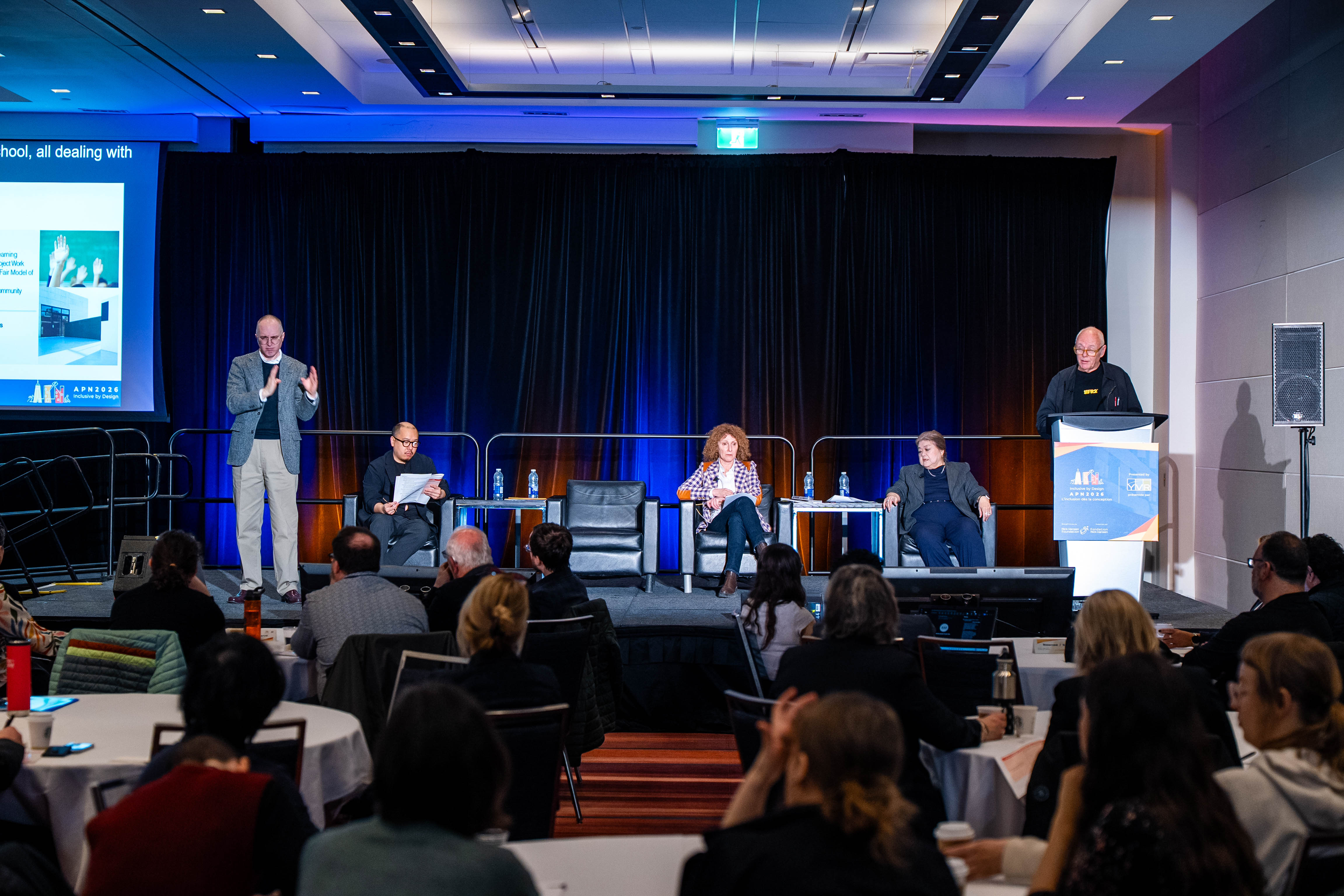
Continuing the Momentum
While much has been achieved regarding accessibility across the built environment, a recurrent theme across APN2026 was the reminder that there’s still a long way to go before the 1.3 billion people who experience disability globally can move through the world without barriers.
“Accessibility isn’t a nice to have, it’s foundational,” Church said, a sentiment that was echoed by Basi in her opening remarks when she reminded attendees that, “our continuing momentum matters more than ever.”
Presenters repeatedly urged attendees to think beyond isolated features and consider the entire user journey. An accessible event is not simply one with a ramp at the entrance. It is an event where information is easy to find, transportation is navigable, routes are intuitive, washrooms are usable, seating is flexible, sensory needs are considered, and staff understand how to support diverse guests. An accessible airport does not stop at the terminal. The journey, as one session emphasized, continues onto the aircraft.
In the session Advancing Accessibility Innovation Through Partnership and Co-Design, Tracey McGillivray, Co-Founder and CEO of Axtion Independence Mobility, noted the many hidden barriers and unexpected limitations that cause challenges to people with disabilities across the built environment. As she said, “a space is not accessible if you have to ask for the key.”
Mia De Frentas, Director of Accessibility Enablement at RBC, expressed this overarching theme well, explaining that "accessibility is really a journey, it's not a destination. It will take time, but every little step will make a difference."
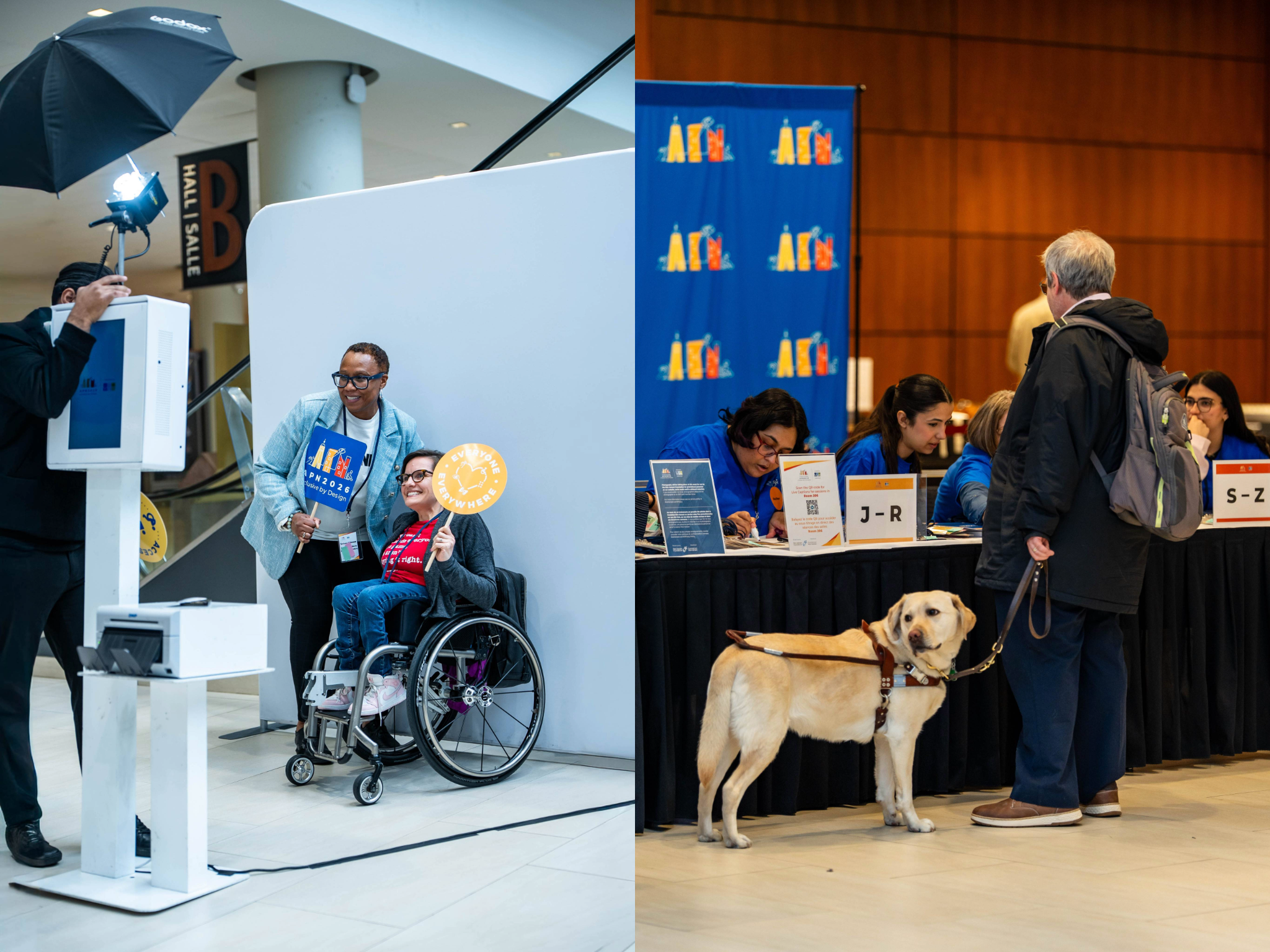
The Journey Must Include Us All
If there was one principle that anchored APN2026, it was this: accessibility cannot be designed for people with disabilities without designing with them. Speaker after speaker emphasized that lived experience must be treated as professional expertise rather than as anecdotal input.
The conference prioritized lived experience by elevating the voices and perspectives of people with disabilities who bring expertise in accessibility across the built environment. Dolly Menna-Dack, Senior Bioethicist at Holland Bloorview Kids Rehabilitation Hospital, noted in the session Rethinking Spaces for Children and Youth with Disabilities that “it’s such a privilege to speak from lived experience – it means someone wants you to tell it like it is.”
That same session highlighted the importance of incorporating young people’s perspectives into accessibility planning. Panelist and Accessibility Standards Canada Board Member Sarah Moore noted that youth “will come up with solutions that you would never have thought about.”
Menna-Dack closed the session with a profound quote: "I invite you to see inclusion as your own moral obligation... then it is no single child's burden."
In the session titled Beyond Compliance: Designing for Real-World Impact, Edward Steinfeld, Director Emeritus of the Centre for Inclusive Design and Environmental Access (IDEA), expressed that “inclusion isn’t a zero-sum game. If we design for margins, everyone benefits.”
Not only do we all have a role in this journey, but we are all beneficiaries of it.
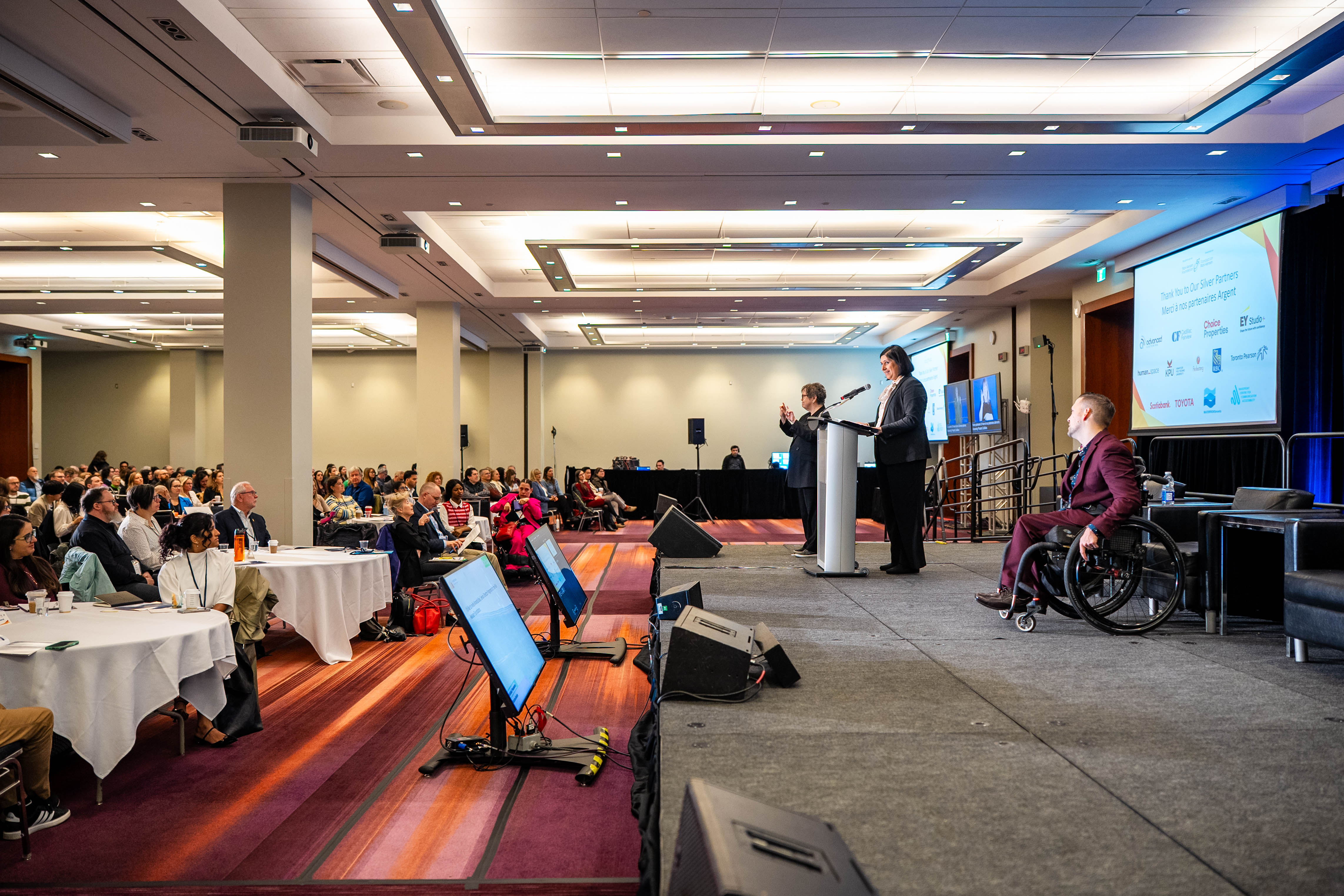
The Next Phase of Accessibility Must Be Systemic
The conference’s fireside conversation on Canada’s accessibility future highlighted another critical point: the era of surface-level accessibility planning is ending.
The Accessible Canada Act established a framework for accountability, but identifying barriers is no longer enough. The next phase of accessibility work must tackle systemic barriers, including those embedded in hiring practices, policies, communication systems, customer experience, procurement, and institutional culture.
As former federal minister and accessibility advocate Carla Qualtrough reminded attendees: “Accessibility is the door that everyone has to open before we can come in and meaningfully participate.”
And that door must exist everywhere across every system that shapes public life.
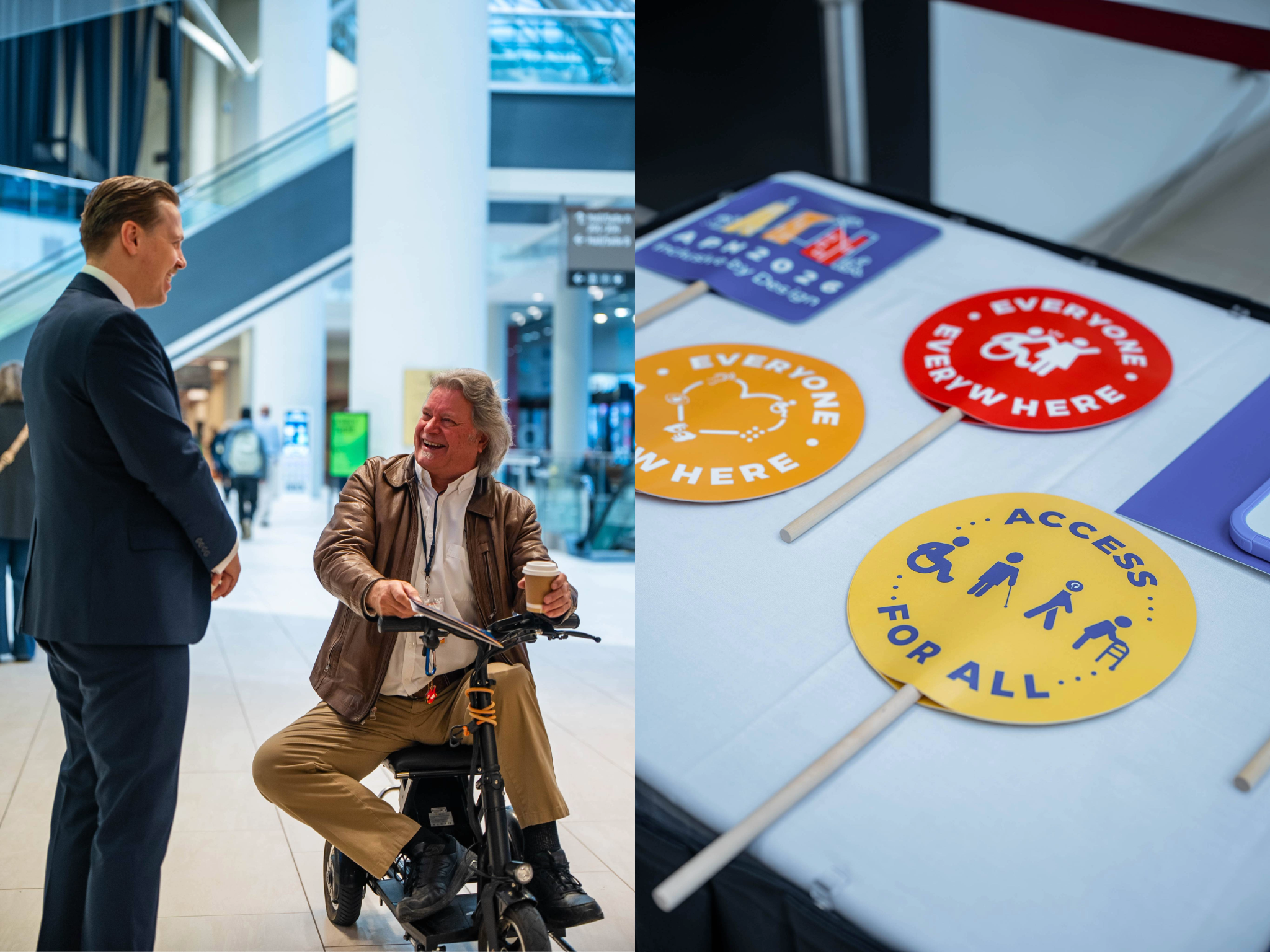
We Know What to Do
Perhaps the most sobering insight of APN2026 came during discussions on accessible housing and retrofit innovation. Canada does not lack the knowledge to create accessible spaces. The design principles exist. The technical expertise exists. The accessibility measuring tool exists.
What remains in short supply is coordination, urgency, and implementation. As the session made clear, the question is no longer whether we know how to build accessible housing – the question is whether we are willing to build it.
It was a sentiment that lingered in the room long after the session ended because in many ways, it captured the larger truth of APN2026: the greatest barriers to accessibility are no longer conceptual. They are cultural, structural, and institutional.
We Must All be the Heroes
In the conference closing remarks Master of Ceremonies Marco Pasqua noted, all of us must be heroes in the accessibility story. “It doesn't come down to one person, one idea. Real heroes are not seeking accolades. They get the work done because it's what matters."
At RHF, we are constantly inspired by the story of our founder, Rick Hansen, and his lifelong commitment to creating a better, more inclusive and accessible world. As Pasqua reminded us, “we can all be the Ricks in our community. Let’s all take the baton.”
The same ingredients that made the Man In Motion World Tour a success decades ago – the courage to rethink assumptions, the humility to listen, and the discipline to build accessibility into our systems from the very beginning – remain essential today.
And if APN2026 proved anything, it is that the world is ready for it.